Scaling beauty brands in today’s market requires more than product-market fit or strong creativity. It requires operational foresight, disciplined channel strategy, and infrastructure that can withstand compounding demand.
Many emerging beauty founders reach a critical inflection point where visibility accelerates faster than systems can support. The difference between a breakout brand and a lasting one is not momentum. It is structured.
Growth without operational clarity often creates margin compression, supply chain strain, and founder burnout. Sustainable scale demands alignment between brand growth strategy, operations, distribution channels, and leadership evolution.
Beauty’s Growth Curve is Rising, and Expectations Are Too
The global beauty industry reached $446 billion in 2023 and continues expanding at a strong pace, with projections approaching $590 billion within the next few years. Clean beauty alone is growing at a double-digit rate, reflecting rising consumer demand for ingredient transparency and responsible sourcing.
Consumers are also signaling greater willingness to pay for sustainability, with research indicating they may spend nearly 9.7 percent more for sustainably produced goods. This shift means sustainability is no longer a differentiator reserved for niche brands. It is becoming a baseline expectation.
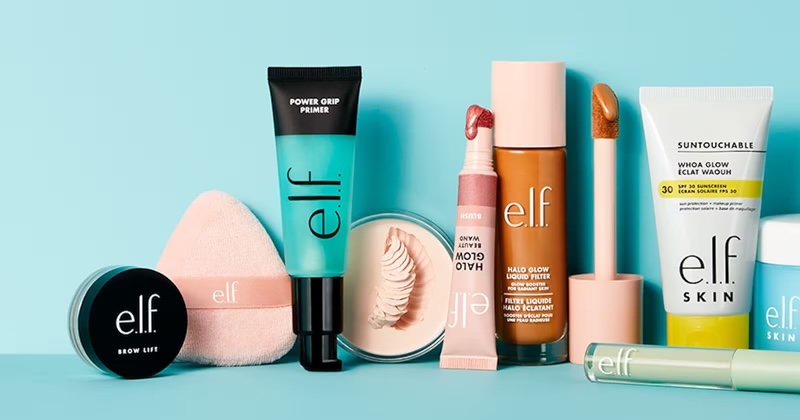
Recent market activity reinforces the importance of scalable infrastructure. Rhode’s $1 billion acquisition by e.l.f. Beauty demonstrates how strong brand positioning paired with disciplined distribution can translate into enterprise value. Meanwhile, e.l.f.’s fiscal 2024 performance illustrates how structured channel execution fuels consistent growth.
Brands like Lush also show that sustainability must be operationalized through sourcing, packaging, and environmental commitments, not simply communicated through marketing.
Opportunity is abundant, but the standards for scaling have evolved.
A Founder at the Inflection Point
Consider a clean skincare brand generating $4.5 million annually through direct-to-consumer sales. The founder built the business on three hero SKUs and strong community engagement.
Repeat purchase rates are healthy, but paid acquisition costs have increased 22 percent year over year. Inventory planning is reactive. Wholesale interest is emerging. Amazon resellers have begun listing the brand without authorization.
This is the moment many founders face.
The question is no longer whether the brand can grow. It is whether it can grow without destabilizing margins, operations, or positioning.
Without a clear expansion framework, new distribution channels can introduce price erosion, supply chain complexity, and inconsistent brand representation.
This is where working with a specialized amazon beauty agency like beBOLD Digital becomes strategic rather than optional. Marketplace expansion must be engineered, not improvised.
The Operational Blueprint Behind Iconic Beauty Brands
Margin Before Momentum
Scaling beauty brands sustainably begins with contribution margin clarity. Before expanding into new distribution channels, founders should understand profitability by SKU, channel-specific cost structures, and advertising efficiency thresholds.
Growth driven purely by revenue targets often masks declining margins. Brands that scale successfully expand from profitable foundations.
Marketplace Expansion as a Controlled Growth Lever
beBOLD Digital recommends that emerging beauty brands treat Amazon as an operational scaling mechanism rather than a secondary sales outlet.
A realistic scenario illustrates this point.
If a $4.5 million brand allows unauthorized sellers to capture Amazon demand, pricing inconsistencies may emerge within months. Reviews become fragmented. Advertising spend becomes reactive.
However, when Amazon is structured properly through Brand Registry, optimized PDPs, strategic advertising, and synchronized inventory forecasting, the same brand can convert high-intent search demand into controlled revenue growth.
In practical terms, shifting 25 to 30 percent of total revenue into a structured Amazon channel can add $1 million to $2 million in incremental sales while preserving pricing discipline. This aligns with broader market expansion trends highlighted in e.l.f.’s recent financial reporting.
The insight is simple but often overlooked. Distribution channels should expand from operational strength, not urgency.
Sustainability That Scales
Sustainability must be embedded into supply chain systems early. Lush’s environmental commitments demonstrate how brands integrate responsible sourcing and packaging as operational standards.
For emerging brands, this may include lighter secondary packaging, refill pilots for hero SKUs, and supplier audits. Sustainable decisions are easier to implement at $5 million in revenue than at $50 million.
Founder-Led to System-Led Growth
Founder challenges intensify during expansion. Decision fatigue, hiring pressure, and channel complexity can erode strategic clarity.
Iconic brands transition from founder-driven execution to system-driven leadership. Hiring operational talent, delegating marketplace oversight, and formalizing forecasting processes allow founders to shift into strategic roles.
Scaling becomes repeatable when leadership evolves alongside revenue.
What Sustainable Scale Looks Like in Practice
After implementing structured marketplace expansion and operational upgrades, our hypothetical brand experiences measurable shifts within 18 to 24 months.
Revenue grows beyond $12 million annually. Amazon contributes approximately 30 percent of total sales while maintaining pricing consistency across channels.
Blended acquisition costs decline as organic marketplace discovery complements paid social efforts. Stockouts drop significantly due to improved forecasting. Repeat purchase rates increase as visibility expands brand awareness across multiple touchpoints.
Margins may compress slightly at first due to marketplace fees and advertising investment. However, improved inventory efficiency and volume leverage stabilize profitability over time.
The result is not explosive but fragile growth. It is durable growth.
Lessons From Brands That Scale Without Breaking
Several principles consistently define sustainable expansion:
- Operational maturity must precede channel diversification.
- Contribution margin clarity guides smart distribution decisions.
- Amazon should be treated as infrastructure, not opportunistic revenue.
- Sustainability requires supply chain integration.
- Founder challenges are solved through delegation and structured leadership.
Rhode’s acquisition underscores how scalable distribution drives valuation outcomes. Enterprise value is built on systems.
Growth That Endures Requires Structure
The transition from indie to iconic is not fueled by visibility alone. It is supported by disciplined operations, intentional distribution channels, and infrastructure that aligns with long-term brand equity.
In a rapidly expanding beauty economy, scaling beauty brands sustainably is less about chasing momentum and more about engineering it.
The brands that endure are the ones that build before they accelerate.
Engineering Your Next Stage of Beauty Growth
For founders evaluating marketplace expansion, Amazon can represent a powerful growth engine when executed with operational control and strategic alignment.
beBOLD Digital partners with emerging beauty brands to structure marketplace entry through listing optimization, advertising strategy, inventory forecasting, and channel protection. When built intentionally, Amazon strengthens brand equity rather than fragmenting it.
Scaling beauty brands successfully requires clarity, systems, and disciplined expansion strategy. Growth is most powerful when it is engineered to last.
