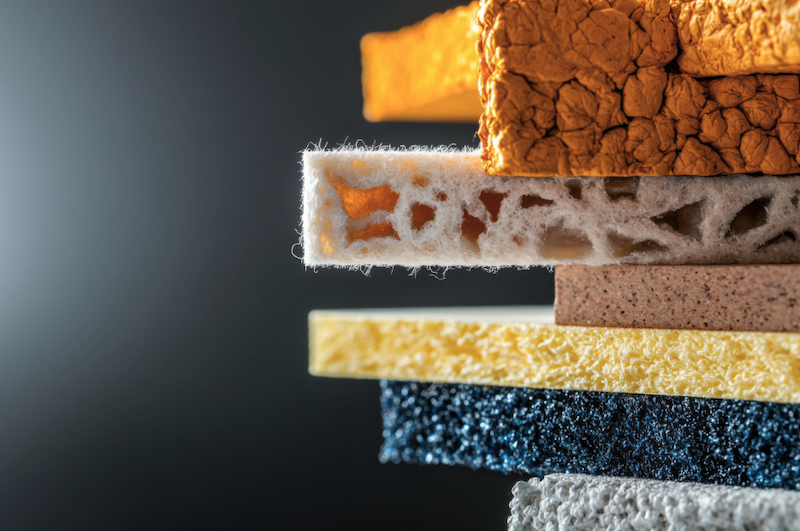
The thermal insulation landscape is crowded with options: fiberglass, ceramic wool, aerogel, foam composites, and mineral-based materials. Yet when engineers need reliable insulation in demanding environments like aerospace applications, industrial furnaces, and high-temperature equipment, mica emerges as the best choice. The reason isn’t marketing. It’s performance in the real world.
Understanding why mica outperforms alternatives requires comparing not just thermal conductivity numbers, but overall performance across temperature range, durability, reliability, and cost-effectiveness. When you understand the full picture, mica sheets and mica components become the logical choice, not the expensive alternative.
Thermal Conductivity: The Incomplete Story
Thermal conductivity (measured in W/m·K) indicates how much heat flows through a material. Lower thermal conductivity means better insulation.
Mica: 0.5-0.7 W/m·K
Common Alternatives:
- Fiberglass: 0.03-0.05 W/m·K (appears dramatically superior)
- Ceramic wool: 0.07-0.15 W/m·K
- Expanded polystyrene foam: 0.033-0.041 W/m·K (also appears superior)
- Mineral wool: 0.04-0.08 W/m·K
At first glance, fiberglass and foam insulators appear 3-10 times better. This is the trap that catches unprepared engineers. A single number (thermal conductivity) doesn’t tell the real story. The full picture reveals why mica dominates high-performance insulation applications.
The Temperature Reality: Where Mica Dominates
This is where the alternatives fall apart.
Fiberglass begins degrading above 230°C. At 300°C, the resin binder holding fibers together starts decomposing. Above 400°C, fiberglass becomes essentially useless – the material structure collapses and thermal conductivity increases dramatically. Your superior insulation becomes a liability.
Expanded polystyrene foam melts at approximately 80°C. It’s unsuitable for any application involving moderate heat. The thermal conductivity advantage becomes completely irrelevant when the material physically disintegrates.
Mineral wool tolerates temperatures up to 600°C, making it a potential competitor to muscovite mica in moderate-temperature applications. However, it lacks mica’s electrical insulation properties and degrades more rapidly under thermal cycling.
Ceramic wool handles 1200°C continuous, rivaling phlogopite mica’s heat tolerance. However, ceramic wool is fragile – it degrades under vibration and mechanical stress, making it unsuitable for equipment with moving parts or vibration.
Mica (Muscovite): 500-700°C continuous, with electrical insulation included Mica (Phlogopite): 800-1000°C continuous, the highest tolerance among practical insulators
Here’s the critical insight: mica’s slightly higher thermal conductivity at room temperature becomes irrelevant in applications involving sustained heat. When your application requires insulation at 400°C or higher, fiberglass and foam insulators will literally cease to exist. Only mica and ceramic materials remain viable.
Structural Integrity Under Thermal Cycling
Thermal cycling, which is repeated heating and cooling, stresses all materials. The rate at which mica expands and contracts under temperature changes is fundamentally different from fiberglass and foam alternatives.
Mica’s crystalline structure creates minimal thermal expansion. When heated and cooled repeatedly, mica maintains dimensional stability. This is critical for precision applications—if insulation expands or contracts significantly with temperature changes, it separates from the component it’s protecting, creating gaps and compromising insulation.
Fiberglass and foam materials expand and contract more significantly with temperature changes. Over hundreds or thousands of thermal cycles, this repeated expansion and contraction causes fiber separation, material delamination, and eventual failure. Components initially well-insulated develop gaps and hot spots as the insulation physically separates.
In industrial furnaces, rotating equipment, and aerospace applications where thermal cycling is constant, mica’s dimensional stability creates longer component life and more reliable insulation throughout the equipment’s operational life.
The Electrical Advantage Nobody Else Has
Here’s a property most alternative insulators cannot provide: electrical insulation.
Mica’s dielectric strength ranges from 14-25 kilovolts per millimeter depending on type. This means mica can safely isolate electrical components from conductive surfaces while simultaneously providing thermal insulation.
Fiberglass? Electrically conductive without special treatment. Mineral wool and ceramic wool? Also electrically conductive. Foam? Depends on type, but none match mica’s inherent electrical properties.
For applications like electric motor stators, transformer insulation, or high-voltage electrical equipment operating in thermal stress environments, no alternative material matches mica’s combination of electrical and thermal performance. You cannot replace muscovite mica in a motor winding with fiberglass – you’d lose the electrical protection you depend on.
This dual-property advantage – thermal and electrical insulation simultaneously – is why mica dominates electrical machinery insulation across every industrial sector.
Long-Term Durability: The Hidden Cost Factor
A mica insulation barrier installed 30 years ago in a generator can still be performing at specification today. The same cannot be said for fiberglass or foam insulators.
Mica is chemically stable. It doesn’t degrade under sustained exposure to heat, moisture, chemical vapors, or electrical stress the way organic materials do. Fiberglass resin binders chemically break down over time, especially at elevated temperatures. Foam materials oxidize and become brittle.
In industrial environments where equipment operates continuously for decades, mica’s stability creates lower total cost of ownership. The initial material cost might be higher, but extended service life and lower failure rates create long-term value that cost-comparison spreadsheets often miss.
Equipment failures create cascading problems: unplanned downtime, emergency repairs, potential safety hazards, and lost production. A mica insulation barrier functioning reliably for 30 years prevents all of this. A fiberglass insulation barrier requiring replacement every 10 years creates recurring costs and operational disruption.
Mechanical Properties: Mica’s Practical Advantage
Fiberglass and mineral wool are fragile – handling them requires care to avoid fiber separation and dust exposure. The fibers separate easily, especially during installation and maintenance.
Mica sheets and components are solid and robust. They can be cut, shaped, and handled without concern about fiber separation. This makes mica easier to work with during installation, maintenance, and component replacement. For technicians and maintenance teams, this practical difference matters daily.
Additionally, mica can be precisely fabricated into custom shapes – tubes, gaskets, washers, complex geometries – with tight tolerances. Fiberglass and ceramic wool lack this precision fabrication capability.
The Real Cost Picture
Yes, mica costs more per unit volume than fiberglass or foam insulators. However, this comparison is misleading because:
- Mica lasts longer in high-temperature applications where alternatives fail entirely
- Mica provides dual benefits (thermal + electrical) where alternatives provide only thermal
- Mica reduces maintenance costs through superior durability and stability
- Mica enables smaller component sizes due to superior thermal performance at temperature, allowing for more compact designs
A motor manufacturer choosing fiberglass insulation for a 400°C application isn’t saving money – they’re planning premature failure. The correct economic comparison is mica versus other materials that actually survive the temperature environment, which dramatically changes the financial picture.
Industrial Consensus Across Sectors
Aerospace manufacturers specify mica for thermal and electrical insulation. Automotive engineers select mica for electric vehicle battery thermal management. Power utilities use mica insulation in generators designed for 50+ year service lives. This isn’t because mica is cheap, it’s because these industries understand that performance reliability creates lower total cost of ownership.
When industries where failure is extremely costly consistently choose mica over alternatives, it’s not a coincidence. It’s a reflection of which material actually performs best across real-world operating conditions.
Selecting the Right Insulation Material
The correct approach to insulation material selection is:
- Determine your operating temperature range (maximum sustained and peak temperatures)
- Identify electrical insulation requirements (if applicable)
- Evaluate expected service life (how long must the component perform?)
- Consider thermal cycling frequency (how often does temperature change?)
- Calculate total cost of ownership (initial cost + maintenance + replacement cycles)
For applications below 150°C without electrical insulation requirements, fiberglass or foam might be cost-effective. For applications exceeding 200°C, especially those involving electrical stress or expected service lives exceeding 10 years, mica becomes the economically rational choice despite higher initial material cost.
When you’re ready to evaluate mica for your application, Axim Mica provides the technical expertise and problem-solving approach that translates understanding into reliable solutions.
The Bottom Line
Mica outperforms alternative thermal insulators not because it has the lowest thermal conductivity. Mica is the best option because it delivers superior thermal performance across the temperature ranges where real equipment operates, while simultaneously providing electrical insulation, structural stability, and durability that alternatives cannot match.
When engineers and procurement teams understand the complete performance picture – not just one thermal conductivity number – mica emerges as the material that actually solves the insulation problem reliably. The better performing alternative isn’t always the one with the lowest number on a single metric. It’s the one that works in the real world.
