• Skip to primary navigation
  • Skip to main content
  • Skip to primary sidebar
  • Skip to secondary sidebar
  • About
    • Contact
    • Privacy
    • Terms of use
  • Shop
    • Cart
    • Checkout
    • My Account
  • Advertise
    • Advertising
      • Buy ad space
    • Case studies
    • Design
    • Email marketing
    • Features list
    • Lead generation
    • Magazine
    • Press releases
    • Publishing
    • Sponsor an article
    • Webcasting
    • Webinars
    • White papers
    • Writing
  • Subscribe to Newsletter

Robotics & Automation News

Where Innovation Meets Imagination

  • Home
  • News
  • Features
  • Editorial Sections A-Z
    • Agriculture
    • Aircraft
    • Artificial Intelligence
    • Automation
    • Autonomous Vehicles
    • Business
    • Computing
    • Construction
    • Culture
    • Design
    • Drones
    • Economy
    • Energy
    • Engineering
    • Environment
    • Health
    • Humanoids
    • Industrial robots
    • Industry
    • Infrastructure
    • Investments
    • Logistics
    • Manufacturing
    • Marine
    • Material handling
    • Materials
    • Mining
    • Promoted
    • Research
    • Robotics
    • Science
    • Sensors
    • Service robots
    • Software
    • Space
    • Technology
    • Transportation
    • Warehouse robots
    • Wearables
  • Press releases
  • Events

China set to lead global humanoid robot race as labour shortages accelerate adoption, report warns

December 11, 2025 by David Edwards

A new intelligence report forecasts a rapid acceleration in the global market for humanoid robots, driven by population decline, advances in artificial intelligence, and intensifying geopolitical competition.

The study – The Future of Humanoid Robots from Recorded Future’s Insikt Group – argues that humanoid robots are shifting from “speculative to attainable” as technological capabilities mature and labour pressures deepen.

The report finds that global demographic trends are now a primary driver of demand. “Global population decline is accelerating the demand for humanoid robots designed to operate within human environments and offset growing labor shortages across industries,” the authors write.

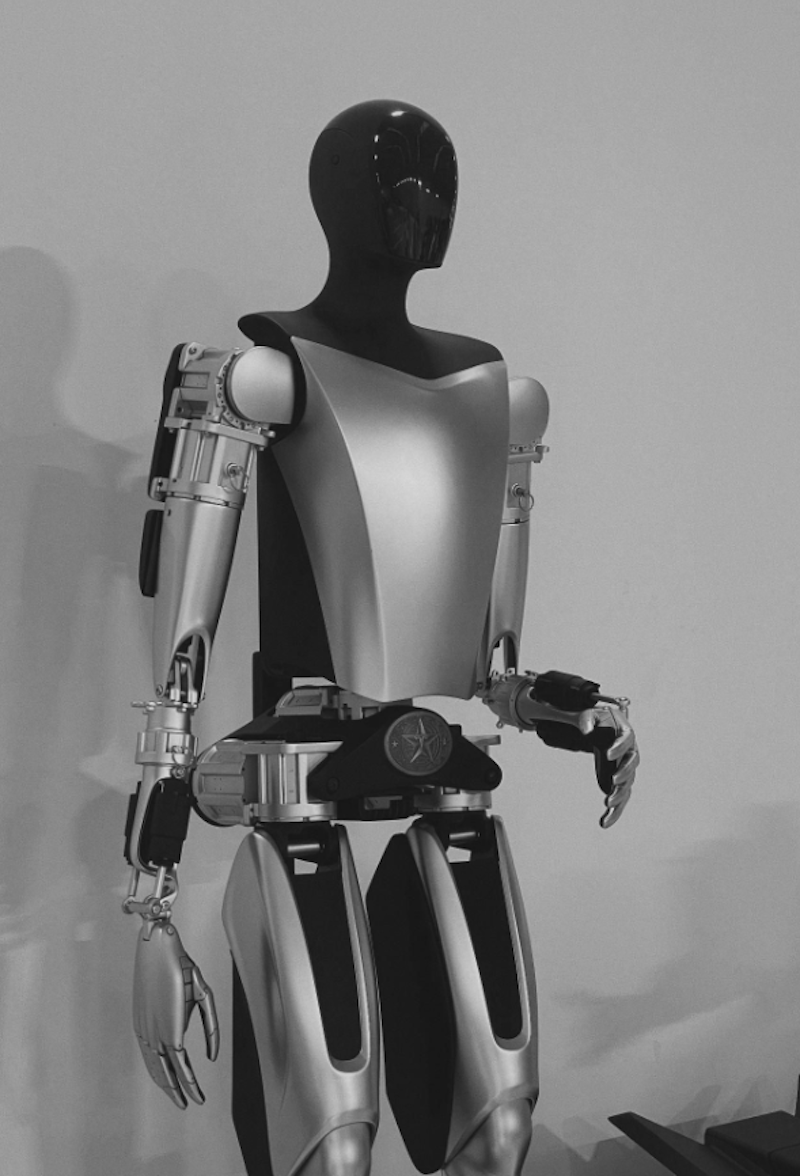
Humanoid robots, defined as “general-purpose, bipedal robots modeled after the human form and designed to work alongside humans,” are being developed for manufacturing, service roles, healthcare and even sporting applications. Some analysis suggests that by 2060 “there will be 3 billion humanoid robots, mainly working in households and service industries,” according to the report.

China emerges as dominant force

The report highlights China as the nation most likely to lead production, deployment and export of humanoid robots. It notes that the country is “on course to dominate the humanoid robotics sector,” supported by long-term industrial planning, heavy investment, a shrinking workforce and established manufacturing capacity.

China’s strategy contrasts with countries that have attempted to offset labour shortages through immigration. According to the report, China has instead prioritised “finding a technological solution rather than importing labor,” spending the last decade preparing its industrial base to mass-produce robots.

Some speculative forecasts cited in the report suggest China could eventually deploy “approximately 300,000,000 humanoid robots” to compensate for demographic decline. China also leads the world in patent filings mentioning humanoid robotics between 2020 and 2025, according to the data presented.

Products such as Unitree Robotics’ R1 humanoid – which the report notes “can already be purchased for around $5,500” – illustrate how quickly prices may fall as production scales. Analysts expect average bill-of-materials costs to drop to “$13,000 to $17,000 by the early 2030s.”

Industrial and automotive players enter the market

The report says both startups and established corporations are now investing aggressively. Automotive companies in particular “possess the expertise to mass-produce complex machinery on assembly lines” and are increasingly moving into humanoid robotics, partly to counter declining car sales.

Humanoid robots have already appeared in high-profile demonstrations, including the inaugural 2025 Robot Olympics in Beijing.

Cybersecurity risks escalate

A major theme of the report is the cybersecurity exposure caused by network-connected humanoid robots. It warns that they “will almost certainly be vulnerable to cyberattacks, ranging from hijacking and data leaks to the formation of botnets.”

Several real-world incidents are cited. Researchers “discovered a critical flaw in Unitree Robotics’ Bluetooth protocol that could let attackers wirelessly hijack its humanoid robots,” while leaked encryption keys in another model allowed one compromised robot to infect others. One model also “transmitted data to servers in China without user consent.”

These vulnerabilities followed a “viral incident in May 2025, in which a humanoid robot turned on its human handlers,” the report notes.

Unitree Robotics subsequently issued a statement acknowledging security issues, saying: “We have become aware that some users have discovered security vulnerabilities and network-related issues while using our robots. We immediately began addressing these concerns and have now completed the majority of the fixes.”

The authors conclude that a dedicated industry focused on securing humanoid robots is likely to emerge, similar to how cybersecurity developed alongside early computing.

Geopolitical and supply chain pressures

The study argues that a global race for robotics dominance will intensify competition for semiconductors, rare earth elements and other critical materials – potentially heightening geopolitical tensions. “The robotics race will put pressure on obtaining minerals and semiconductors, which in turn will accelerate geopolitical tensions,” the report states.

Cyber-espionage targeting robotics companies is also expected to increase. Recorded Future’s network intelligence already shows “state-linked malware families targeting the robotics industry,” likely in pursuit of sensitive IP.

A transformative but uncertain future

While long-term projections – including the possibility of billions of humanoid robots worldwide – remain speculative, the report emphasises that recent breakthroughs in AI and robotics make such scenarios increasingly plausible.

Yet significant barriers remain. The “energy demands of humanoid robots” and the requirement for “massive quantities of critical materials” could slow growth. Some analysts cited in the report also warn of an impending “hype crash.”

Still, the authors conclude that humanoid robots are likely to play a major role in future economies, particularly in countries facing severe demographic decline: “Modern economies rely on sustained consumption and productivity growth … yet across much of the developed world this two-century trend of population growth is reversing.” Humanoid robots, they argue, may be one of the few viable paths to sustaining economic output.

Print Friendly, PDF & Email

Share this:

  • Print (Opens in new window) Print
  • Share on Facebook (Opens in new window) Facebook
  • Share on LinkedIn (Opens in new window) LinkedIn
  • Share on Reddit (Opens in new window) Reddit
  • Share on X (Opens in new window) X
  • Share on Tumblr (Opens in new window) Tumblr
  • Share on Pinterest (Opens in new window) Pinterest
  • Share on WhatsApp (Opens in new window) WhatsApp
  • Share on Telegram (Opens in new window) Telegram

Related stories you might also like…

Filed Under: Humanoids, Research Tagged With: ai robotics market, automation news, china robotics, global robotics competition, humanoid robot adoption, humanoid robots, industrial robotics trends, labour shortage technology, population decline automation, recorded future report, robot cybersecurity risks, robotics and automation, robotics and automation news, robotics news

Primary Sidebar

Search this website

Latest articles

  • FORT Robotics extends physical AI safety platform with Nvidia Halos
  • Fieldwork Robotics secures SEED Innovations investment to scale berry harvesting robots
  • Multi-robot demo showcases new UK’s Plymouth subsea test range
  • Tech company AVI-SPL launches autonomous Dallas-Houston freight operations with Volvo Autonomous Solutions
  • RoboDK unveils CAM software that cuts robotic machining deployment time ‘by up to 40 percent’
  • Richtech Robotics launches 24/7 interactive livestream featuring AI robot ADAM
  • Cognibotics selected for €6.5 million in EU accelerator funding
  • CS2 Skin Marketplace Comparison: Which Platform Offers the Best Prices and Security?
  • How Automation is Changing Employee Performance Tracking and Recognition
  • What Can Delay a Car Accident Settlement and How an Attorney Helps

Secondary Sidebar

Latest news

  • FORT Robotics extends physical AI safety platform with Nvidia Halos
  • Fieldwork Robotics secures SEED Innovations investment to scale berry harvesting robots
  • Multi-robot demo showcases new UK’s Plymouth subsea test range
  • Tech company AVI-SPL launches autonomous Dallas-Houston freight operations with Volvo Autonomous Solutions
  • RoboDK unveils CAM software that cuts robotic machining deployment time ‘by up to 40 percent’
  • Richtech Robotics launches 24/7 interactive livestream featuring AI robot ADAM
  • Cognibotics selected for €6.5 million in EU accelerator funding
  • CS2 Skin Marketplace Comparison: Which Platform Offers the Best Prices and Security?
  • How Automation is Changing Employee Performance Tracking and Recognition
  • What Can Delay a Car Accident Settlement and How an Attorney Helps

Copyright © 2026 · News Pro on Genesis Framework · WordPress · Log in

We use cookies on our website to give you the most relevant experience by remembering your preferences and repeat visits. By clicking “Accept”, you consent to the use of ALL the cookies.
Do not sell my personal information.
Cookie SettingsAccept
Manage consent

Privacy Overview

This website uses cookies to improve your experience while you navigate through the website. Out of these, the cookies that are categorized as necessary are stored on your browser as they are essential for the working of basic functionalities of the website. We also use third-party cookies that help us analyze and understand how you use this website. These cookies will be stored in your browser only with your consent. You also have the option to opt-out of these cookies. But opting out of some of these cookies may affect your browsing experience.
Necessary
Always Enabled
Necessary cookies are absolutely essential for the website to function properly. These cookies ensure basic functionalities and security features of the website, anonymously.
CookieDurationDescription
cookielawinfo-checkbox-analytics11 monthsThis cookie is set by GDPR Cookie Consent plugin. The cookie is used to store the user consent for the cookies in the category "Analytics".
cookielawinfo-checkbox-functional11 monthsThe cookie is set by GDPR cookie consent to record the user consent for the cookies in the category "Functional".
cookielawinfo-checkbox-necessary11 monthsThis cookie is set by GDPR Cookie Consent plugin. The cookies is used to store the user consent for the cookies in the category "Necessary".
cookielawinfo-checkbox-others11 monthsThis cookie is set by GDPR Cookie Consent plugin. The cookie is used to store the user consent for the cookies in the category "Other.
cookielawinfo-checkbox-performance11 monthsThis cookie is set by GDPR Cookie Consent plugin. The cookie is used to store the user consent for the cookies in the category "Performance".
viewed_cookie_policy11 monthsThe cookie is set by the GDPR Cookie Consent plugin and is used to store whether or not user has consented to the use of cookies. It does not store any personal data.
Functional
Functional cookies help to perform certain functionalities like sharing the content of the website on social media platforms, collect feedbacks, and other third-party features.
Performance
Performance cookies are used to understand and analyze the key performance indexes of the website which helps in delivering a better user experience for the visitors.
Analytics
Analytical cookies are used to understand how visitors interact with the website. These cookies help provide information on metrics the number of visitors, bounce rate, traffic source, etc.
Advertisement
Advertisement cookies are used to provide visitors with relevant ads and marketing campaigns. These cookies track visitors across websites and collect information to provide customized ads.
Others
Other uncategorized cookies are those that are being analyzed and have not been classified into a category as yet.
SAVE & ACCEPT