
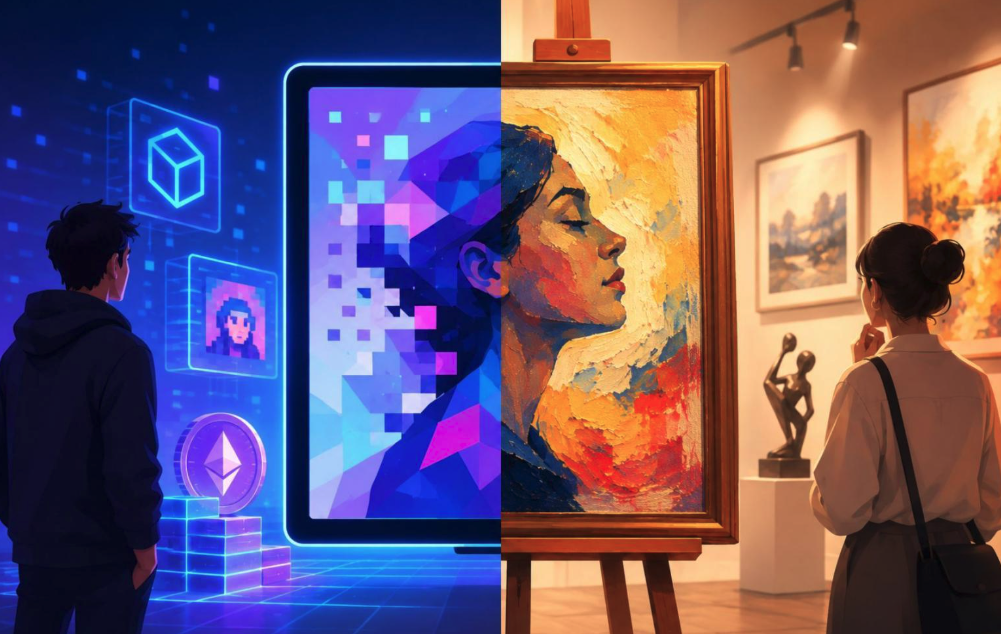
Artists have sold their work through galleries, art fairs and auction houses to collectors worldwide for centuries: walk in, look at a piece and pay for something to hang on a wall.
NFTs changed that. Now an artist can sell a digital file directly to a buyer anywhere in the world, with a blockchain tracking who owns it.
Neither path is going away. They just work differently, and each one solves problems the other struggles with. In this guide, we’ll cover the opportunities and challenges of both approaches.
How Traditional Art Sales Work
Traditional art sales happen through galleries, fairs, auctions or direct studio sales.
A gallery represents an artist, shows their work to collectors, and handles the sale, often for a hefty cut.
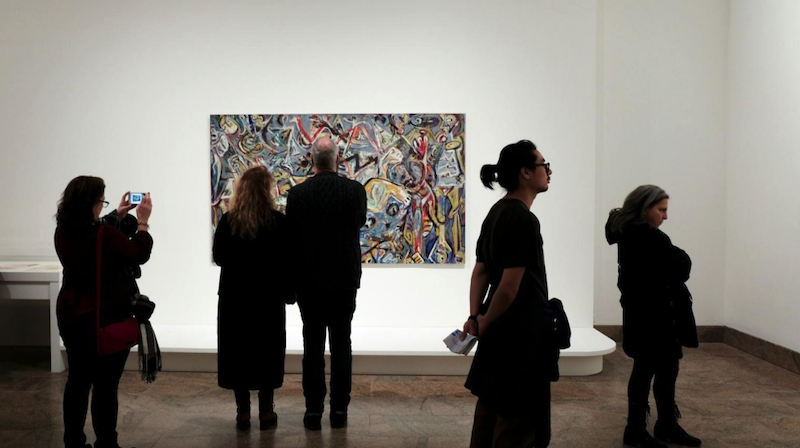
Auction houses take a similar cut, usually around 20 percent, but for higher-profile pieces.
Art fairs let artists meet buyers face to face, and some skip the middleman entirely and sell directly from their studio.
This system has real strengths. Galleries and auction houses have spent decades building trust with collectors, so a sale through them carries built-in credibility.
Traditional art also offers something a screen cannot replicate: standing in front of a painting, seeing the brushwork up close and feeling its scale. And with AI-generated art flooding the internet, more collectors are drawn to work they know came from a human hand, imperfections included.
The real problem is commissions, which can eat up 30 to 70 percent of the sale. Selling this way also depends on location, and a new artist without connections can take years to make their first sale.
How NFT Art Sales Work
An NFT is basically a digital receipt. Whenever an artist mints a piece as an NFT, they’re creating a token on a blockchain that says this specific file, whether it’s a JPEG, a video or something else, belongs to this person. Anyone can look up its ownership history within seconds.
This approach gives artists things traditional sales rarely offer. Take location: an artist can sell directly to a buyer anywhere in the world without needing a gallery.
Marketplace fees are also much lower, often 10 to 15 percent on the first sale and as little as 0 to 3 percent on resales, a fraction of what a gallery or auction house typically charges.
Royalties are another perk with NFTs: some artists earn a small percentage every time their work resells, something almost never seen in traditional art.
But there’s a catch. NFT royalties aren’t always guaranteed, since several major marketplaces made them optional, so a buyer can simply choose not to pay one.
Other challenges include extreme market swings, theft and a buyer pool that’s still much smaller and newer than traditional art’s.
One 2026 market report puts the global NFT art market at around 7.8 billion dollars, though estimates vary widely by source. Online sales across the entire global art market, NFTs included, made up about 15 percent of total value in 2025, per the Art Basel and UBS Global Art Market Report 2026.
Where NFT Art and Traditional Art Meet
NFTs and traditional art aren’t fighting for the same buyer. A painter can release a digital edition of a physical piece and sell to both audiences at once, or a collector can buy a canvas and get a digital certificate along with it.
Galleries have started showing digital-native artists, and plenty of NFT artists now turn their digital work into physical prints, apparel or other merch, giving fans something to actually hold. Blockchain is also being explored as a cleaner way to track ownership history.
Simply put, none of this means choosing a side. It just means an artist now has more ways to reach people than a decade ago.
How Artiststore Can Create New Opportunities
This overlap between digital and traditional art is exactly where a print-on-demand platform like Artiststore could create something interesting.
Digital and NFT artists already have the artwork. With a platform like Artiststore, these artists can bring their pieces to life as keychains, prints, apparel or other merchandise or build out collections themed around specific blockchain art communities.
Partnering with Web3 creators this way could also open the door to coverage from art, design and tech media that closely cover this space.
NFTs gave artists a new way to sell their work, prove ownership and earn from resales, while traditional art still offers something NFTs cannot fully replace: physical products, established trust and a large collector base.
Instead of choosing one over the other, platforms like Artiststore can bring both worlds together by helping digital artists turn their work into physical products.
This could give artists new ways to reach fans while creating more opportunities for artists and collectors in the growing NFT and art space.
