For decades, robots were built to weld, lift, inspect, and assemble. Their world was the industrial floor – structured tasks, predictable environments, and a focus on efficiency.
That paradigm is shifting. A new category of machines is emerging, designed not to move pallets or operate tools but to interact, comfort, teach, and keep people company.
Social and companion robots occupy a different space in the automation landscape. Instead of replacing physical labour, they augment human relationships, taking on roles traditionally associated with caregivers, teachers, receptionists, and even friends.
Whether assisting older adults at home, supporting students in classrooms, or acting as digital companions for those who feel isolated, these robots represent a growing frontier where artificial intelligence intersects with emotion, empathy, and social presence.
The central question is not merely whether these machines can perform useful tasks, but whether humans are ready to accept them as part of daily life. And more fundamentally: what does it mean to forge bonds with non-human entities designed to engage us?
A growing market driven by social need
Interest in social robots is rising for reasons rooted in demographics, workforce shortages, and social trends. Many countries are seeing rapidly ageing populations and strained elder-care systems. Care homes and hospitals face chronic staffing shortages.
Meanwhile, loneliness and social isolation have been identified as significant health risks across societies.
In education, teachers are increasingly supplementing instruction with interactive digital tools, while parents explore technology-based support for children with developmental needs. In hospitality and public services, labour gaps and cost pressures have prompted trials of customer-facing robots in airports, retail stores, and hotels.
Analyst estimates for the social and companion robotics market vary, but most project steady expansion over the next decade. Japan, South Korea, and parts of Europe have been early adopters, influenced by cultural factors, technological readiness, and policy support for care automation.
The United States is now prioritising digital health innovation, with companion technologies gaining traction through both public programmes and consumer markets.
Some projections should be treated cautiously, and adoption remains uneven. However, it is increasingly clear that social robots are no longer a fringe research topic – they are becoming part of the commercial robotics landscape.
How social robots work
Unlike industrial arms or autonomous mobile robots, social robots rely on a mix of artificial intelligence, user interface design, and psychology.
Key enabling technologies include:
- Natural language processing and speech synthesis – allowing robots to carry conversations, ask questions, and respond naturally.
- Vision systems and face recognition – enabling robots to identify people, detect emotions, and adjust interactions.
- Embodied interaction – whether wheels, humanoid forms, or animal-like designs, physical presence is central to user comfort and engagement.
- Behaviour models and reinforcement learning – improving social responses over time based on user patterns.
- Cloud and edge computing – storing interaction history, training models, and delivering timely responses.
Humanoid form factors are not always necessary. Some successful designs are deliberately non-human. The debate continues: is it better for a robot to approximate a human presence or embrace a unique aesthetic that avoids uncanny-valley discomfort?
The trend suggests a hybrid reality. Many social robots take friendly, stylised forms, while emerging humanoid platforms hint at convergence between physical capability and emotional sensing.
Key players and notable deployments
Several companies have shaped the perception and development of social robotics:
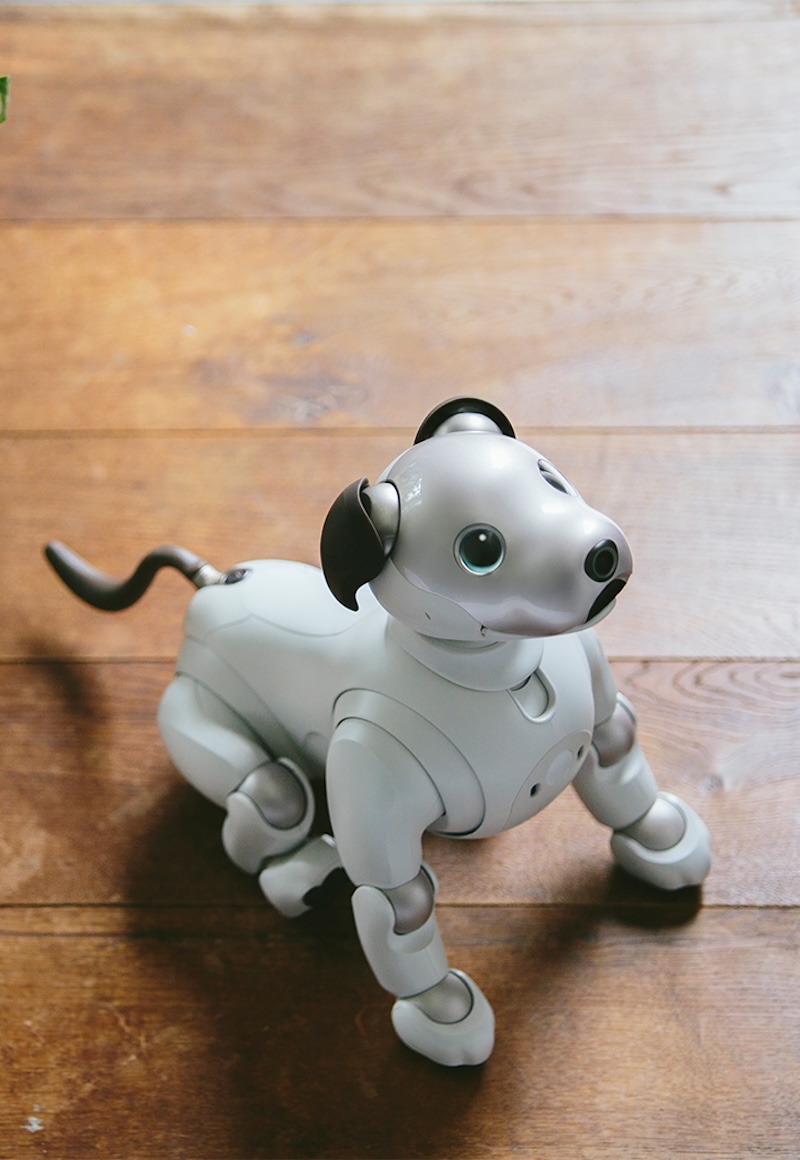
- Sony Aibo (main picture) – one of the earliest consumer robots designed for emotional connection. Aibo remains a niche but enduring success in robot-pet companionship.
- SoftBank Robotics Pepper – widely publicised deployments in retail and hospitality. Pepper demonstrated both the potential and the limits of scripted social interaction in real-world environments.
- Paro Therapeutic Seal – used in elder-care and dementia support settings, particularly in Japan and Europe. It responds to touch and sound, providing calming stimulation.
- ElliQ – a voice-activated robotic companion for older adults, focused on reducing loneliness, promoting healthy routines, and connecting users to caregivers and family.
- Embodied Moxie – designed to support children’s emotional development, communication, and learning through interactive sessions and guided educational dialogue.
- Nao – another SoftBank platform, often used in research and educational environments to study human-robot interaction and assist children with autism.
Further developments may come from companies building general-purpose humanoids. Firms such as Figure AI, Tesla, and Agility Robotics are currently focused on logistics and industrial support, but many observers see a potential crossover: humanoid machines capable of physical assistance in homes, hospitals, and public spaces may eventually serve social and emotional support roles too.
Where social robots are being used today
Social and companion robots are being deployed across multiple environments.
Healthcare and elder-care
Robots are used in care homes and assisted-living facilities to:
- provide reminders and wellness monitoring
- encourage physical activity
- reduce loneliness through conversation and games
- support cognitive stimulation programmes
Pilot studies indicate benefits in improving mood and engagement, although long-term impact data remains limited.
Education and special needs support
In classrooms and therapy sessions, social robots assist by:
- encouraging participation in learning activities
- supporting language acquisition
- helping children with autism practise social interaction and emotional expression
- providing consistent, patient guidance in repetitive tasks
Robots do not replace teachers; instead, they supplement and personalise instruction.
Retail and hospitality
Service robots have been tested as greeters, guides, and reception assistants. Results vary. In some cases, robots successfully offload routine enquiries and reduce staff burden. In others, customer expectations and technical constraints limit effectiveness.
Homes
Consumer adoption remains modest compared to smartphones or smart speakers, but robot companions are beginning to reach early adopters, particularly in elder assistance and family-friendly educational applications.
Ethical and regulatory challenges
The growth of social robotics raises important questions.
Data and privacy
Social robots often collect sensitive personal information. Managing voice data, video, and behavioural insights requires stringent safeguards. Users may not always understand what is stored, analysed, or transmitted.
Emotional attachment and dependency
Humans form bonds with machines surprisingly easily. When a robot expresses empathy or encouragement, users may attribute genuine emotion. This creates ethical dilemmas. Are we designing machines to comfort people – or encouraging artificial relationships that could substitute for human contact?
Autonomy and accountability
If a social robot gives guidance or emotional support, who is responsible for the outcome? Designers? Care providers? Regulators?
Cultural variation
Acceptance differs significantly across the world. Japan and South Korea are markedly more receptive to emotional machines. Many European countries prioritise human-centric care models and privacy protection. The United States sits somewhere in the middle, influenced by both healthcare demand and commercial experimentation.
Regulation in early stages
Policy discussions are just beginning. Standards may eventually govern transparency, safety, and claims made by AI-driven companions. For now, the field operates largely under general-purpose AI and medical device frameworks, where applicable.
Humanoids and the next chapter
The rise of humanoid robots brings a new dimension to social robotics. Machines capable of lifting objects, navigating homes, and interacting conversationally could one day support independent living at scale. Prototypes today remain expensive and largely experimental.
But investment momentum suggests that multi-functional humanoids – combining mobility, manipulation, and social intelligence – may move closer to practical deployment later this decade.
If that happens, the distinction between physical assistant and emotional companion may blur. Future robots may not only fetch objects and open doors but also detect stress, suggest relaxation techniques, and keep people engaged through conversation and shared experiences.
Whether that future is viewed as empowering or unsettling will depend on economics, culture, regulation, and trust.
A future defined by choice, not inevitability
Social and companion robots are advancing rapidly, but their success will not be measured solely by technical progress. Adoption hinges on trust, transparency, and clarity of purpose. They will not replace human connection, nor should they be promoted as substitutes.
Instead, their value lies in augmenting scarce human care resources, supporting learning, and easing isolation where other options are limited.
The idea of forming emotional bonds with machines may once have seemed strange. Yet people already connect deeply with virtual assistants, chatbots, digital pets, and AI characters. Physical embodiment intensifies that relationship – for better or worse.
Social robots are entering a formative moment. Early products are proving useful in specific contexts, while broader consumer adoption remains nascent. Ethical frameworks and regulatory structures will need to evolve alongside innovation. The outcome is not predetermined. Humans will decide how – and when – machines enter emotional and social spaces.
For now, these robots remain tools with extraordinary potential. They are machines built to listen, respond, and support. Whether they ultimately become trusted companions will depend on how thoughtfully they are designed, deployed, and governed in the years ahead.
