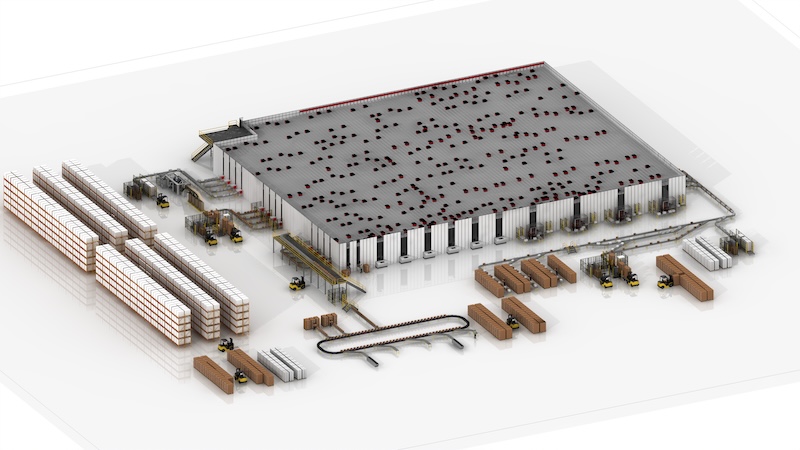
AutoStore has unveiled a series of new and upgraded hardware and software products designed to reduce manual intervention in warehouse operations and move its automated storage systems closer to “lights-out” fulfillment.
The company’s Fall 2026 product announcement includes new technology for handling different bin and case sizes, robotic picking for smaller businesses, AI-assisted system design and investment planning, and predictive maintenance capabilities.
AutoStore says the additions build on its CubeVerse software platform and AutoStore Intelligence technology, which it introduced earlier this year as part of a broader strategy to increase the autonomy of fulfillment operations.
Parth Joshi, chief product officer and president at AutoStore, says: “Autonomy should not require businesses to take a leap of faith.
“The opportunity is to remove the practical barriers one by one. That means reducing variability, manual handoffs and the operational effort required to keep automated systems running.
“What we hear directly from customers is also driving us to bring more workflows and use cases onto the AutoStore platform, from buffering and case handling to automated piece picking.”
Among the new products is FlexBinsPort, which allows all standard AutoStore bin heights to be handled at a single workstation. AutoStore estimates that the system can improve storage utilization by 10-15 percent while increasing labor efficiency. FlexBinsPort is scheduled for release in the fourth quarter of 2026.
The company is also expanding AutoCase, its technology for combining case and individual-item picking within an AutoStore installation. From the first quarter of 2027, AutoCase will support cases measuring up to 600 x 400 mm.
Multiple AutoCase stations will also be able to work on the same task group simultaneously, creating a continuous case flow for processes such as palletizing and packaging. AutoCase is already in production use at Nowaste Logistics in Sweden and Komplett in Norway.
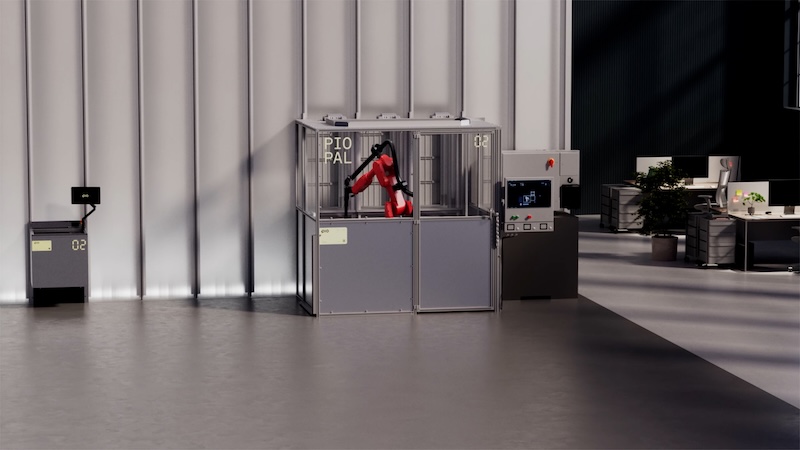
AutoStore is extending robotic piece picking to smaller businesses through Pio Pal, offered through a Robotics-as-a-Service model. The company says the system can achieve packing throughput of up to 540 order lines per hour for pre-picked orders.
New pre-picking capabilities can increase performance by up to three times without additional labor, according to AutoStore. Pio Pal is already operating at Norwegian apparel company Famme, with further deployments planned for the first quarter of 2027.
AutoStore is also expanding its VersaAI robotic piece-picking technology with automated item induction, workstation barcode scanning and robotic cycle counting for inventory validation.
On the software side, CubeExplore uses generative AI, operational benchmarks and comparable project data to model potential returns on AutoStore investments. AutoStore Intelligence within CubeStudio adds an AI-powered design assistant for comparing warehouse system configurations before deployment.
The company is also introducing CubeFleet, which combines maintenance alerts, guidance and work-order creation within a fleet management system covering individual sites or multiple facilities.
CubeFleet uses live data from the CubeAnalytics platform and predefined maintenance thresholds to identify equipment requiring attention. AutoStore estimates that the technology could reduce unplanned downtime by 35-45 percent.
Joshi says: “Together, these steps move us closer to lights-out fulfillment. It is not one giant leap, but a series of practical advances that make greater autonomy increasingly achievable.”
