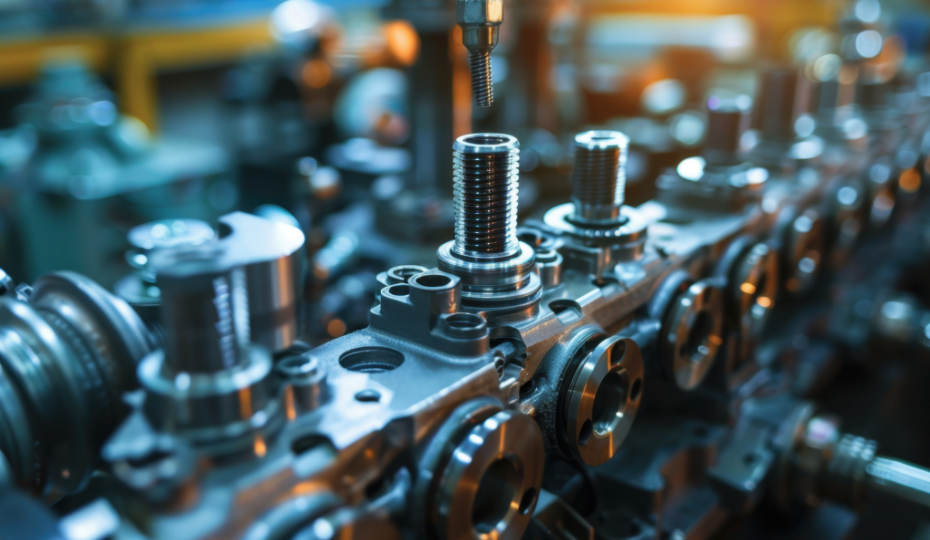
Importance of end-of-line testing
Before a product leaves the production line, manufacturers need to ensure that it is performing well and is of high quality.
That’s why end-of-line testing is necessary. It works as a final quality gate. Testing may include measurements such as balance, vibration, torque, pressure, electrical performance, dimensions, or functional operation.
The challenge is not just to find equipment that can perform a measurement. The system needs to produce repeatable results at production speed while fitting into the manufacturer’s existing workflow.
Modern EOL systems can bring together measurement, automated sequences, data collection, reporting, and production-line integration.
For manufacturers working with rotating components, balance testing equipment can be an important part of this final quality check. It helps to verify that assemblies meet balance requirements before they move beyond the production line.
End-of-Line Testing
End-of-line testing involves inspection and functional testing carried out near the end of a manufacturing process. It is used to determine whether a finished product or assembly meets the set requirements.
There are two types of testing:
- In-process testing – testing during manufacturing to identify problems initially.
- End-of-line testing – final verification before the product moves to shipping or out to the customers.
EOL testing can provide a final pass/fail decision, identify defects, document measurements, and create traceability records.
It can also generate production data that helps manufacturers identify recurring defects and process problems.
Function of End-of-Line Testing Equipment
Depending on the application, equipment may position and secure the product, conduct automated measurements, simulate operating conditions, measure physical or electrical characteristics, and compare results against predetermined limits, produce automatic pass or fail decisions, record the results and identify defective units.
For example, industrial EOL systems can incorporate measurements involving force, vibration, pressure, temperature, distance, strain, and other parameters.
Key Types of End-of-Line Testing
The types of End-of-Line testing are:
Functional Testing
It helps to understand if the final product performs the intended function.
Dimensional and Measurement Testing
Confirms that components or assemblies fall within specified tolerances.
Performance Testing
Measures characteristics such as speed, torque, pressure, force, vibration, or output.
Electrical Testing
Used for products and assemblies requiring voltage, current, resistance, communication, or electronic-function verification.
Balance and Vibration Testing
It is particularly relevant to rotating components and assemblies. The imbalance can lead to vibration, noise, premature wear, and performance problems.
This is a good place to introduce balance testing equipment as an important category of EOL technology for manufacturers working with rotating components.
How Manufacturing Test Automation Changes EOL Testing
Automation can reduce manual measurement and decision-making while making test procedures more consistent.
The benefits include:
- Repeatable test sequences.
- Reduced operator-dependent variation.
- Faster cycle times.
- Automatic data recording.
- Consistent pass/fail decisions.
- Reduced manual data-entry errors.
- Easier production traceability.
Automation isn’t always the best in every situation. Manufacturers should consider production volume, product variation, cycle time, labor requirements, and the complexity of the testing process.
What Manufacturers Should Look for in EOL Equipment
These are a few things that manufacturers should keep in mind when it comes to EOL equipment:
Accuracy and Repeatability
Equipment needs to deliver dependable measurements within the required tolerance.
Throughput
The system must keep pace with the production line. A highly accurate tester that creates a bottleneck may not suit high-volume manufacturing.
Flexibility
Manufacturers should consider whether the system can accommodate different product configurations, fixtures, recipes, or future production requirements.
Data and Traceability
Look for automatic recording of test results, serial numbers, test parameters, and pass/fail outcomes.
NIST’s smart manufacturing work highlights the importance of collecting and reusing manufacturing data to improve production-system performance.
Integration
Discuss compatibility with PLCs, MES platforms, databases, sensors, and existing automation infrastructure.
Maintenance
Equipment should be accessible for calibration, servicing, replacement of wear components, and troubleshooting.
Why Cycle Time and Production Throughput Matter
EOL equipment operates within a larger production system.
Manufacturers should determine:
- Required cycle time.
- Expected daily production.
- Number of shifts.
- Changeover frequency.
- Product variants.
- Operator involvement.
- Test and retest procedures.
A good system should perform the required measurements without becoming a bottleneck.
Automotive EOL testing, for example, emphasizes throughput because it must operate in series-production environments.
Data Collection and Traceability
Just displaying a green “PASS” indicator is no longer enough for many manufacturers.
Modern systems can record individual test results and associate them with a specific serial number or production unit.
This information can help with:
- Quality investigations.
- Root-cause analysis.
- Warranty investigations.
- Process improvement.
- Production reporting.
- Customer documentation.
Connected testing systems can support broader smart-manufacturing strategies by making production data available beyond the individual test station.
Choosing a Testing Equipment Partner
Manufacturers should evaluate more than the machine itself. The supplier’s engineering expertise, customization capabilities, integration support, calibration, training, and after-sales service can all affect the long-term value of an EOL system.
The importance of working with a BTI equipment provider that understands the specific measurement and production requirements of the application.
Why Balance Testing Deserves Special Attention
Rotating assemblies can require precise balance verification because imbalance can create unwanted vibration and affect operating performance.
This is why manufacturers should consider:
- Measurement accuracy.
- Repeatability.
- Automatic correction where appropriate.
- Fixture design.
- Rotor or assembly compatibility.
- Production cycle time.
- Data recording.
- Ease of calibration and maintenance.
Final Checklist for Manufacturers
Before choosing end-of-line testing equipment, manufacturers should ask:
- What characteristics must be tested?
- What accuracy and repeatability are required?
- What is the target cycle time?
- How much automation is appropriate?
- What product variations must the system accommodate?
- How will test results be recorded?
- Does the equipment integrate with existing factory systems?
- How will calibration and maintenance be handled?
- Can the system be expanded as production requirements change?
- Does the supplier provide engineering and technical support?
Conclusion
EOL testing creates a reliable final verification process that combines measurement accuracy, repeatability, speed, automation, and traceability.
The right end-of-line testing equipment should fit the manufacturing process rather than force the production line to adapt around the machine.
Manufacturers evaluating EOL solutions should look for equipment and engineering support that align with their specific product, production volume, measurement requirements, and long-term quality objectives.
