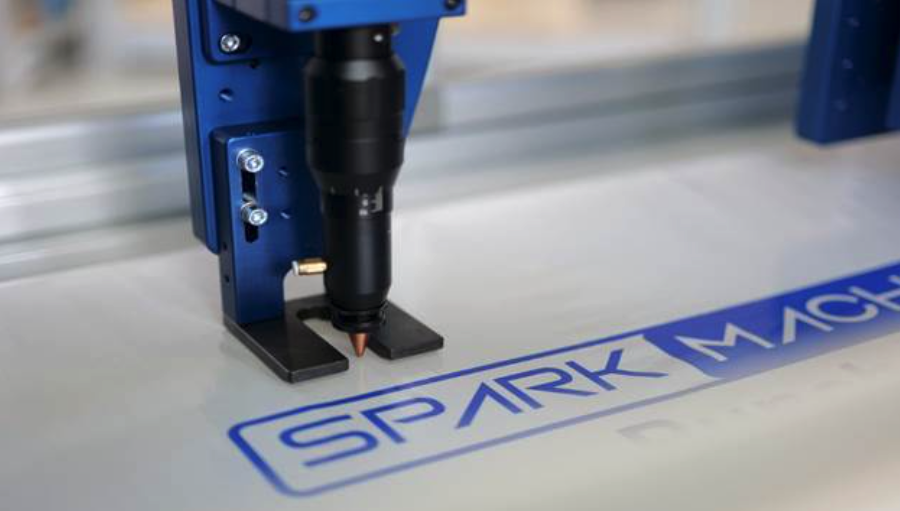
In flexible food packaging, controlling material permeability is essential for preserving freshness and reducing global food waste.
While Modified Atmosphere Packaging (MAP) regulates gas exchange between the product and its environment, its success relies entirely on the microscopic precision of film perforations.
Spark Machinery has elevated this standard by integrating state-of-the-art machine vision with laser micro-perforation, creating an automated, self-diagnosing solution that operates entirely in real time.
Overcoming Mechanical Limitations
Traditional mechanical micro-perforation tools suffer from inevitable wear and lack continuous oversight. Physical contact creates inconsistencies caused by blade degradation or microscopic variations in the plastic film, where a single defective hole can ruin an entire reel.
Spark Machinery overcomes this by pairing high-power laser configurations with high-resolution cameras that serve as an objective quality inspector across lines operating at speeds up to 400 m/min.
High-Speed Vision & Real-Time Metrics
Capturing images in just 1 microsecond (µs), the machine vision system conducts up to 28 complete diagnostic checks per second. This continuous feedback loop analyzes three critical structural metrics:
- Free Area Computation: Measures the exact open surface area to guarantee precise gas transmission rates (oxygen, carbon dioxide, and ethanol) tailored to specific food items.
- Circumference Deviation: Detects variance between the actual perforation and target diameter, automatically tweaking settings to correct shape distortion.
- Melt Ring Assessment: Monitors the ratio between the melt ring and open zone, triggering automatic lens focus adjustments to ensure real-time calibration.
Cutting-Edge Innovations
To meet demanding converter standards, the system incorporates specialized hardware and software features:
- Sub-Micron Membrane Detection: Unvaporized polymer layers over 1 micron thick can leave micro-membranes that appear clear to the naked eye but block gas flow. The vision software identifies these functional failures and prompts instant correction.
- Laser Source Pre-Excitation: By maintaining laser gas in a near-ignition state, the system ensures optimal power stability from millisecond zero, eliminating skipped punctures during line startups or operational pauses.
When variances are detected due to shifts in film thickness or ambient temperature, the central controller dynamically adjusts laser power, pulse duration, and focal distance on the fly.
Real-Time Self-Correction and Advantages
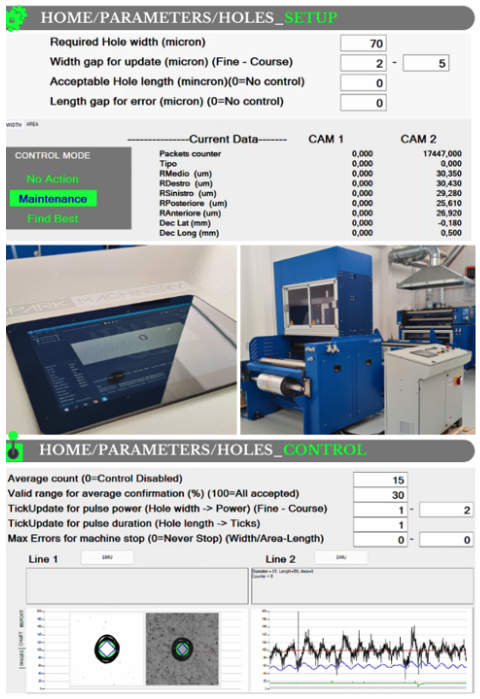
Transitioning from passive inspection to real-time self-correction yields direct operational benefits. Material waste is virtually eliminated by preventing out-of-spec production, while comprehensive digital metrics generated for every reel provide full supply-chain traceability.
Ultimately, perfecting micro-perforation accuracy extends food shelf life, delivering both sustainability and economic returns for converters and brand owners.
Key Technical Specifications
- Image Capture Speed: 1 μs
- Inspection Rate: 28 Hz (diagnostic checks per second)
- Membrane Identification: > 1 micron thickness
- Adjustable Variables: Laser power, pulse duration, and focus
- Configuration Options: Available as a standalone system with integrated unwinding/rewinding units, or custom-tailored to fit into existing production configurations
- Maximum Line Speed: Up to 400 m/min
For more information on camera-assisted laser micro-perforation: https://www.sparkmachinery.com/machines/laser-perforators
Contact us: info@sparkmachinery.com
