
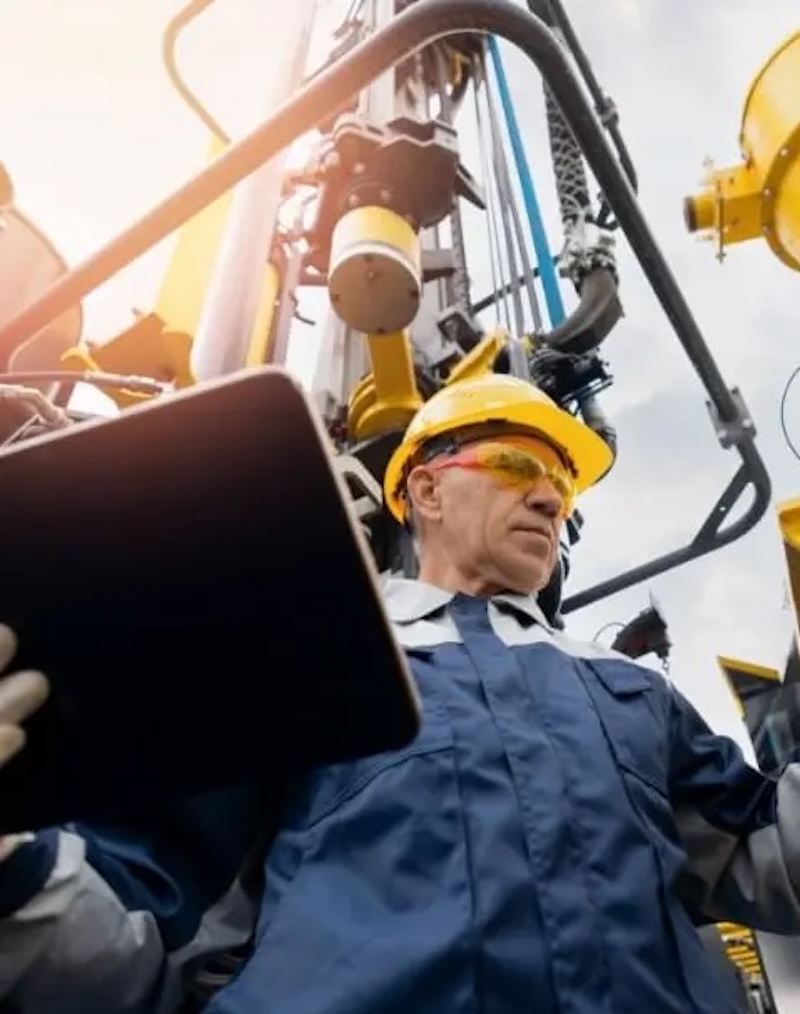
For decades, automation on the plant floor meant machines doing the same thing very fast, very reliably and very literally.
A robotic arm welded exactly where it was told, a conveyor moved at a fixed speed, and a programmable controller executed rules written by an engineer months earlier.
That model built the modern industrial economy. But it has a ceiling: rule-based automation cannot handle the messy, variable, decision-heavy work that still fills a factory. Intelligent automation is what happens when you add judgement to the machinery.
From fixed rules to adaptive workflows
The distinction between traditional and intelligent automation is the difference between a system that follows instructions and one that responds to conditions. Classic automation executes a predefined sequence.
Intelligent automation combines that mechanical capability with AI – computer vision, machine learning, predictive models and increasingly agentic reasoning – so the system can perceive what is actually happening and adapt.
On a plant floor, that looks like a line that adjusts its own parameters when a sensor detects drift, a quality station that learns to recognise new defect types, or a scheduling system that reshuffles production in real time when a supplier shipment is late.
The machinery is not new; the intelligence layered on top of it is. As coverage of the field has noted, this marks a shift from conventional rule-based automation toward self-optimising systems capable of retrieval, reasoning and autonomous decision-making.
Where the returns show up first
Predictive maintenance is the flagship use case, and the numbers explain why. By analysing vibration, temperature and performance data, AI models forecast equipment failures before they happen.
Industry figures cited across the sector put the impact at roughly 25 to 30 percent lower maintenance costs and 35 to 45 percent less downtime. On a plant where an hour of unplanned stoppage costs a fortune, that is a board-level result, not a marginal efficiency.
Quality control is a close second. AI-driven vision systems detect anomalies early, catching defects while they are still cheap to fix and cutting the waste that flows from discovering a problem three steps too late.
Robotics & Automation News has explored exactly this territory in its look at driving efficiency in manufacturing with intelligent automation beyond robotics, and the throughline is consistent: the biggest gains come from the intelligence around the machines as much as the machines themselves.
The convergence of AI, IoT and robotics
Intelligent automation rarely arrives as a single product. It emerges from the convergence of connected sensors, machine learning and physical automation. The IoT layer supplies the continuous data – every temperature reading, cycle time and energy draw.
The AI layer turns that data into forecasts and decisions. The robotics layer acts on them. When these three work as one system, a plant stops being a collection of machines and starts behaving like a responsive organism.
This convergence also changes what a production line can economically produce. Traditional mass production optimised for making the same thing millions of times.
Adaptive, intelligent lines make personalised or small-batch output viable at costs that used to require mass scale, because the system can reconfigure itself rather than waiting for a human to retool it.
Agentic AI enters the factory
The newest frontier is agentic AI – systems that do not just predict but plan and execute multi-step processes with limited human intervention.
Instead of flagging that a machine will fail, an agent can schedule the maintenance window, order the part, reroute production around the affected cell and notify the supervisor, citing its reasoning at each step. This is automation that manages workflows, not just motions.
That capability raises the stakes on governance. An agent that acts autonomously on the plant floor needs clear boundaries, human oversight for high-consequence decisions, and auditable logs of what it did and why.
The manufacturers moving fastest are the ones building this discipline in from the start, treating trust and safety as design requirements rather than afterthoughts.
Teams delivering intelligent automation services increasingly focus on exactly this: agentic workflows that can plan and execute multi-step processes while staying within defined guardrails.
Getting started without boiling the ocean
The failure pattern in industrial AI is the moonshot: a sprawling “smart factory” programme that promises everything and delivers a pilot that never scales.
The successful pattern is narrower. Pick one line or one asset class, target a metric with obvious cost – unplanned downtime, scrap rate, energy per unit – and prove the return there. A focused win builds the data foundation, the internal skills and the executive confidence to expand.
The other reality is that adopting intelligent automation is as much a change-management challenge as a technical one.
Operators need to trust the system’s recommendations, maintenance teams need new skills, and leadership needs to communicate the shift clearly, both internally and to customers.
In asset-heavy sectors such as energy, where these deployments are often highest-value, firms frequently work with a specialist oil and gas marketing agency to articulate how automation improves safety, reliability and sustainability to stakeholders who care deeply about all three.
The plant floor as a decision engine
The endgame of intelligent automation is a plant floor that no longer just makes things but continuously decides how to make them better. Every sensor reading becomes an input, every AI model a source of judgement, and every robot an actuator for decisions made in real time.
The manufacturers who get there will not be the ones who bought the most technology. They will be the ones who deployed it with focus, governed it with discipline, and treated intelligence – not just automation – as the goal.
