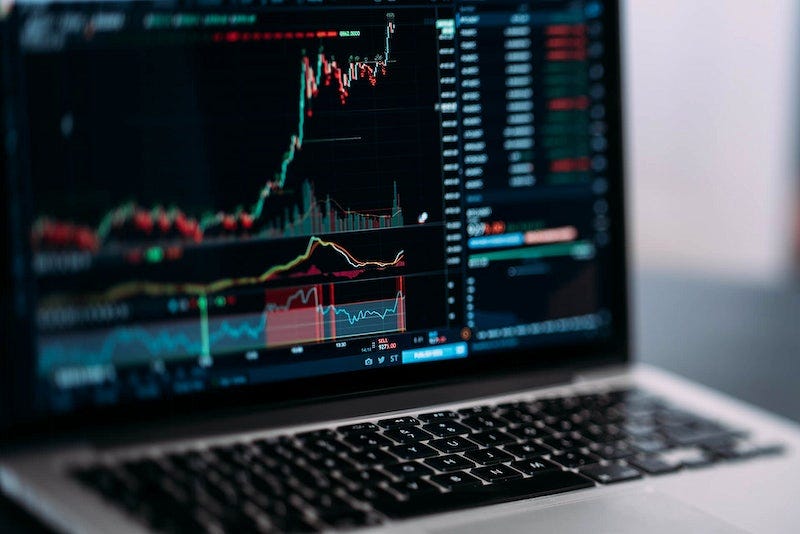
A fast trading system is not always a reliable one. According to the Bank for International Settlements, automated and algorithmic trading now represents a significant share of activity across many financial markets, making robust risk controls more important than ever.
When you build or evaluate an automated strategy, your biggest advantage often comes from accurate risk calculations rather than faster execution alone.
Speed Without Risk Control Creates Expensive Mistakes
Automation may be able to strip emotion out of trading, but it cannot kick out poor assumptions. That is why, if your algorithm enters trades without accounting for potential losses, available margin, or capital exposure, it might keep making the same error hundreds of times before you even discover it.
Dependable systems these days view a trade as a carefully thought-out choice. A strategy needs to be capable of predicting different scenarios, assessing the financial implications, and filtering the trades based on risk levels before an order is placed in the market.
Such a way of doing things increases uniformity and safeguards the profitability over the long term.
Strong Algorithms Begin With Numbers That Matter
Many traders focus heavily on entry signals while giving less attention to the calculations that determine survival during changing market conditions.
Like other automated systems that depend on continuous data analysis to improve reliability, trading algorithms rely on accurate position sizing more than any technical indicator to support long-term profitability.
Before each order, your automated system needs to determine the expected profit and loss, risk-to-reward ratio, account exposure, margin requirements, and maximum drawdown that is acceptable.
Studies by the CFA Institute continually demonstrate that prudent risk management serves to strengthen the ability of portfolios to withstand market turmoil, so such calculations become a practical necessity rather than a feature one can do without.
Better Automation Starts With Accurate Risk Estimates
Every automated strategy is more powerful if you check every trade with care before it becomes a reality.
A trustworthy Contract for Difference or CFD calculator helps you figure out the size of your position, value of each pip, margin required, and potential profit or loss only with the help of up-to-date market conditions instead of using rough estimates.
Carrying out these computations can really limit guesswork, which is something you need to always avoid once you infuse your money into the market.
Besides, your automation logic could also benefit from these pre-trade checks as they will keep risk level in line, even when market volatility changes fast.
Since automated trading systems are taking care of bigger trading volumes globally, pre-trade calculations which are quite precise are becoming a layer of protection that’s just added as an afterthought.
Drawdown Analysis Reveals Problems Before They Become Expensive
Many trading strategies may appear quite convincing over a short backtesting period. It is because they emphasize returns rather than risk.
Professional developers, however, devote equal time to understanding losing periods as they do to profitable ones. With drawdown analysis, you can evaluate the extent to which your trading system’s capital might decrease before it nearly returns to the original level of investment.
Also, with knowledge of historical drawdowns, you can alter leverage decisions, change position sizing, or even lower the number of trades before launching the system in real markets.
Continuous Risk Monitoring Keeps Automated Systems Reliable
Financial markets constantly change because of economic events, interest rate decisions, geopolitical developments, and unexpected volatility. A trading model that performed well six months ago may produce very different outcomes today.
You need to continuously monitor performance metrics instead of relying only on historical testing. Most of the time, regular reviews of win rate, average loss, maximum drawdown, and capital utilization allow your automated strategy to adapt before small issues develop into larger failures.
Even the International Organization of Securities Commissions states that ongoing monitoring and effective risk governance remain essential elements of responsible automated trading environments.
Reliable Automation Depends on Smarter Decisions
Some of the best automated trading systems these days are built on well-thought-out calculations instead of blind speed.
If all positions are assessed using solid risk metrics, the approach will not only gain consistency and predictability but also become well-equipped to handle market shifts.
So, if you want automation that performs beyond favorable market cycles in your agenda, make risk calculations part of every trading decision you’ll make.
In most cases, careful planning today can help you build a system that remains dependable long after market conditions inevitably change.
