For decades, when technology companies looked to establish a presence in the Middle East, the conversation typically revolved around Dubai or Abu Dhabi.
But as global competition for AI, robotics, and deep-tech investment intensifies, a growing number of smaller, more agile innovation hubs are seeking to carve out their own place in the technology landscape.
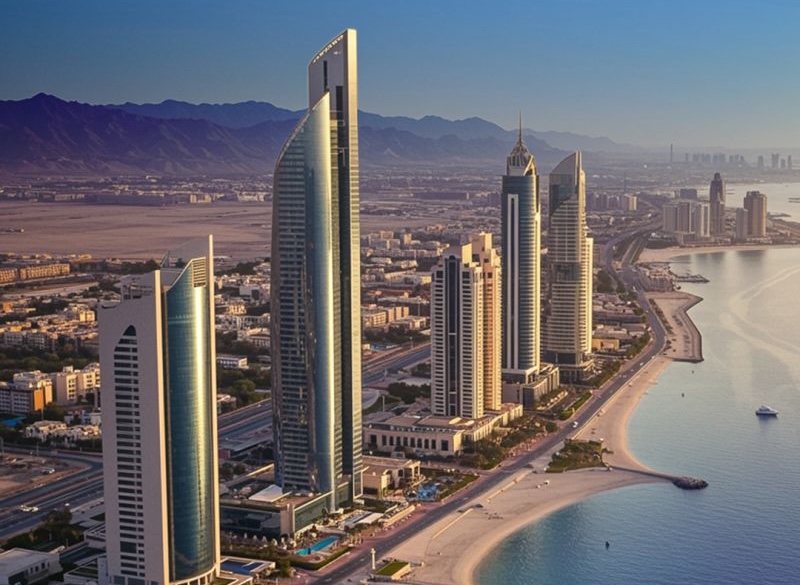
Among them is Innovation City Ras Al Khaimah, a technology-focused free zone located in the Emirate of Ras Al Khaimah in the United Arab Emirates.
Positioned approximately 45 minutes from Dubai, Innovation City is targeting startups and scaleups working in areas such as artificial intelligence, robotics, Web3, gaming, health technology, and other emerging sectors.
The organization describes itself as the world’s first AI-powered free zone and has attracted more than 1,000 startups as part of a broader effort to establish Ras Al Khaimah as a destination for entrepreneurs looking to expand into the Middle East.
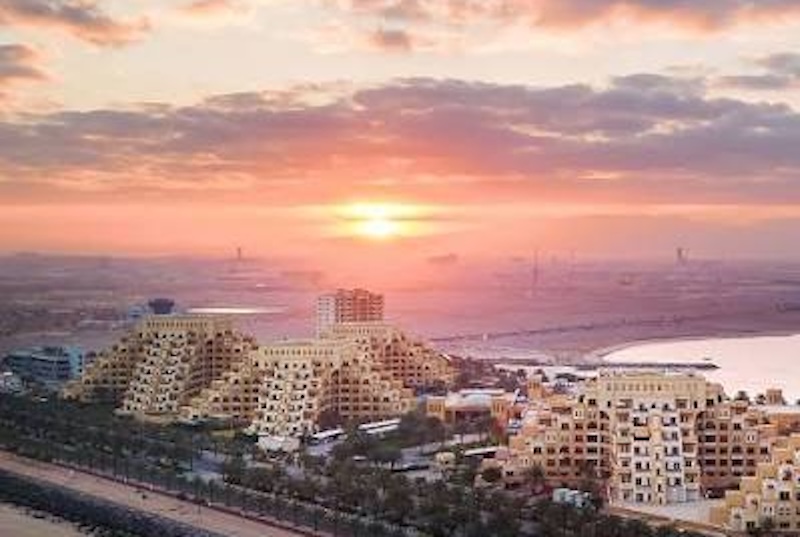
While much of the attention surrounding AI and robotics development in the Gulf region has focused on the UAE’s larger cities, Innovation City argues that smaller ecosystems can offer advantages in speed, flexibility, and founder support.
The timing is significant. The UAE has emerged as one of the world’s most ambitious adopters of artificial intelligence, with substantial investments in digital infrastructure, automation, advanced manufacturing, logistics, and emerging technologies.
Governments across the region are increasingly seeking to diversify their economies beyond traditional sectors such as oil and gas while positioning themselves as global centers for innovation.
In this interview, Paul Dawalibi, CEO of Innovation City Ras Al Khaimah, discusses the UAE’s growing role in AI and robotics, why regulatory speed and simplicity matter when competing for technology startups, how smaller innovation hubs can challenge established global centers, and what role the Gulf region may play in shaping the future of automation and intelligent systems over the next decade.
For robotics companies exploring international expansion opportunities, Dawalibi offers an insider’s perspective on how the Middle East’s technology ecosystem is evolving and where new opportunities may emerge.
Interview with Paul Dawalibi

Robotics & Automation News: Innovation City describes itself as the world’s first AI-powered free zone. In practical terms, what does that actually mean for companies operating there day to day?
Paul Dawalibi: It means AI is not a feature. It is the foundation. Innovation City was purpose-built for the industries defining the next decade of robotics, AI, Web3, gaming, healthtech, and other frontier technologies.
Not a general free zone that welcomes technology as an afterthought. Every touchpoint is designed for founders who are building things that did not exist five years ago. In practice: AI-powered support services from day one.
An AI-assisted business plan tool built in. The world’s first blockchain-based digital business identity underpinning everything. Founders here spend their time building. Not navigating systems designed for a different era.
R&AN: The UAE has become increasingly active in AI, robotics, logistics, and automation. Why do you think the region is attracting so many emerging technology companies right now?
PD: Because ambition and infrastructure finally exist in the same place at the same time. The UAE has committed to transitioning 50 percent of federal operations to Agentic AI within two years.
That is not a strategy document. That is a procurement signal and the world’s most ambitious founders are reading it clearly. Add geography.
Four hours from a third of the world’s population. For companies building in robotics, logistics and automation, proximity to real deployment markets is not a nice-to-have.
It is the difference between a pilot and a business. The region is not just attracting technology companies. It is becoming where technology gets proven.
R&AN: Ras Al Khaimah is competing with much larger and better-known innovation hubs such as Dubai, Abu Dhabi, Singapore, London, and Silicon Valley. What advantages can a smaller, more agile ecosystem offer founders?
PD: The founders we are built for are not choosing by geography or reputation. They are weighing speed, access, and the ability to move without friction from day one.
Innovation City was designed for one kind of person, the founder who refuses to accept yesterday’s rules. Who needs to be operational in days, not quarters. Who wants to spend their energy building, not navigating.
For that founder, the question of which hub has more name recognition is completely irrelevant. Speed is the only currency that matters. And we built everything around that.
R&AN: Robotics and automation companies often need more than software-friendly regulation – they also require testing environments, industrial partners, manufacturing access, and logistics infrastructure. How is Innovation City supporting those kinds of physical technology businesses?
PD: We are honest about where we are. Innovation City is not a sprawling industrial campus. But what we offer is more targeted than most free zones would admit.
Companies can bring in components and run light assembly operations directly within the free zone – which for early-stage hardware and robotics businesses means moving from prototype to physical product without leaving the ecosystem.
That is a meaningful step that most purely digital free zones cannot offer. On the infrastructure side, our data centre, run in partnership with IOPn, provides subsidized AI services to our companies.
For robotics companies building AI-driven systems, that is not a peripheral benefit. It is core infrastructure they would otherwise pay heavily for.
RAK as an emirate adds the broader layer, manufacturing facilities, logistics networks and port access, that complements what we provide inside the free zone.
The combination is more complete than the free zone footprint alone suggests. We are building toward more. And we are doing it without pretending we are already there.
R&AN: Many governments talk about becoming global AI hubs, but relatively few succeed in building lasting ecosystems. What mistakes do you think countries or regions commonly make when trying to attract technology startups?
PD: The most common mistake is confusing announcements with ecosystems. We have all seen it – the strategy launch, the rebranded agency, the sovereign fund with a splashy press release.
And then nothing. Because founders are not reading press releases. They are asking one question: Can I build here, fast, without the system getting in my way?
The second mistake is treating founders like applicants. The moment a government starts asking builders to prove their worthiness to enter, it has already lost. The best founders have options. They go where they feel trusted, not processed.
At Innovation City we started from the opposite direction entirely. Default yes. Speed as strategy. Remove everything that stands between an ambitious founder and their first day of building.
The proof is not in what we say. It is in how fast we move and how well we understand our customer.
R&AN: The Middle East has traditionally been associated with sectors such as oil, gas, construction, aviation, and logistics. How do you see robotics and AI transforming those industries across the Gulf region over the next decade?
PD: The Gulf’s traditional industries are not going away – they are going to be rebuilt from the inside.
Robotics in construction and infrastructure, AI-driven predictive maintenance in oil and gas, autonomous logistics networks across ports and supply chains that are already among the busiest in the world.
The advantage the region has is that the incumbent players here have both the capital and the political will to invest in transformation at a scale that most markets cannot. What changes over the next decade is not which industries define the Gulf – it is how those industries operate.
The companies building that transformation infrastructure right now, in places like Innovation City, are not passengers in that story. They are writing it.
R&AN: There is growing global competition for technical talent, particularly in AI and robotics engineering. What is Innovation City doing to attract and retain founders, researchers, and highly skilled engineers from around the world?
PD: The best technical talent in the world follows environments where they can move fast, own their work, and keep what they earn. That is what we built. A free zone that understands the needs of technical talent because we’ve been there.
The proof is already here. SPARQ, an AI-native game engine built by over 20 senior engineers, chose Innovation City after building across Europe. They came deliberately. Raised an 8.5 million dollars seed round backed by Andreessen Horowitz. From Ras Al Khaimah.
Licensing in days. Zero income tax. Full support on visas, employment and ecosystem integration from day one. That is what makes the difference. Ras Al Khaimah also provides an unparalleled lifestyle.
R&AN: You’ve emphasized “zero bureaucracy” and digital-first licensing systems. How important is regulatory speed and simplicity when competing for startups internationally?
PD: It is not a differentiator. It is the baseline. A founder choosing where to build is making a decision under pressure – capital is finite, and every week lost to paperwork is a week not spent building.
If your licensing process takes months, you have already lost them before the conversation starts. At Innovation City, companies are licensed in two to three days. Our cost structure is built entirely for startup economics. But speed and cost are table stakes.
What compounds over time is the simplicity of staying – compliance that does not become a burden, a blockchain-based digital identity that travels with you, infrastructure that scales as you do. Zero bureaucracy is not a slogan. It is the only way we know how to operate.
R&AN: Looking ahead five to 10 years, what role do you expect the UAE – and specifically Ras Al Khaimah – to play in the global robotics and automation industry?
PD: Ras Al Khaimah will be the primary proving ground for robotics and automation at scale. The combination of government conviction, physical infrastructure, regulatory agility and geographic reach creates conditions that very few places in the world can replicate.
What gets built and validated here over the next five years will be exported globally – the companies, the frameworks, and the identity infrastructure that makes autonomous systems trustworthy across borders.
The UAE is not positioning itself as a follower in this industry. The ambition is to be the place where the global standards get written. Ras Al Khaimah is becoming the Silicon Valley of the Middle East – and Innovation City is where that future is being built.
