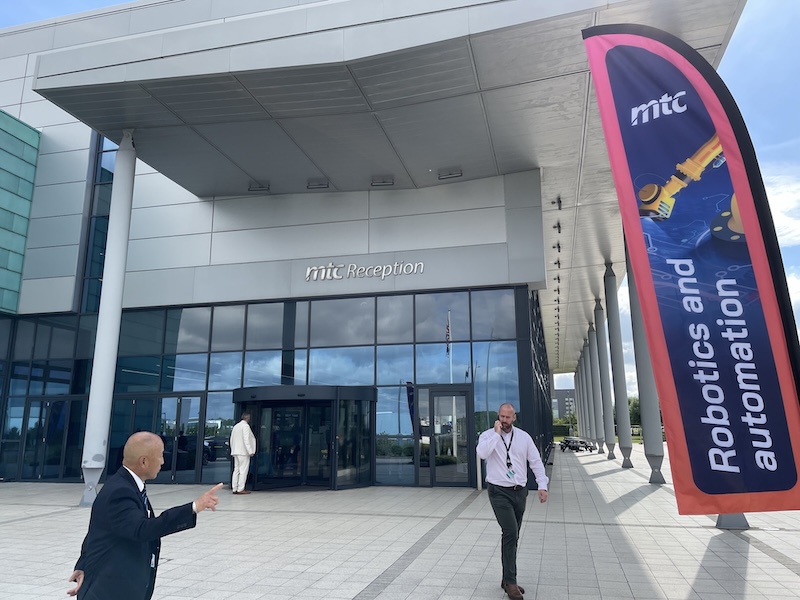
Readers not old enough to remember what are often referred to as the “Thatcher years” may not appreciate how dramatically the UK’s economy changed during the 1980s.
Like some other Western economies, particularly the US, the UK increasingly shifted its focus toward services, finance, retail, and consumer spending, while manufacturing became a smaller part of the national economy.
Before Margaret Thatcher became prime minister in 1979, manufacturing accounted for roughly 30 percent of UK national income and employed around 6.8 million people.
Today, the sector accounts for less than 10 percent of the economy and employs around 2.6 million people. The UK has fallen from being one of the world’s leading manufacturing nations to somewhere around 12th to 14th place globally, depending on the measure used.
None of that makes Mike Wilson, chief automation officer at the Manufacturing Technology Centre (MTC), pessimistic about the future. In fact, Wilson believes the UK can significantly expand its manufacturing base again, provided businesses are willing to embrace new technologies.
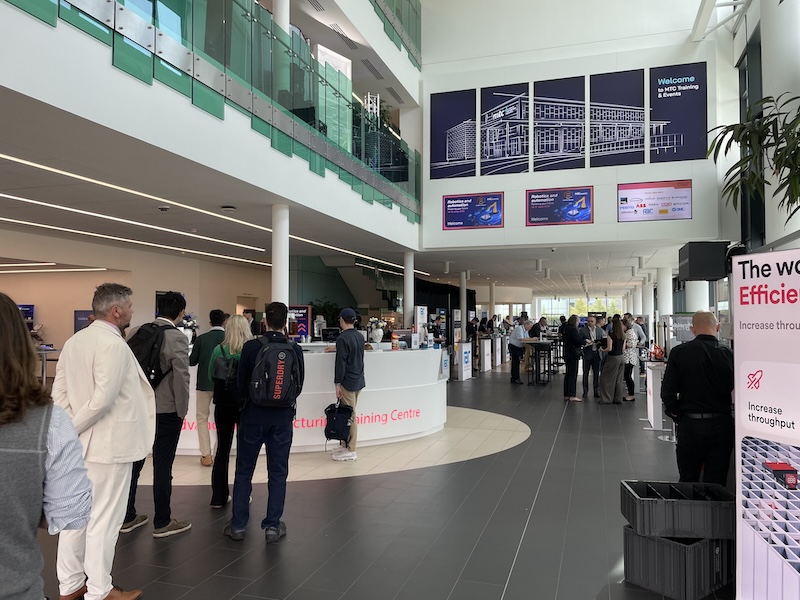
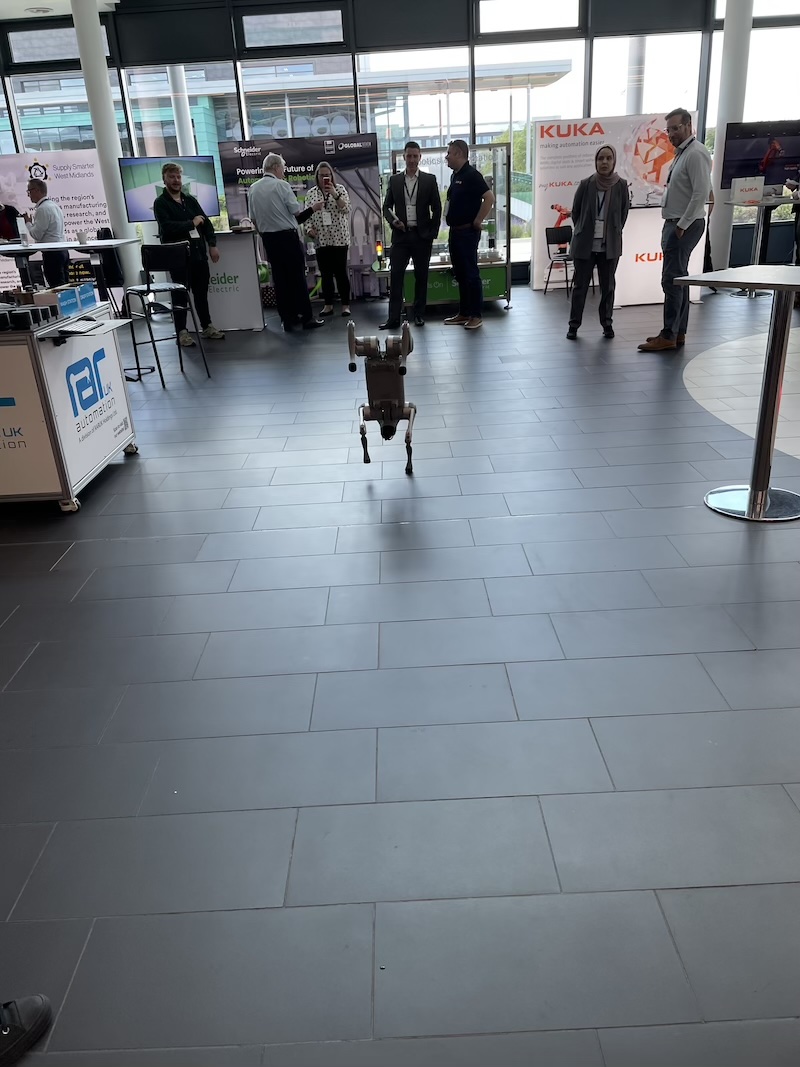
In an interview with Robotics & Automation News, Wilson says: “I remember Margaret Thatcher talking about service, economy, finance, and fundamentally manufacturing didn’t matter.
“Personally, I think that was a big mistake. Our manufacturing sector has declined over the years. We’re still the 12th largest manufacturing nation in the world.”
The timing may be right. Governments in both the UK and the US are placing renewed emphasis on manufacturing, driven by concerns over supply-chain resilience, strategic independence, economic growth, and reducing dependence on overseas production.
Wilson believes the MTC’s newly opened Robot Experience Centre can help accelerate that shift by encouraging more manufacturers – particularly small and medium-sized businesses – to adopt robotics and automation.
The UK currently has a robot density of around 119 robots per 10,000 manufacturing employees, placing it well behind many of the world’s leading industrial nations. But Wilson sees that not as a weakness, but as an opportunity.
“We did have, back in the 70s, a manufacturing sector that was at least twice as big as what we’ve got now as a percentage of GDP,” says Wilson. “There’s no reason why we can’t go back there. But to do that, we have to employ the technology.”
As someone entering the workforce during the final years of Britain’s shift away from manufacturing, I find that argument persuasive.
Rising labor costs in Asia, geopolitical tensions, supply-chain disruptions, and transportation costs are all changing the economics of global manufacturing.
Combined with advances in robotics and automation, those trends may make producing goods closer to home more attractive than it has been for decades.
Interview with Mike Wilson
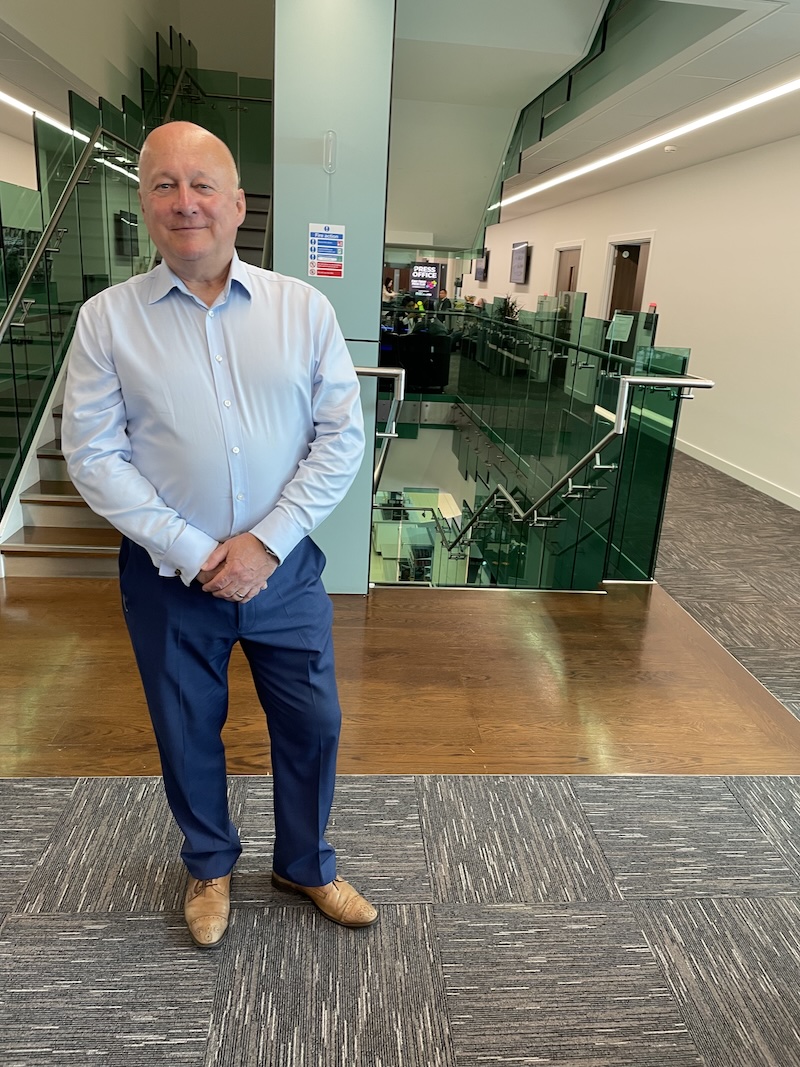
Robotics & Automation News: You’ve been involved in robotics for many years. Can you tell us about your role at the MTC?
Mike Wilson: I’ve been involved in robotics for more than 40 years, working for both users and vendors. I joined the Manufacturing Technology Centre nearly six years ago.
My role is slightly unusual because I don’t directly manage any of the technical teams. Instead, I focus on strategy, working with government, speaking at industry events, and promoting the benefits of robotics and automation.
A key part of my job is helping manufacturers understand how they can adopt these technologies. The MTC is a not-for-profit organization, so any surplus we generate is reinvested. Our measure of success is the impact we have in helping industry adopt new technologies and improve productivity.
R&AN: The UK has historically lagged some other countries in robotics adoption. Are you optimistic about the future?
MW: Yes, I am optimistic.
The UK is still behind many other countries when it comes to adopting robots and automation. Historically, we’ve had a very flexible labour market, which made it easier for businesses to rely on people rather than automation. Labour costs have also been lower than in some European countries.
However, the situation is changing. We have labour shortages and skills shortages across manufacturing, and businesses are looking for alternative ways to address those challenges. Automation is one of the most effective ways to do that.
We’re seeing growing interest in manufacturing generally, helped by initiatives such as the government’s industrial strategy. There’s a recognition that manufacturing remains important to the UK economy and that increasing productivity is essential.
At the same time, global uncertainty is encouraging companies to build more resilient supply chains and bring production closer to home. All of these factors are creating new opportunities for automation.
One of our biggest challenges is helping companies that have never bought a robot before. Many see automation as risky because they don’t understand the technology. What we find is that once a company installs its first robot, it gains confidence and often invests in more automation.
Our aim is to help businesses make that first step.
R&AN: Tell us about the new Robot Experience Centre and what it is designed to achieve.
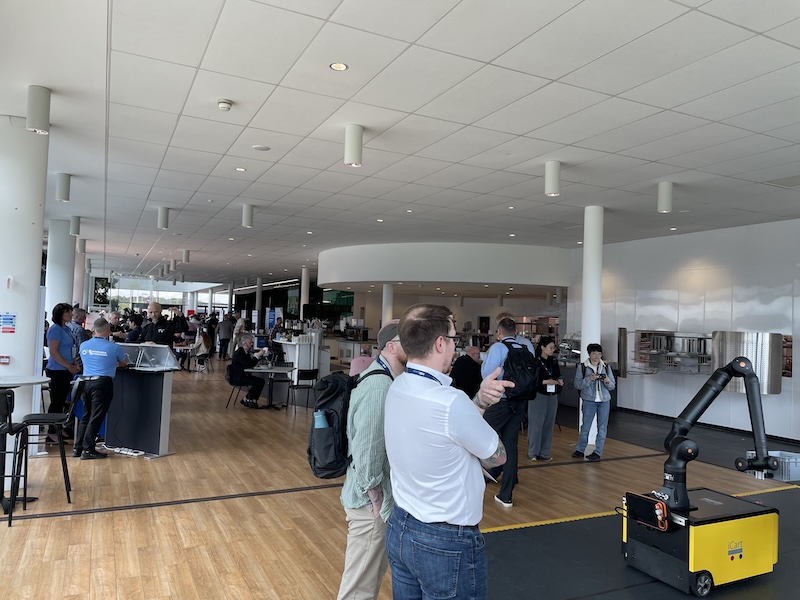
MW: We’ve invested in the Robot Experience Centre primarily to support SMEs.
The facility contains several robot systems that allow companies to see the technology in action, gain hands-on experience, and even bring in their own components so we can run practical trials.
The centre focuses on four common applications: robotic welding, palletizing, machine tending, and collaborative robots. These are among the most likely starting points for smaller manufacturers looking to automate.
Alongside the facility itself, we’ve introduced training programmes focused on the procurement of automation. Robot suppliers already provide training on programming and maintenance. Our focus is helping companies develop business cases, write specifications, and understand how to purchase automation successfully.
We’ve also established relationships with banks and finance providers so that businesses can be directed toward suitable funding options.
Because we are independent, we’re not trying to sell any particular robot or solution. Companies can come to us knowing they’ll receive impartial advice rather than a sales pitch.
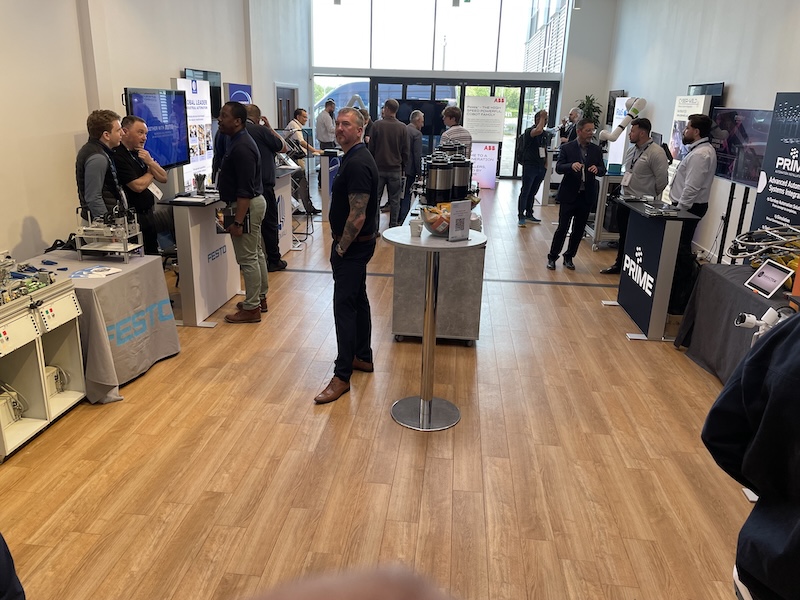
R&AN: How important are supply chains and SMEs to the future of UK manufacturing?
MW: They’re absolutely critical.
We do work with large companies such as Rolls-Royce and others, but their challenges are different. They generally know how to buy automation. The work we do with them is often focused on developing solutions that don’t yet exist commercially.
The bigger opportunity is within their supply chains. There are many more small and medium-sized manufacturers than there are large enterprises.
The UK has around 130,000 manufacturing businesses. Only a few thousand are large companies. Around 28,000 are medium-sized manufacturers employing between roughly 10 and 250 people.
Our estimate is that only around 8,000 of those businesses have even a single robot. That means tens of thousands of manufacturers have not yet started their automation journey.
Those businesses make up the overwhelming majority of UK manufacturing, so if we want the sector to grow, improve productivity, and remain competitive internationally, we need to help SMEs adopt automation.
R&AN: Do you believe manufacturing should play a larger role in the UK economy?
MW: Absolutely.
I remember the period when the UK increasingly focused on services and finance while manufacturing became less of a priority. Personally, I think that was a mistake.
The UK is still one of the world’s largest manufacturing nations, but manufacturing represents a much smaller share of the economy than it once did.
I believe we need a stronger manufacturing base, particularly given today’s uncertain global environment. Greater domestic manufacturing capability improves resilience, strengthens supply chains, and creates economic value.
Government initiatives such as the industrial strategy and programmes like Made Smarter are helping businesses adopt digital technologies and become more competitive.
Manufacturing currently represents around 10 percent of the UK economy. If we could significantly increase that contribution, it would have a major impact on economic growth and exports.
But achieving that requires investment in technology. We need greater adoption of robotics and automation because that’s how manufacturers remain competitive globally. We also face labour shortages, which means relying solely on people is no longer a viable long-term strategy.
Automation is not optional if we want to rebuild and grow UK manufacturing.
