
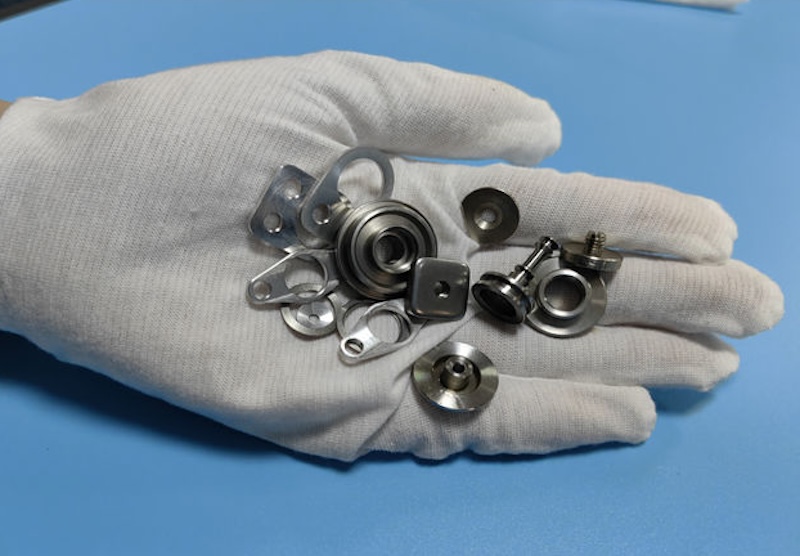
The rapid growth of robotics, factory automation, and intelligent manufacturing systems is transforming industrial production worldwide.
Modern manufacturing environments increasingly rely on highly precise mechanical systems capable of operating continuously with minimal deviation, especially as automation technologies become more advanced and interconnected.
From collaborative robots and automated assembly systems to sensor-driven manufacturing equipment, precision-engineered components are now fundamental to industrial automation performance.
As robotics systems become faster, smaller, and more intelligent, manufacturers require machining technologies capable of producing complex components with exceptional dimensional accuracy and repeatability.
Industrial technology publications such as Robotics & Automation News continue to highlight how robotics, automation, manufacturing, and intelligent systems are converging to reshape modern industry.
The Growing Precision Requirements of Automation Systems
Automation systems operate under increasingly demanding performance expectations. Modern robotics platforms require highly accurate mechanical components to support:
- Motion control stability
- Precision positioning
- Sensor integration
- High-speed operation
- Long-term durability
- Reduced vibration and wear
Even small dimensional inconsistencies can affect robotic accuracy, assembly reliability, and operational lifespan.
This is especially important in industries such as:
- Automotive manufacturing
- Electronics production
- Semiconductor equipment
- Warehouse automation
- Medical robotics
- Industrial IoT systems
As automation systems continue evolving toward higher speeds and greater complexity, the quality of precision-machined components becomes increasingly critical.
Why Swiss Machining is Well Suited for Robotics Manufacturing
Swiss machining technology has become one of the most effective manufacturing methods for producing miniature, complex, and high-tolerance industrial components.
Unlike conventional CNC turning processes, Swiss-type lathes support the material close to the cutting zone, significantly reducing vibration and improving machining stability during production. This enables manufacturers to achieve:
- Extremely tight tolerances
- Excellent concentricity
- Superior surface finishes
- Stable high-volume repeatability
- Efficient machining of miniature components
- Reduced secondary operations
These advantages make Swiss machining particularly valuable for robotics and automation applications where precision and consistency are essential.
Applications of Swiss Machined Components in Robotics and Automation
Modern automation systems depend on numerous precision-machined parts working together within highly controlled environments.
Common applications include:
Robotic Motion Systems
Industrial robots contain precision shafts, bushings, sleeves, and miniature turned components that directly influence movement accuracy and mechanical stability.
Swiss machining enables manufacturers to produce highly consistent motion-control components capable of supporting high-speed robotic operations.
Sensor and Vision Systems
Automation equipment increasingly relies on advanced sensors and machine vision technologies. These systems often require miniature housings, threaded fittings, precision alignment parts, and conductive metal components manufactured to extremely tight tolerances.
Connector and Communication Components
Smart factories and industrial IoT systems require stable communication between sensors, controllers, robotic systems, and automation equipment.
Precision-machined connector pins, terminals, and RF components play a critical role in maintaining reliable electrical performance within automated production environments.
Automated Manufacturing Equipment
Machine tending systems, conveyor systems, and automated production cells contain numerous precision-machined metal parts used for alignment, actuation, fluid control, and structural support.
As manufacturers move toward more autonomous production systems, the demand for reliable precision components continues increasing.
Material Requirements for Industrial Automation
Robotics and automation systems often operate in demanding environments involving vibration, temperature fluctuations, moisture, chemicals, or continuous operation.
Swiss machining supports a wide range of engineering materials suitable for these conditions, including:
- Stainless steel
- Aluminum
- Brass
- Copper alloys
- Titanium
- Engineering plastics
Material selection allows manufacturers to optimize components for durability, conductivity, corrosion resistance, or lightweight performance depending on the application requirements.
Precision Manufacturing and the Smart Factory Evolution
Industry 4.0 and smart manufacturing initiatives are accelerating global investment in automation technologies. Robotics systems are now increasingly integrated with:
- Artificial intelligence
- Industrial IoT
- Digital twins
- Real-time analytics
- Autonomous material handling
- Predictive maintenance systems
As robotics systems become more intelligent and interconnected, the mechanical precision of core components becomes even more important.
According to Robotics & Automation News feature coverage, manufacturing automation continues evolving toward greater autonomy, AI integration, and advanced industrial intelligence.
The Importance of Reliable Precision Machining Partners
Manufacturers developing advanced automation systems increasingly seek long-term machining partners capable of maintaining consistent quality, engineering support, and scalable production capacity.
Reliable precision manufacturing suppliers provide:
- Tight process control
- Advanced inspection systems
- Engineering collaboration
- Rapid prototyping
- Stable production consistency
- High-volume manufacturing capability
Companies specializing in advanced CNC Swiss machining services continue supporting industries that require tight-tolerance custom metal parts for robotics, automation, electronics, and industrial manufacturing applications.
At the same time, manufacturers producing high-precision Siwss CNC machined components play an increasingly important role in supporting the next generation of robotics systems and automated production technologies.
The Future of Automation Depends on Precision Manufacturing
The future of industrial automation will depend not only on software, AI, and robotics platforms, but also on the precision-engineered hardware that enables these systems to function reliably at scale.
As manufacturers continue investing in autonomous systems, intelligent factories, and robotic production environments, Swiss machining will remain one of the foundational manufacturing technologies supporting the future of industrial automation.
