Autonomous trucking has long been viewed as one of the most commercially promising – and technically demanding – applications of artificial intelligence and robotics.
Unlike passenger robotaxis, long-haul freight routes offer more structured operating environments and clearer economic incentives, making them a key battleground in the race toward large-scale autonomy.
Among the companies working to bring self-driving trucks into commercial operation, Torc Robotics has emerged as one of the sector’s strongest players.
Founded in 2005 by a group of Virginia Tech students following their work on the DARPA Grand Challenge and Urban Challenge programs, the company has spent two decades developing Level 4 autonomous driving systems for commercial vehicles.
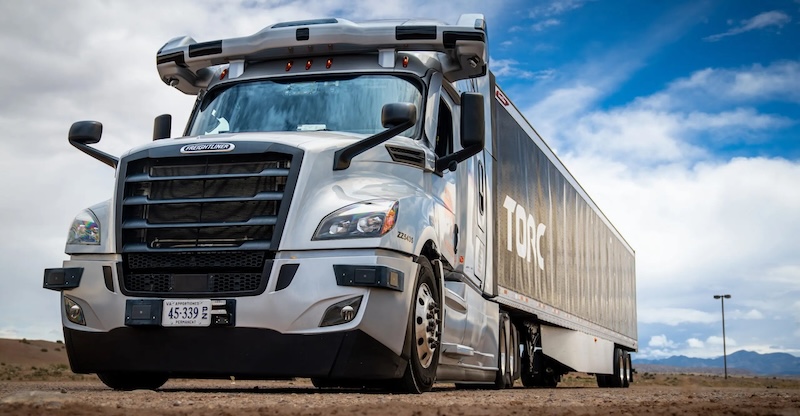
Today, Torc is focused on autonomous freight transport using the latest-generation autonomous-enabled Freightliner Cascadia platform developed in partnership with Daimler Truck.
The company has expanded testing operations across the United States, including public-road deployments in Texas, Virginia, and more recently Michigan, where Torc is validating its hardware and AI software stack under a wider range of real-world driving and seasonal conditions.
The company’s growing presence in Ann Arbor also reflects the increasing convergence of automotive engineering, artificial intelligence, simulation, and robotics within the autonomous trucking sector.
Beyond vehicle autonomy itself, Torc’s work involves large-scale data processing, AI inference models, simulation environments, sensor fusion, and safety-critical systems engineering.
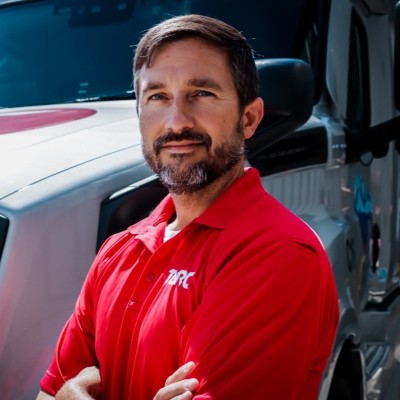
In this interview, Nick Elder, vice president of commercialization at Torc Robotics, discusses the company’s path toward commercial deployment, the operational realities of autonomous freight, the importance of partnerships and infrastructure, and how the economics of long-haul trucking are shaping the next phase of development in autonomous mobility.
Interview with Nick Elder, VP of commercialization, Torc Robotics
Robotics & Automation News: The core challenge Autonomous trucking has been “five years away” for more than a decade. What, specifically, has changed in the past two to three years that makes large-scale deployment more realistic now?
Nick Elder: In the past two to three years, AI advancements have increased the speed of software development. In addition, the hardware that makes autonomous trucking possible has been improving at a rapid pace (next gen compute platforms, increasingly higher resolutions, longer distances, miniaturization, increased robustness, cost reductions).
This combination of accelerated software and hardware development has created a lot of excitement within the industry around having real products on the road.
R&AN: Economics of autonomy You mentioned eliminating inefficiencies like deadhead/empty miles and dwell time. At what point does autonomous trucking actually become economically viable compared to human-driven fleets – and what are the key cost thresholds that need to be met?
NE: While human-driven operations will continue to have a major place in trucking and overall freight logistics, self-driving trucks provide a unique value in that they never get sick, distracted, need rest breaks, or other unplanned disruptions.
This reliability and predictability that comes with autonomy delivers a value that can oftentimes result in a lower total cost of ownership.
Meaning that, overall, autonomous trucking can make financial sense when you consider the combined impact of improved reliability, reduced human-related factors such as sick time, driver wage costs, and fewer operational disruptions.
When these are paired with additional efficiency gains, like fuel savings and reduced tire wear, they collectively create an optimized solution with net cost benefits.
R&AN: Operational reality vs technology A lot of focus is placed on the driving system itself, but how much of the real challenge is operational – routing, fleet management, maintenance, and integration into existing logistics networks?
NE: Operations are certainly part of the challenge of introducing and expanding autonomy, despite all the efficiencies that autonomous trucks promise.
Self-driving trucks are not going to take over all human operations, so identifying the places where autonomy is a good fit and taking steps to integrate effectively into those networks is the key to a successful execution.
While completely manageable, the challenge will be meaningful – there are natural change considerations that come with integrating new systems and operations.
We try to minimize this through efforts to simplify the process and diminish roadblocks to adoption. Torc has already taken the first steps by actively and deeply engaging with customers through our Torc Autonomous Advisory Council.
These partnerships have and continue to provide detailed input, as we work towards full productization and customer integration, ensuring we fully realize the customer perspective as we effectively deliver this promising and impactful technology.
R&AN: Safety and edge cases From your perspective, what are the hardest safety problems still unsolved in autonomous trucking, particularly in edge cases like weather, roadworks, or unpredictable human behavior?
NE: In a broad sense, the comprehensive complexity of a safety case is the most rigorous and therefore one of the most challenging hurdles to address for a truly scalable product deployment.
Proving that a product is inherently safe requires far more than an impressive demonstration. It demands a comprehensive, reliable, repeatable, and traceable approach to safety, which is a significant undertaking.
This includes applying rigorous engineering standards and practices, clearly defining and controlling the permissible operating environment, and ensuring proper system performance through thoughtful design, rigorous simulation and real-world testing, detailed operational documentation, and thorough training.
R&AN: Scaling beyond pilot programs Many companies have demonstrated successful pilot runs. What are the main barriers that prevent those pilots from scaling into fully commercial operations across multiple routes and regions?
NE: Pilots provide valuable operational data and insights that help continuously improve both the systems and the supporting infrastructure needed for efficient autonomous truck operations.
Ultimately, however, scaling requires more than incremental improvement, the product must be highly reliable and deliver a clear Total Cost of Ownership (TCO) advantage.
A key factor in achieving this is manufacturing trucks at scale on a factory line, where both cost efficiency and reliability can be consistently met.
Additionally, effective scaling requires a robust service and support infrastructure to maintain the product in the field. This includes comprehensive preparation for maintenance and repairs, reliable parts distribution, and well-developed support services to ensure consistent, ongoing operation.
R&AN: The timeline question If we look ahead five years, what does a “successful” autonomous trucking network actually look like in practical terms – and what percentage of freight movement could realistically be handled autonomously by then?
NE: With continued advances in hardware and rapidly evolving algorithms, autonomous trucks are likely to be operating routinely on highways and interstates across a significant portion of the US in the next five years.
The majority of operations will likely remain concentrated in the southern half of the country, but regular autonomous routes will connect nearly all major key market areas (KMAs) from coast to coast.
Human-driven trucks will remain essential to freight logistics, but autonomous trucking will be firmly established as a core tool within the broader logistics ecosystem.
