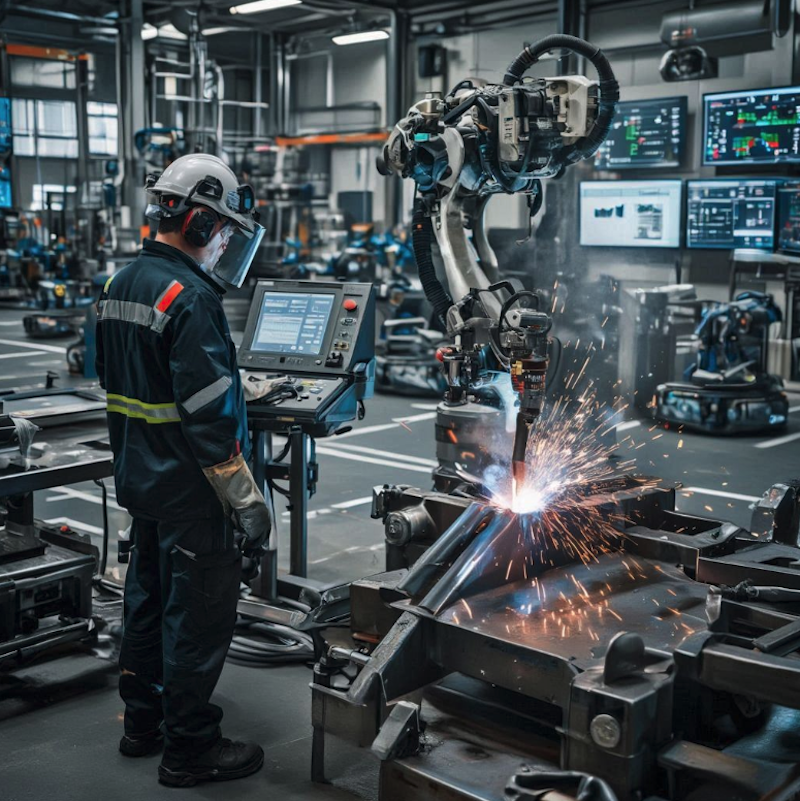
Automation is not replacing the trades. It is upgrading them.
Robots, sensors, and AI systems are showing up across job sites and factories, but they still depend on skilled workers to install, program, and maintain them. Here are 10 automation trends reshaping what welders, electricians, and refrigeration techs do every day.
1 Robotic Welding Cells in Metal Fabrication
Robotic welding cells are becoming standard in fabrication shops. According to the International Federation of Robotics, global robot installations reached record levels in 2024, led by manufacturing.
For welders, that means fewer repetitive passes and more responsibility in setup, programming, and inspection. The role shifts from pure welding to robotic oversight.
2 AMRs in Airport and Warehouse Logistics
Autonomous mobile robots are moving baggage, pallets, and inventory in busy environments. They reduce manual transport but increase demand for technicians who understand motors, wiring, and controls.
Electricians and maintenance techs now support charging stations, sensors, and fleet software.
3 AI Quality Control in Food Processing
AI-powered vision systems inspect products at speeds humans cannot match. A 2024 analysis from McKinsey & Company highlights how AI-driven quality systems are improving efficiency.
When cameras flag defects, skilled workers recalibrate sensors and adjust equipment to keep production moving. Automation boosts precision, but people keep it aligned.
4 Warehouse Micro Fulfillment
Retailers are building compact automated fulfillment centers closer to customers. These facilities pack robotics into tight spaces, from storage systems to robotic picking.
Downtime is costly, so technicians who understand mechanical systems and controls play a critical role.
5 EV And Battery Assembly Robotics
EV and battery manufacturing rely heavily on automation and high-voltage systems. Automotive Logistics reports continued expansion of robotic battery assembly through 2025.
That creates demand for electricians and welders comfortable around robotics and advanced safety standards. For those building these skills in Georgia, the Atlanta campus of Tulsa Welding School offers hands-on programs in welding, electrical applications, and refrigeration technology aligned with modern automated environments.
6 Construction 3D Printing Pilots
Construction 3D printing is moving into real projects. Coverage from Construction Dive shows growing adoption across the industry.
Printed structures still require skilled trades to install electrical systems, HVAC components, and reinforcements.
7 Smart Building Controls
Commercial buildings rely on automated lighting, HVAC, and security systems. These connect through centralized building automation platforms.
Electricians with controls knowledge can move into roles focused on programming and diagnostics.
8 Data Center Cooling Automation
Data centers depend on advanced cooling strategies to manage heat. According to Data Center Dynamics, AI-driven cooling systems are reducing energy use across facilities.
Refrigeration technicians who understand smart controls and precision cooling are essential to keeping these environments stable.
9 Predictive Maintenance With Sensors
Facilities use sensors to track vibration, temperature, and performance in real time. Maintenance teams receive alerts before failures occur.
Work shifts from emergency repair to planned intervention, rewarding techs who can interpret data and act quickly.
10 Hospital Service Robots
Hospitals are deploying robots to move supplies and support staff. Healthcare IT News reports steady growth in service robot adoption.
Technicians maintain batteries, navigation sensors, and safety systems in high-stakes environments.
Skilled Trades and the Future Of Automation
Automation trends are clearly reshaping the future of skilled trades. The tools are evolving, but the need for skilled hands is not disappearing. If these trends interest you, explore training options, ask questions, and connect with programs that prepare you for today’s modern job sites.
Skilled trades remain at the center of every automated system, and the next step is yours to take in this fast-changing industry landscape with confidence and practical, future-ready skills that employers value most today.
