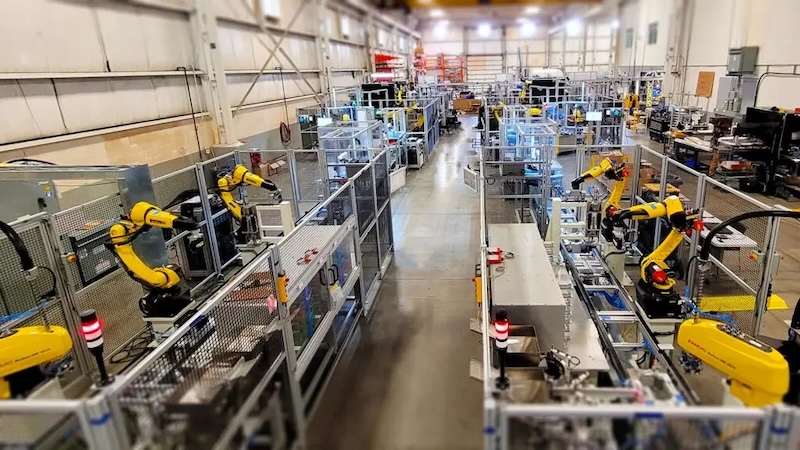
A new report from Eclipse Automation suggests that while factory automation is now widespread across North America, only a small proportion of manufacturers are achieving meaningful outcomes from their investments.
The study, based on a survey of more than 600 executives across the automotive, medical device, and consumer-industrial sectors, found that although up to 70 percent of US manufacturers and 60 percent of Canadian firms report using some form of automation, levels of maturity and performance vary significantly.
The findings point to a growing divide between companies that are successfully translating automation into measurable returns and those that are struggling to move beyond early-stage deployments.
Labor shortages remain a key driver. In early 2025, nearly 500,000 manufacturing roles went unfilled across the US and Canada, reinforcing automation as a necessity rather than a choice for many companies.
However, the report suggests that simply adopting automation technologies is not enough.
Researchers identified five factors that consistently distinguish successful automation programs: system integration, access to structured data, balanced governance between IT and engineering, clear accountability, and a strategy that combines short-term gains with long-term transformation.
Companies that meet their automation goals are three to four times more likely to have fully integrated systems across their technology stack, while those with access to structured data are three times more likely to succeed.
By contrast, less successful firms tend to operate fragmented systems, lack reliable data, and often fail to assign clear ownership of automation initiatives.
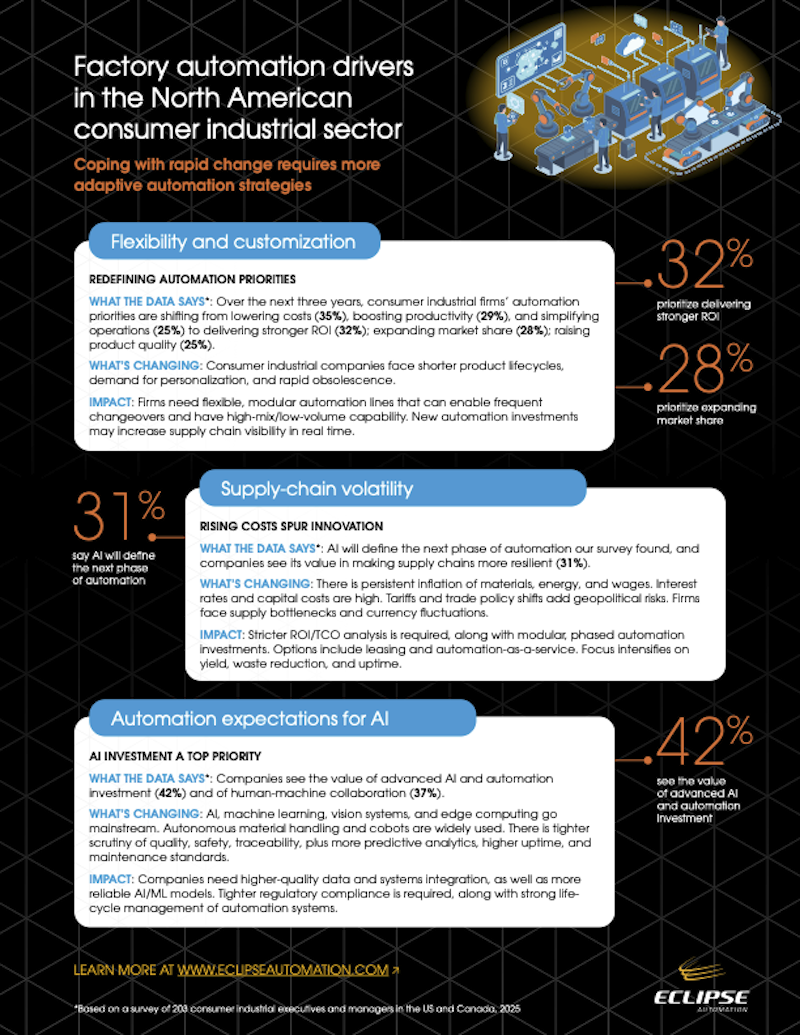
The report also highlights a shift in how leading manufacturers approach automation. Rather than focusing solely on cost reduction, more successful companies prioritize return on investment and treat automation as a broader, enterprise-wide strategy.
“Factory automation is no longer a tactical upgrade; it is a strategic journey,” the report states, emphasizing the need to align technology, workforce skills, and business objectives.
The increasing role of artificial intelligence is expected to widen the gap further. While many companies plan to adopt AI for automation, higher-performing firms are more likely to apply it to predictive maintenance and real-time decision-making, areas that directly impact operational performance.
Despite the challenges, the report suggests that success is not limited to large or highly mature organizations. Smaller manufacturers and those at earlier stages of automation can achieve comparable results if they adopt a structured, data-driven approach.
Overall, the findings indicate that the next phase of factory automation will depend less on technology adoption and more on how effectively companies integrate systems, manage data, and align automation with business strategy.
