• Skip to primary navigation
  • Skip to main content
  • Skip to primary sidebar
  • Skip to secondary sidebar
  • About
    • Contact
    • Privacy
    • Terms of use
  • Shop
    • Cart
    • Checkout
    • My Account
  • Advertise
    • Advertising
      • Buy ad space
    • Case studies
    • Design
    • Email marketing
    • Features list
    • Lead generation
    • Magazine
    • Press releases
    • Publishing
    • Sponsor an article
    • Webcasting
    • Webinars
    • White papers
    • Writing
  • Subscribe to Newsletter

Robotics & Automation News

Where Innovation Meets Imagination

  • Home
  • News
  • Features
  • Editorial Sections A-Z
    • Agriculture
    • Aircraft
    • Artificial Intelligence
    • Automation
    • Autonomous Vehicles
    • Business
    • Computing
    • Construction
    • Culture
    • Design
    • Drones
    • Economy
    • Energy
    • Engineering
    • Environment
    • Health
    • Humanoids
    • Industrial robots
    • Industry
    • Infrastructure
    • Investments
    • Logistics
    • Manufacturing
    • Marine
    • Material handling
    • Materials
    • Mining
    • Promoted
    • Research
    • Robotics
    • Science
    • Sensors
    • Service robots
    • Software
    • Space
    • Technology
    • Transportation
    • Warehouse robots
    • Wearables
  • Press releases
  • Events

Owning the Experience: The Rise of White-Label Video Solutions in a Fragmented Market

December 11, 2025 by David Edwards

What started as an easy way to watch shows has turned into a confusing mix of different services. A few early streaming giants have now multiplied into a sea of platforms, each with exclusive content, unique interfaces, and separate fees.

This fragmentation not only frustrates viewers but also presents challenges for content owners trying to retain their audiences and control their brand experience. To navigate this landscape, many broadcasters and video platform operators are turning to white-label OTT solutions.

These platforms let providers launch their own branded streaming service quickly, without building everything from scratch, so they can truly own the user experience. Coupled with hybrid monetization models and tools like dynamic ad insertion, a white-label approach empowers operators to engage viewers and generate revenue without sacrificing quality or control.

Why White-Label Online Video Platforms are on the Rise

With the streaming market crowded and heavily fragmented, content providers are seeking ways to stand out and maintain direct relationships with their viewers. White-label platforms have emerged as a popular strategy for several key reasons:

  • Faster deployment: Launch a full-featured streaming service quickly, instead of spending years building a custom platform. This speed to market allows providers to capitalize on opportunities in the fast-growing online video niche.
  • Brand control: Customize the interface, branding, and user experience to match your identity. In a landscape saturated with options, this personalization fosters a sense of ownership and loyalty among viewers.
  • Cost-effectiveness: Avoid the heavy upfront investment of developing video platform infrastructure in-house. The allure of customization, branding, and cost-efficiency has been a major driver of white-label platform growth.
  • Flexible monetization: Support diverse revenue models – subscriptions, pay-per-view, or ad-supported streaming – under one roof. Providers can even mix models (e.g. a hybrid AVOD/SVOD service) as needed to maximize reach and ROI.
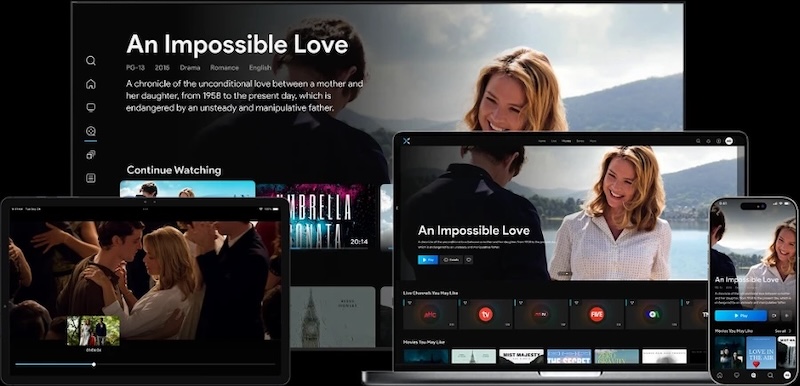
  • Multi-platform reach: Most white-label solutions come pre-equipped with apps for web, mobile, and smart TVs, ensuring your content reaches viewers on any device with minimal extra development.

In fact, the global white-label online video platform market is projected to reach $2.2 billion by 2026, underscoring how widely these solutions are being adopted for content delivery and monetization. Even traditional telecom and TV operators have jumped on board.

By leveraging ready-made online video tech, even smaller or niche content providers can swiftly enter the market and retain control over their viewer experience in spite of the fragmentation.

Why Audience Data Ownership Matters

In a fragmented video market, understanding and retaining your audience is just as critical as reaching them. When you distribute your programming on a third-party platform, you’re often handing over control of viewer data—what’s watched, when, on which device, and for how long.

These insights are invaluable for shaping future programming decisions, targeting promotions, and optimizing monetization. But in most aggregator models, you rarely get access to this level of detail.

White-label platforms flip that dynamic. Because you’re operating your own service under your brand, you retain full control over the customer relationship. That means you can track user behavior, viewing patterns, subscription history, and engagement metrics on your terms. With proper consent mechanisms in place, this data becomes a tool for informed business decisions and a more personalized viewer experience.

For example, knowing which shows are being watched (or dropped) can help guide programming investments. Understanding churn patterns can inform retention strategies, such as offering targeted discounts or early access to upcoming releases. When you control the platform, you’re no longer guessing, you’re building based on real viewer insight.

This level of visibility is especially important for niche or regional providers who may not have the budgets to gamble on trial-and-error content strategies. With full data access, even small services can behave like the big players, iterating quickly, segmenting their audiences, and offering tailored features that boost engagement.

And perhaps most importantly, owning your data means owning your growth. You’re not just renting space on someone else’s platform. You’re building an asset: a direct, data-informed relationship with your viewers.

Closing Thoughts

White-label video platforms are a streamlined and cost-efficient path to market, but what is more, they provide operators with real control over the entire viewer experience. From a consistent, branded interface across web, mobile, and smart TVs to the ability to define how content is presented, accessed, and monetized, these solutions let providers shape every aspect of their service without rebuilding the infrastructure themselves.

This level of control matters. As audiences fragment across services and devices, the ability to maintain a unified user experience – one that feels purposeful and aligned with your brand – helps reduce churn and build loyalty. Features like multi-device support, built-in DRM, and flexible monetization options (including seamless ad stitching via server-side insertion) are all parts of a coherent, operator-owned system.

Print Friendly, PDF & Email

Share this:

  • Print (Opens in new window) Print
  • Share on Facebook (Opens in new window) Facebook
  • Share on LinkedIn (Opens in new window) LinkedIn
  • Share on Reddit (Opens in new window) Reddit
  • Share on X (Opens in new window) X
  • Share on Tumblr (Opens in new window) Tumblr
  • Share on Pinterest (Opens in new window) Pinterest
  • Share on WhatsApp (Opens in new window) WhatsApp
  • Share on Telegram (Opens in new window) Telegram

Related stories you might also like…

Filed Under: Culture, Technology Tagged With: audience data ownership, automation news, branded streaming services, dynamic ad insertion, hybrid monetization, online video platforms, ott platforms, robotics and automation, robotics and automation news, robotics news, streaming fragmentation, svod avod, video streaming technology, white-label video

Primary Sidebar

Search this website

Latest articles

  • FORT Robotics extends physical AI safety platform with Nvidia Halos
  • Fieldwork Robotics secures SEED Innovations investment to scale berry harvesting robots
  • Multi-robot demo showcases new UK’s Plymouth subsea test range
  • Tech company AVI-SPL launches autonomous Dallas-Houston freight operations with Volvo Autonomous Solutions
  • RoboDK unveils CAM software that cuts robotic machining deployment time ‘by up to 40 percent’
  • Richtech Robotics launches 24/7 interactive livestream featuring AI robot ADAM
  • Cognibotics selected for €6.5 million in EU accelerator funding
  • CS2 Skin Marketplace Comparison: Which Platform Offers the Best Prices and Security?
  • How Automation is Changing Employee Performance Tracking and Recognition
  • What Can Delay a Car Accident Settlement and How an Attorney Helps

Secondary Sidebar

Latest news

  • FORT Robotics extends physical AI safety platform with Nvidia Halos
  • Fieldwork Robotics secures SEED Innovations investment to scale berry harvesting robots
  • Multi-robot demo showcases new UK’s Plymouth subsea test range
  • Tech company AVI-SPL launches autonomous Dallas-Houston freight operations with Volvo Autonomous Solutions
  • RoboDK unveils CAM software that cuts robotic machining deployment time ‘by up to 40 percent’
  • Richtech Robotics launches 24/7 interactive livestream featuring AI robot ADAM
  • Cognibotics selected for €6.5 million in EU accelerator funding
  • CS2 Skin Marketplace Comparison: Which Platform Offers the Best Prices and Security?
  • How Automation is Changing Employee Performance Tracking and Recognition
  • What Can Delay a Car Accident Settlement and How an Attorney Helps

Copyright © 2026 · News Pro on Genesis Framework · WordPress · Log in

We use cookies on our website to give you the most relevant experience by remembering your preferences and repeat visits. By clicking “Accept”, you consent to the use of ALL the cookies.
Do not sell my personal information.
Cookie SettingsAccept
Manage consent

Privacy Overview

This website uses cookies to improve your experience while you navigate through the website. Out of these, the cookies that are categorized as necessary are stored on your browser as they are essential for the working of basic functionalities of the website. We also use third-party cookies that help us analyze and understand how you use this website. These cookies will be stored in your browser only with your consent. You also have the option to opt-out of these cookies. But opting out of some of these cookies may affect your browsing experience.
Necessary
Always Enabled
Necessary cookies are absolutely essential for the website to function properly. These cookies ensure basic functionalities and security features of the website, anonymously.
CookieDurationDescription
cookielawinfo-checkbox-analytics11 monthsThis cookie is set by GDPR Cookie Consent plugin. The cookie is used to store the user consent for the cookies in the category "Analytics".
cookielawinfo-checkbox-functional11 monthsThe cookie is set by GDPR cookie consent to record the user consent for the cookies in the category "Functional".
cookielawinfo-checkbox-necessary11 monthsThis cookie is set by GDPR Cookie Consent plugin. The cookies is used to store the user consent for the cookies in the category "Necessary".
cookielawinfo-checkbox-others11 monthsThis cookie is set by GDPR Cookie Consent plugin. The cookie is used to store the user consent for the cookies in the category "Other.
cookielawinfo-checkbox-performance11 monthsThis cookie is set by GDPR Cookie Consent plugin. The cookie is used to store the user consent for the cookies in the category "Performance".
viewed_cookie_policy11 monthsThe cookie is set by the GDPR Cookie Consent plugin and is used to store whether or not user has consented to the use of cookies. It does not store any personal data.
Functional
Functional cookies help to perform certain functionalities like sharing the content of the website on social media platforms, collect feedbacks, and other third-party features.
Performance
Performance cookies are used to understand and analyze the key performance indexes of the website which helps in delivering a better user experience for the visitors.
Analytics
Analytical cookies are used to understand how visitors interact with the website. These cookies help provide information on metrics the number of visitors, bounce rate, traffic source, etc.
Advertisement
Advertisement cookies are used to provide visitors with relevant ads and marketing campaigns. These cookies track visitors across websites and collect information to provide customized ads.
Others
Other uncategorized cookies are those that are being analyzed and have not been classified into a category as yet.
SAVE & ACCEPT