Qualcomm has announced that it has completed its acquisition of Modular Inc, an innovator in AI-native software infrastructure.
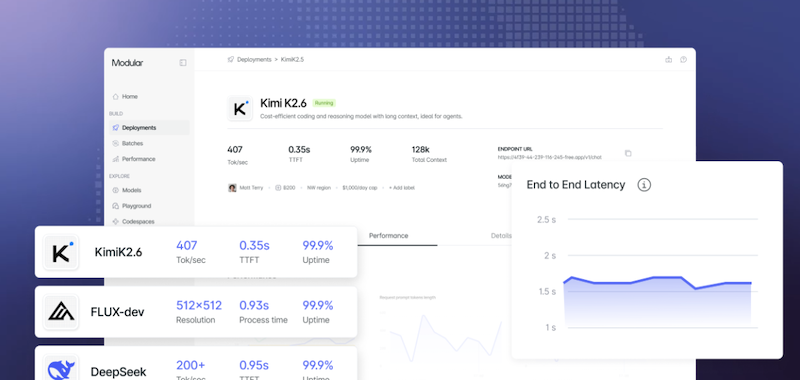
Modular’s software platform gives developers a unified way to optimize and deploy generative and agentic AI workloads across heterogenous computing systems.
Combined with Qualcomm Technologies’ leadership in high-performance, energy-efficient compute, Modular strengthens the company’s ability to deliver complete AI solutions.
The acquisition will accelerate the expansion of Qualcomm Technologies’ AI platforms across devices, data center, edge infrastructure, and personal and industrial AI. It will also give Modular the scale and reach to bring its technology to more developers, enterprises, hardware platforms, and markets.
Modular’s commitment to an open, heterogenous ecosystem will continue, while delivering leading performance across CPUs, GPUs, NPUs, and custom silicon.
Mojo, MAX, and Modular Cloud will continue as products and brands, with expanded investment and support through Qualcomm Technologies.
Chris Lattner, co-founder and CEO of Modular, will take on the role of executive vice president of advanced AI software and platforms.
Cristiano Amon, president and CEO, Qualcomm, says: “Combining Modular’s AI-native software platform with Qualcomm Technologies’ leading solutions, industry scale and ecosystem partnerships accelerate our ability to deliver high-performance, energy-efficient AI solutions from edge to cloud.
“With Modular’s world-class engineering team, we’re enabling a new and open approach to AI software development, enabling AI to run efficiently across any hardware while maximizing performance.
“This solves one of AI’s biggest challenges, gives developers and customers genuine choice, and advances competition, innovation and resilience across the industry.”
Lattner says: “Joining Qualcomm gives us the scale to bring Modular’s software innovations to a broader portfolio of AI and compute platforms.
“Together, we can help developers deploy AI more efficiently across a wide range of hardware architectures while improving productivity, performance, and portability.”
