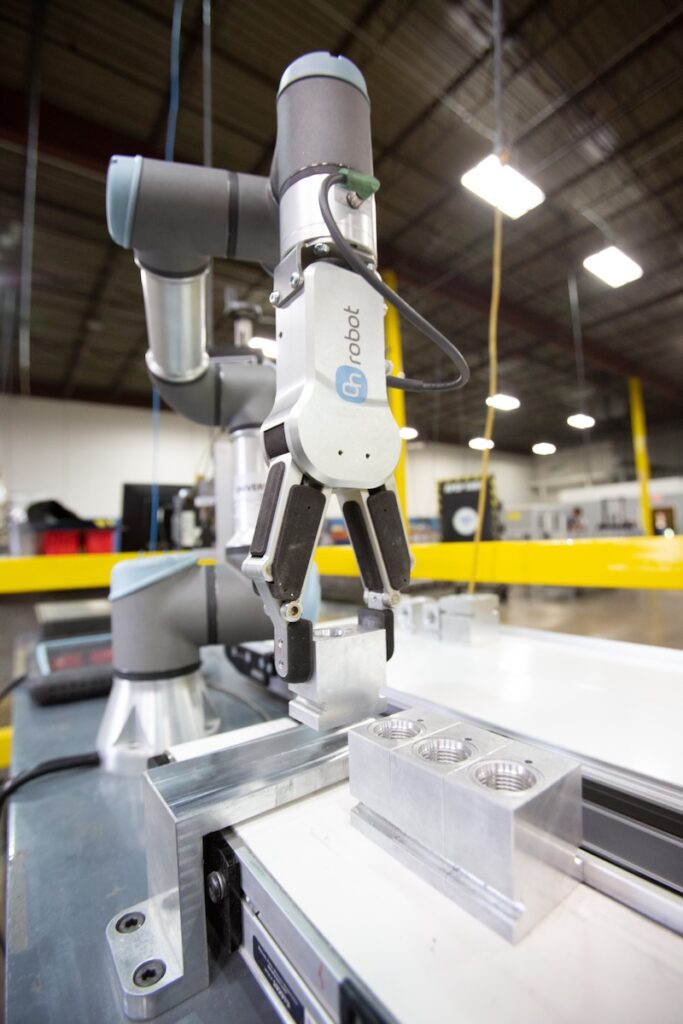
By Thomas Houden, director of global business development, OnRobot
Physical AI promises robots that can perceive, act and adapt in the physical world with far less task-specific engineering than traditional automation.
It’s a compelling proposition: robots powered by AI models trained on vast amounts of data, capable of improving over time and operating effectively in far less structured environments. But how do we get there?
As AI systems move from the digital to the physical world, new requirements emerge. Intelligent models and policies remain essential, but they are only a part of the equation. Robots ultimately interact with the physical world through grippers, sensors and tools that make direct contact with objects. [Read more…] about Physical AI in the real world: Four requirements for reliable robot manipulation