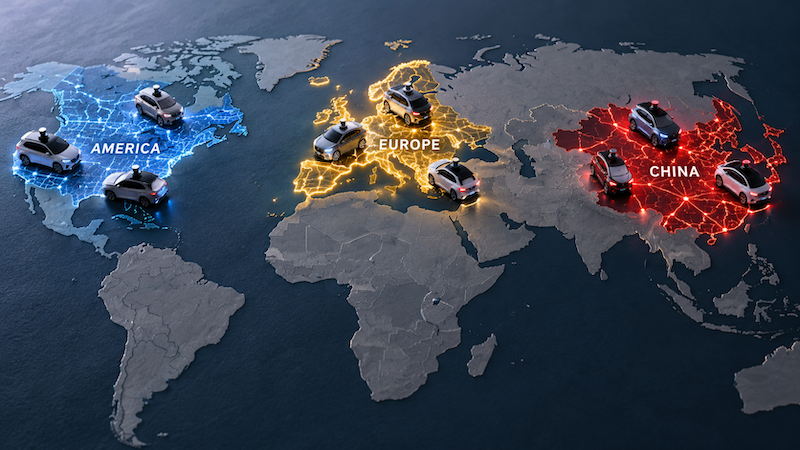
The global robotaxi market is forecast to grow from $486.75 million in 2025 to approximately $179.4 billion by 2034, according to a new report from Polaris Market Research.
The research projects a compound annual growth rate of 92.8 percent between 2026 and 2034, reflecting expectations of rapid expansion in autonomous ride-hailing services as technology advances and commercial operations increase.
Growth is expected to be supported by improvements in artificial intelligence, lidar, radar, cameras and autonomous driving software, alongside investment in electric vehicles and supporting infrastructure.
The report identifies partnerships between autonomous vehicle developers and established ride-hailing companies as an important factor in commercial expansion.
Such arrangements allow technology developers to access existing customer networks and fleet management systems, while ride-hailing operators can introduce autonomous services without developing their own self-driving technology.
North America leads, Asia-Pacific growing fastest
According to Polaris, North America accounted for 72.2 percent of global robotaxi market revenue in 2025, supported by investment in autonomous driving technology and early commercial operations.
Asia-Pacific is expected to experience the fastest regional growth, with a projected compound annual growth rate of 93.1 percent during the forecast period.
Electric vehicles represented 69.4 percent of robotaxi market revenue in 2025, reflecting their suitability for autonomous fleet operations.
The research also forecasts particularly strong growth in camera-based sensing technologies, with the camera segment projected to expand at 94.7 percent annually.
Major companies operating in the sector include Waymo, Baidu, Pony AI, WeRide, Zoox, Tesla, Uber and Lyft.
Despite the optimistic projections, the report acknowledges continuing challenges involving safety, regulation, vehicle costs and infrastructure.
The commercial success of robotaxi services will depend on operators demonstrating reliable autonomous driving performance while maintaining competitive fares and managing the costs of fleet operations.
