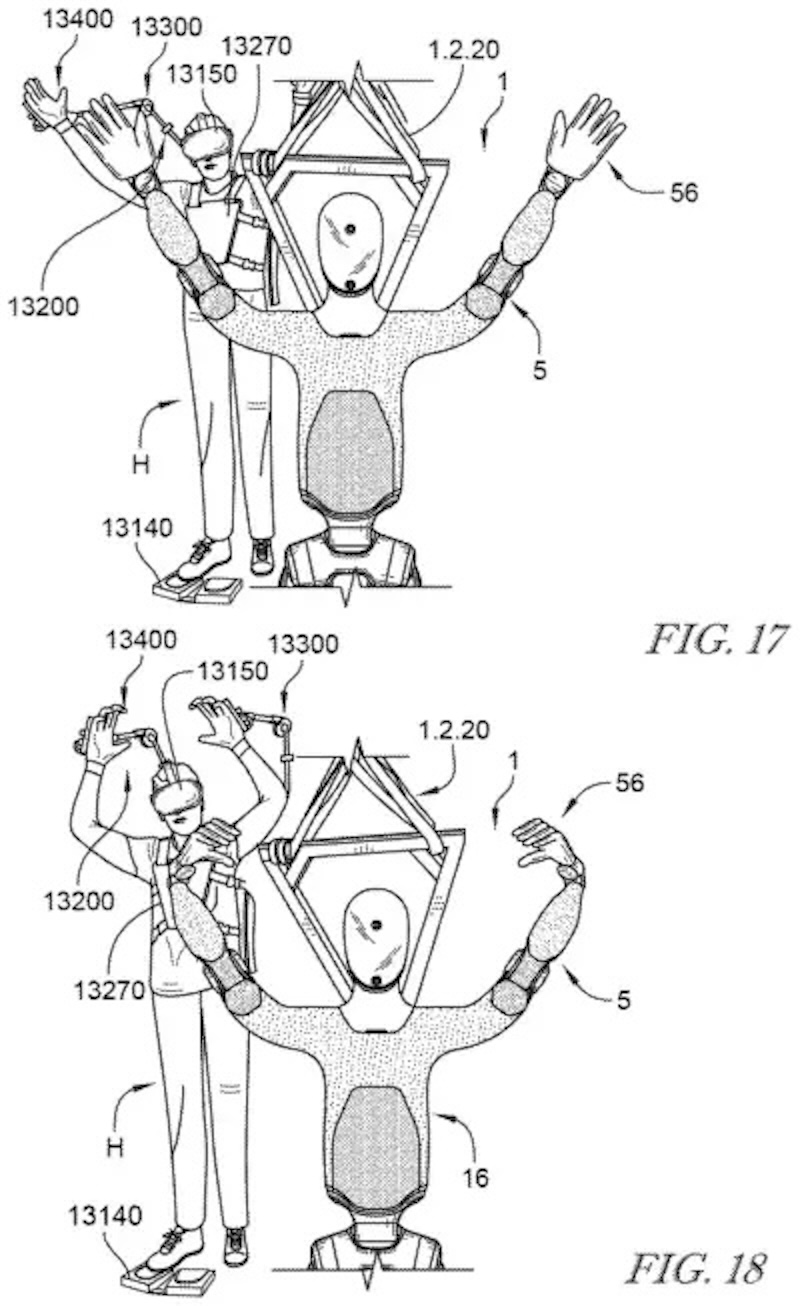
Figure AI has filed a patent application for a wearable robotic system designed to capture human arm movements and use the resulting data to train humanoid robots or control them remotely in real time.
The application, US 2026/0364774 A1, was published on November 19, 2026, and was highlighted in a report by Patentlyze, a publication specializing in patent analysis.
The proposed system consists of a backpack-style frame fitted with two articulated mechanical arms that follow the movements of a human operator.
Rather than requiring workers to perform demonstrations in a motion-capture studio, the equipment could allow movement data to be collected while people carry out everyday tasks in factories, warehouses and other working environments.
Capturing human movement through robotic arms
According to the patent application, the wearable apparatus includes a harness attached to the operator’s torso, with mechanical arms extending over the shoulders and following the movements of the wearer’s arms.
Each mechanical arm incorporates rigid links, articulated joints and sensors that measure movement at the shoulder, elbow and wrist.
The system can provide up to seven axes of rotation per arm, allowing it to capture complex movements while accommodating different body sizes.
Joint encoders measure rotational positions, while inertial measurement units track orientation and movement. Glove-like attachments connect the ends of the mechanical arms to the operator’s hands.
The design allows the mechanical arms to follow the wearer’s movements without requiring extensive physical attachments along the human arms.
Sensor information can be recorded for subsequent machine learning applications or transmitted to a humanoid robot for remote operation.
Real-time control with minimal delay
One of the more significant features described in the filing is the ability to translate human movement into robot commands with an end-to-end delay of less than 20 milliseconds.
This could allow an operator to control a humanoid robot almost simultaneously with their own movements, potentially improving the responsiveness of remote manipulation.
The patent also describes a clutch mechanism that temporarily interrupts the transmission of movement data.
In one proposed configuration, machine learning software could identify pauses in the operator’s activities and automatically activate the clutch.
A headset could additionally provide the operator with video from the robot’s cameras, allowing the human to observe the robot’s surroundings while controlling its movements.
The system could therefore serve two purposes: collecting training data for autonomous robot learning and enabling direct human control of robotic equipment.
Addressing the robotics training data challenge
Humanoid robot developers require substantial amounts of movement data to train machines to perform physical tasks.
Collecting this information can be expensive and time-consuming, particularly when conventional approaches require specialized equipment or controlled environments.
Figure AI’s proposed wearable system could provide an alternative by capturing demonstrations directly from human workers performing practical tasks.
For example, an operator moving components between workstations could generate detailed information about arm positions, joint movements and manipulation sequences.
This information could subsequently be used to train robots to perform similar operations.
Patentlyze notes that the patent application includes relatively broad claims covering wearable frames equipped with articulated arms and movement sensors.
Other claims address more specific features, including low-latency robot control and sensor configurations designed to correspond with those used in robotic joints.
Patent application, not a product announcement
The application lists Victor Ragusila, Nathan Jenest, Corey Lynch, Michael Rose and Lee Magnusson as inventors.
It was filed on June 26, 2026, as a continuation of an international application filed in February 2026.
Although the design provides an indication of Figure AI’s research into robot training and teleoperation, the filing does not establish that the company has developed a commercial product or intends to introduce one.
Nevertheless, the proposed technology illustrates growing interest in collecting human movement data outside traditional laboratory environments.
For humanoid robotics developers, portable systems capable of recording real-world tasks could become an important tool for training machines to work in industrial settings.
Main image: A worker wearing a sensor backpack and headset demonstrates arm movements for a humanoid robot to copy in real time. Courtesy of Patentlyze
