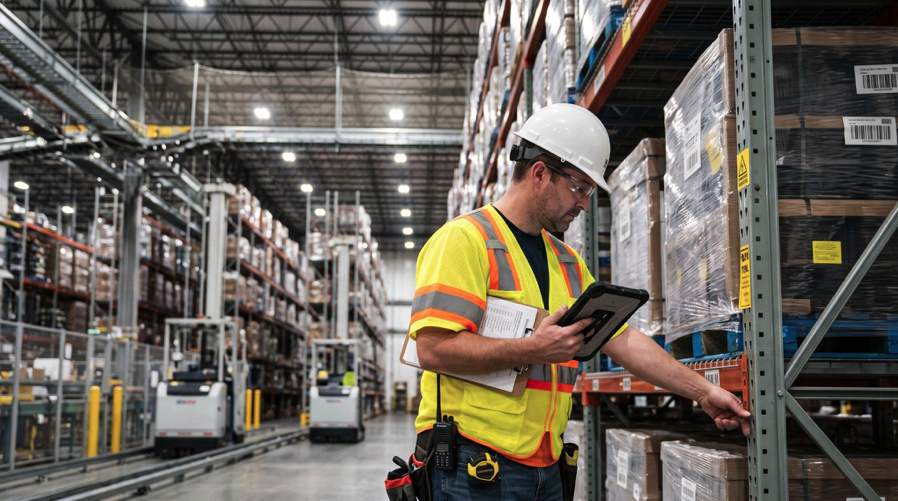
Automated pallet racking inspection is the specialist safety checking of automated storage systems, including ASRS (Automated Storage and Retrieval Systems), high-bay, shuttle and mobile racking, to confirm the structure is sound and compliant.
These systems move more stock, faster, with fewer people on the floor. That efficiency comes with a catch. The racking is harder to see, harder to reach and fails in ways conventional checks were never built to catch, which is why regular SEMA-approved pallet racking inspection matters more in an automated warehouse, not less.
If you run automation, you already know throughput, uptime and the cost of a stopped line. The steel holding it all up deserves the same attention, and it rarely gets it.
Why does automation make inspection harder, not optional?
Automation removes the very things that used to catch problems early. In a manual warehouse, a driver walks the aisle, spots a bent upright and reports it.
Take the people out of the aisles and that daily, informal check disappears with them. The aisles are often fenced, the system runs continuously, and nobody is standing where they can watch a problem form.
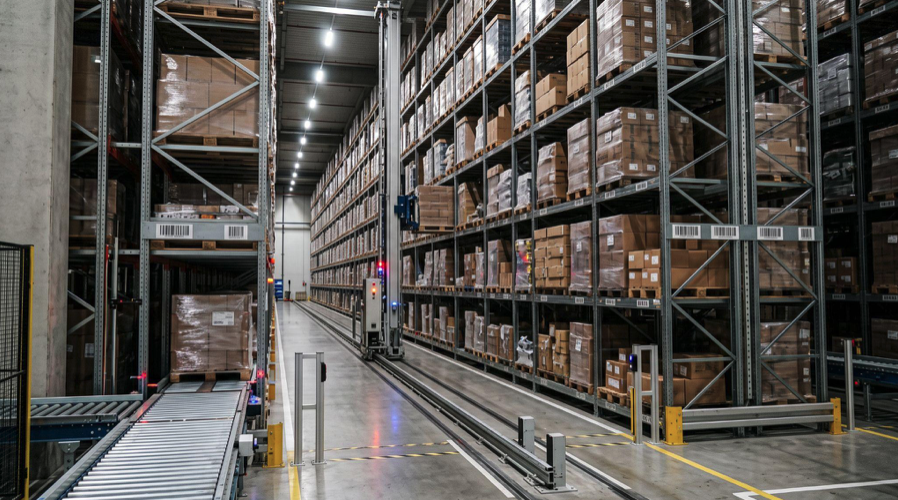
The systems themselves raise the stakes. Automated warehouse solutions such as goods-to-person systems, pallet shuttles and vertical lift modules all rely on steel carrying heavy, repeated, precisely located loads.
High-bay installations push that steel to great heights, where small faults are invisible from the ground. Mobile and dynamic racking adds rails, rollers and powered bases that wear and drift. Drive-in and shuttle systems pack pallets deep into dense blocks, so damage mid-run can hide for months.
Height makes all of it worse. HSG76, the HSE’s warehousing and storage guidance, is explicit that automated and high-bay systems still need inspecting, precisely because their upper levels take less everyday impact yet cannot be checked from the floor. The failure modes shift too.
You are no longer only hunting for forklift strikes near the base. You are looking for rail misalignment, shuttle and crane-track wear, fatigue around repeatedly loaded positions, and the slow movement that builds as the system cycles thousands of times a week.
These are structural problems hiding inside a machine. Finding them takes a trained eye, proper access and a method built for the system.
What does a proper inspection of automated racking involve?
A proper inspection is a structured engineering assessment, not a walk-round. A competent inspector works to the relevant SEMA and HSE standards, examines the structure systematically, grades any damage by severity, and issues a detailed report built around that warehouse and its equipment.
The report is the whole point. It tells you what is safe, what needs watching, and what has to come out of use now.
Access is the practical challenge. Reaching the upper levels of a high-bay aisle takes the right equipment and a methodical sweep, so that every level is covered rather than only the ones in easy view.
What the inspector finds then gets classified under SEMA’s green, amber and red risk levels, and that classification is a judgement about structural safety. It carries real weight, because the next decision is whether stock stays on the rack or comes off.
Can you automate the inspection too?
Partly, and it is a fair question for anyone already invested in automation. Continuous monitoring, machine vision and drone imagery can all help. They extend reach, flag obvious changes, and buy you early warning between formal inspections. What they cannot do is close the loop.
Software can tell you something has changed. It cannot reliably judge how dangerous that change is, weigh it against the installation as a whole, or discharge your legal duty to have the racking inspected by a competent person.
So treat automated monitoring as a smoke alarm, not a fire brigade. A flagged anomaly still has to be assessed by someone qualified to call it: green and monitor it, amber and stop reloading those positions until they are repaired, or red and offload and isolate the bay at once.
A SEMA-approved racking inspection gives you that qualified judgement and the documented sign-off that monitoring alone will never produce. The smart setup runs both. Sensors widen the eyes. A competent inspector keeps you compliant.
What do HSG76, PUWER and SEMA require?
UK law expects you to keep storage equipment safe, and three names shape how. HSG76, the HSE’s warehousing and storage guidance, covers the inspection of automated and high-bay racking directly.
PUWER, the Provision and Use of Work Equipment Regulations, classes racking as work equipment that has to be suitable for the job, kept in good repair, and inspected on a structured basis. SEMA, the Storage Equipment Manufacturers’ Association, sets the design and inspection standards most UK warehouses are held to.
Two roles matter in practice. A PRRS, or Person Responsible for Racking Safety, is the appointed person inside your business who manages day-to-day racking safety and the interim checks.
The formal expert inspection should be carried out by a SARI, a SEMA Approved Racking Inspector, whose certification is the recognised mark of competence for this work.
Frequency follows the same layered logic: regular visual checks by trained staff, formal interim checks by a competent person, and a thorough expert inspection at set intervals, with extra checks after any impact or reconfiguration.
A busy, continuously running automated system sits at the higher-risk end of that scale. Choosing a SEMA-approved inspector is not a nicety. In a sector where getting it wrong means collapse, injury or prosecution, it is the baseline.
What happens when damage is found?
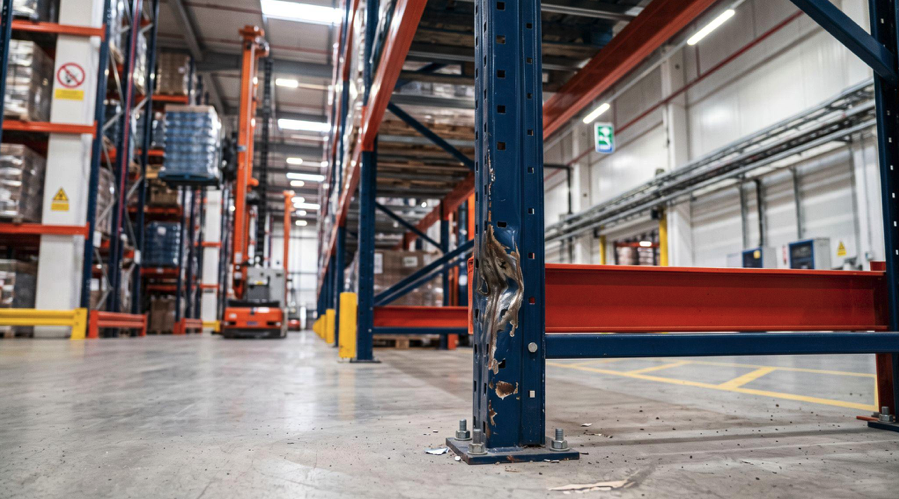
Damaged racking must never stay in service, and the response scales with severity. Minor, in-tolerance damage gets recorded and monitored. More serious damage means the affected positions are not reloaded once they empty, and they are repaired before going back into use.
Severe damage means offloading and isolating the bay straight away, until it is made safe. The inspection report drives every one of those calls. It is the record that tells you what to do and proves you did it.
Then comes the fix. Rack repairs restore a damaged system to full safety with minimal disruption, and in an automated warehouse that minimal-downtime point is everything.
Repairs and any reconfiguration should be carried out by SEIRS-registered racking installers, under the Storage Equipment Installers Registration Scheme, which is the recognised standard for safe installation.
Racking is only ever as safe as the hands that assemble it. Once the repair is signed off, load signage goes back up and the structure returns to work.
Automation pays back only while the structure underneath it stays sound. Spend on the shuttles, the software and the cranes, then protect all of it with inspection built for the system you actually run.
Images: All images generated using gemini AI
