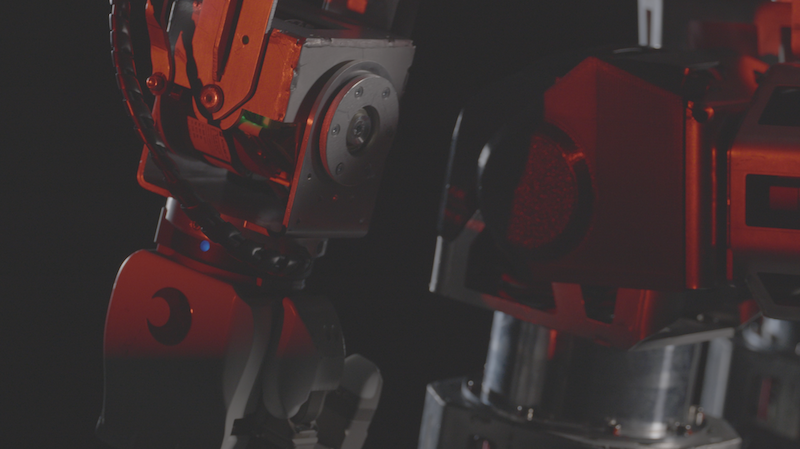
The humanoid robotics industry is increasingly dominated by companies promising general-purpose machines capable of performing a growing range of industrial tasks.
Minerva Humanoids is taking a rather different approach: start with jobs where replacing the human body has an immediate and potentially life-saving purpose.
The San Francisco-based company has developed Roger, a semi-autonomous humanoid designed for hazardous work in energy operations, explosive ordnance disposal (EOD), hazardous-material response and other public safety applications.
Rather than attempting to remove people from the process entirely, Minerva uses what it calls “shared autonomy”. Its Minerva Intelligence system handles functions including balance, fall recovery and navigation, while a trained specialist remotely controls tasks requiring professional expertise and judgment through a VR headset.
The company recently emerged from stealth with approximately $10 million in pre-seed funding led by General Catalyst, with Long Journey Ventures and Credo Ventures as co-leads.
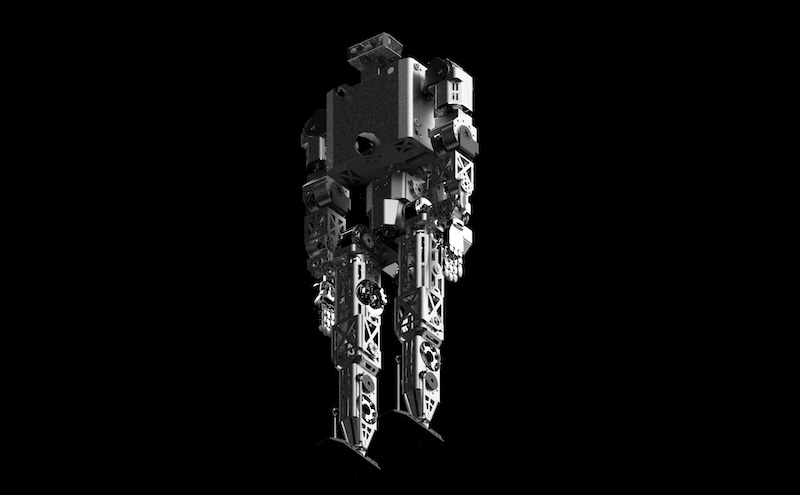
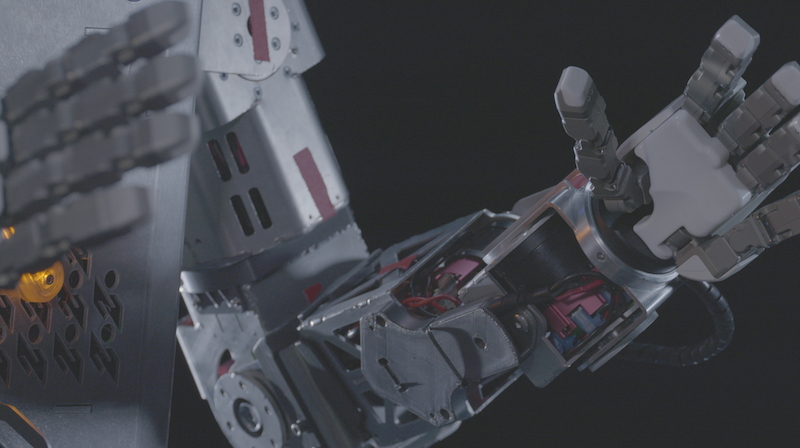
Minerva says it took Roger from a clean-sheet design to a walking humanoid in just over five months and is now moving into paid industry pilots and field testing.
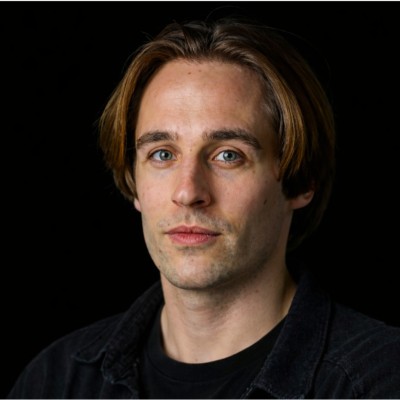
Minerva co-founder and CEO Sandor Felber brings experience from humanoid AI research at MIT CSAIL and Tesla’s Optimus program. Co-founder and CTO Maurice Rahme previously spent more than five years at Boston Dynamics, where he helped develop Stretch from an early prototype into a commercial robot.
In this interview with Robotics & Automation News, Felber explains why Minerva believes the humanoid form is particularly suited to dangerous environments originally designed around people, and why teleoperation remains central to the company’s approach.
He also discusses the engineering trade-off between dexterity and payload, Roger’s ability to sacrifice itself when a hazardous situation cannot otherwise be safely resolved, lessons from airport testing, and why Minerva sees significant overlap between robots designed for energy and public safety applications.
Felber also outlines the next stage for Roger as Minerva moves from development and demonstrations towards real-world deployments in the US, UK and Germany.
Interview with Sandor Felber
Robotics & Automation News: What are the main engineering differences between Roger and general-purpose humanoids designed for factories and warehouses?
Sandor Felber: Roger is engineered to be the best possible avatar for the operator working in EOD, hazardous material response, and high risk environments.
To do this, we optimized its kinematics to minimize the human-to-robot embodiment gap; a simple example of this is coincident wrist axes, just like on a human arm.
Our sensing suite is another example of this, granting the operator superhuman sight on demand, with multiple POVs and modalities, including thermal.
R&AN: Which human-designed tasks or environments are most difficult for robots, and where does Roger still have limitations?
SF: One example of why the humanoid form factor matters is in bomb disposal. Quadrupeds and dog-like robots are very good at doing everything up to roughly a foot off the ground, but they’re very bad at anything above that.
In bomb disposal, devices can be put in a spot where they’re out of reach for these robots. The person placing the device is human, so it’s much more intuitive to go after it with a human-like form factor and follow the existing procedures we already have.
We don’t need to develop new procedures for something that’s already being done by a person; you do the same thing, except a human is not in the bomb suit doing it themself.
A big challenge is balancing dexterity with the ability to handle heavy payloads. Ultimately, we will cover this spectrum as widely as possible while biasing towards where Roger can be most useful.
R&AN: Which decisions can Roger make autonomously, and which remain with the human operator?
SF: Minerva Intelligence handles the low-level proprioceptive and perceptive intelligence of the robot, including balance, fall recovery, and navigation.
Tasks that require domain expertise and judgment remain with the trained specialist, who operates Roger remotely through a VR headset.
R&AN: How did you take Roger from a clean-sheet design to walking in just over five months?
SF: We came into Minerva with a lot of relevant experience: I worked on humanoid AI research at MIT CSAIL and on Tesla’s Optimus program, while Maurice spent five and a half years at Boston Dynamics and helped take Stretch from an early prototype to a commercially deployed product, going through multiple new robot revisions as a result.
In anticipation of building Roger, we developed our software stack across multiple third party robots while our humanoid was being designed and built, and we leveraged the maturity of the wider robotics supply chain.
The piece that will require the most work going forward is our hardware, which we will iterate on based on our pilot and demo feedback this fall.
R&AN: What have you learned from airport testing, and how much adaptation does Roger need for different applications?
SF: One thing we learned early on at an airport was how intuitive the humanoid form can be for an operator. Before the current Roger was ready, we demonstrated with a third-party humanoid, and despite a language barrier, someone was able to take the headset and begin operating it right away with no training.
This experience reinforced for us how intuitive it is to map a human operator onto a human-like form factor.
Across energy and public safety, we see roughly 70-80 percent overlap in the hardware requirements, so we can use the same core platform and configure Roger for the specific application.
R&AN: What happens when Roger encounters a failure or a situation it cannot safely resolve?
SF: Minerva Intelligence runs on the robot itself, so Roger does not require a live cloud connection to operate. In the event of a loss of comms power, Roger will freeze and execute a controlled fall away from identified critical assets.
If a situation is not safely resolvable, Roger has the ace up its sleeve that it can sacrifice itself. It essentially provides the operator with a deus ex option that no human could otherwise do.
For example, in the case of an explosive that is not safely approachable or detonatable, Roger can minimize casualties and damage by taking on the render-safe process to the best of the operator’s judgement, without fear clouding their decision-making.
R&AN: Is hazardous work Roger’s long-term market, or a starting point for broader industrial applications?
SF: Our mission is to protect human life in the most dangerous jobs on the planet. There are a lot of things humanoids could eventually do, but we’re focused on the places where putting a robot instead of a person can mean saving someone’s life.
For us, that means jobs in energy and public safety where people are still physically entering dangerous environments.
R&AN: What are your main milestones for the next 12 to 24 months, and when will Roger enter regular operational use?
SF: Our immediate milestone is deployments. We’re launching our first paid industry pilots this fall and are already working with groups including the FBI on testing and upcoming pilots, including field testing in the USA, UK, and Germany.
We’re also working with several governing bodies in the EU on force-protection efforts. The next step is getting Roger into more real-world environments so we can learn from those deployments and continue making the system more robust.
On the hardware side, we’re already looking toward the next iteration, including better sensor integration and higher payload capabilities.
