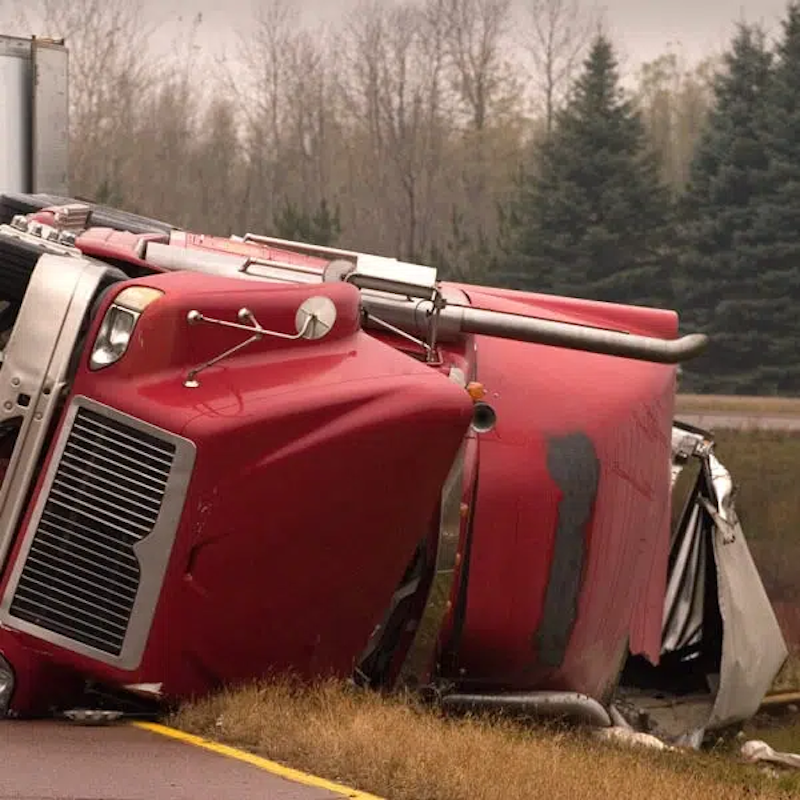
McAllen sits at one of the country’s busiest freight crossings. Trucks rumble up from the Pharr International Bridge and pour onto Expressway 83 and US-281, hauling produce and cargo north around the clock.
That constant flow of eighteen-wheelers keeps the Valley’s economy moving, but it also means truck crashes here can be devastating.
And when one happens, what follows isn’t a simple insurance claim. It’s a full-scale investigation, because these cases are built on evidence most people never see.
A truck wreck is not just a bigger car crash. The proof, the parties, and the stakes all operate on another level. A truck accident lawyer in McAllen approaches these cases like an investigation, chasing down data and records before they vanish and building a picture of exactly what went wrong.
Understanding how that process works helps you see why speed and thoroughness matter. Here’s a look inside a truck accident investigation, from the evidence to the fault to the damages.
The Black Box and Onboard Data
Modern trucks carry electronic systems that quietly record what happened. The engine control module and event data recorder, often called the black box, can capture speed, braking, throttle, and hours of operation in the moments before a crash.
This data can confirm or contradict a driver’s account with hard numbers. It’s some of the most valuable evidence in any truck case, which is why it must be secured before it’s overwritten or lost.
Logs, Maintenance, and the Paper Trail
Beyond the truck itself, a mountain of paperwork tells the story. Driver logs show whether the trucker was on the road longer than the law allows. Maintenance records reveal whether the driver neglected brakes or tires.
Inspection reports, dispatch records, and the driver’s history all provide important information. Companies aren’t always eager to hand these over, so getting them often requires early legal pressure.
Preserving Evidence Before it’s Gone
Here’s the urgent part. Trucking companies often send investigators to a serious crash within hours, and evidence can disappear just as fast. A damaged truck may be repaired or scrapped, and electronic data can be overwritten within days.
This is why a formal demand to preserve everything usually has to go out immediately. Waiting even a short while can mean losing the proof a case depends on for good.
Untangling Fault Among Multiple Parties
Fault in a truck crash is rarely simple. The driver may be responsible, but so might the trucking company that set an impossible schedule, or the crew that loaded the cargo.
A shop that skipped a repair, or a manufacturer of a defective part, could share blame too. Sorting out who did what and who owes what is one of the hardest and most important parts of the investigation.
How Federal Rules Establish Negligence
Commercial trucks operate under a thick book of federal safety regulations that ordinary drivers never touch. These rules govern how long a trucker can drive, how cargo must be secured, and how equipment must be maintained.
When a company violates one, that breach becomes strong evidence of negligence. Much of the investigation involves matching what the records show against what the rules require, then proving where the company fell short.
Measuring the Full Damages
Because trucks are so massive, the injuries they cause tend to be catastrophic, and the damages reflect that. A thorough investigation adds up far more than current medical bills.
It projects the cost of future surgeries and long-term care, along with lost earning power and the lasting impact on a person’s life.
In the most tragic cases, it accounts for wrongful death. Getting this number right is what ensures a settlement truly covers the harm done.
The Bottom Line
A truck accident investigation is demanding work, built on evidence that vanishes quickly and fault that’s tangled across several parties, with damages that can shape the rest of someone’s life.
It’s also why these cases are so hard to handle alone, and why the first days after a crash matter enormously. The sooner an investigation begins, the more proof there is to work with.
