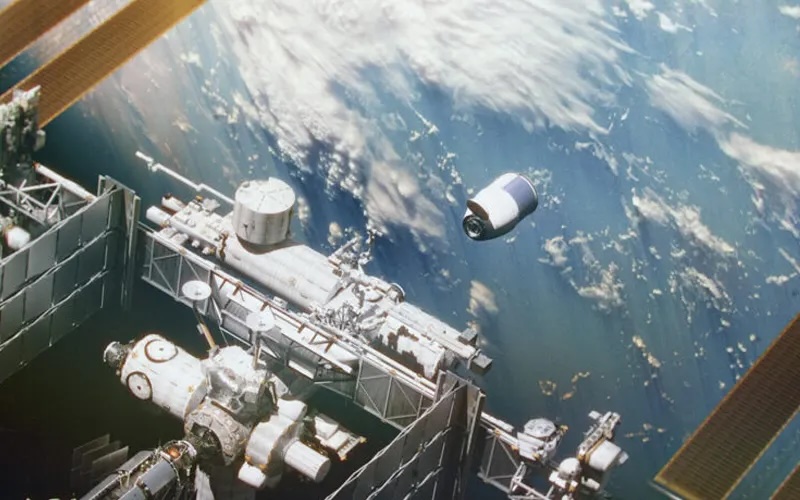
As governments and private companies accelerate plans for commercial space stations, orbital manufacturing and eventually lunar infrastructure, one question is becoming increasingly important: who – or what – will do the work in space?
Brooklyn-based startup Icarus Robotics believes much of that work will be carried out by intelligent robotic workers.
Founded in 2024, the company is developing what it describes as a “robotic labor force for space”, combining embodied artificial intelligence with human-in-the-loop control to automate routine tasks in orbit before progressively increasing levels of autonomy.
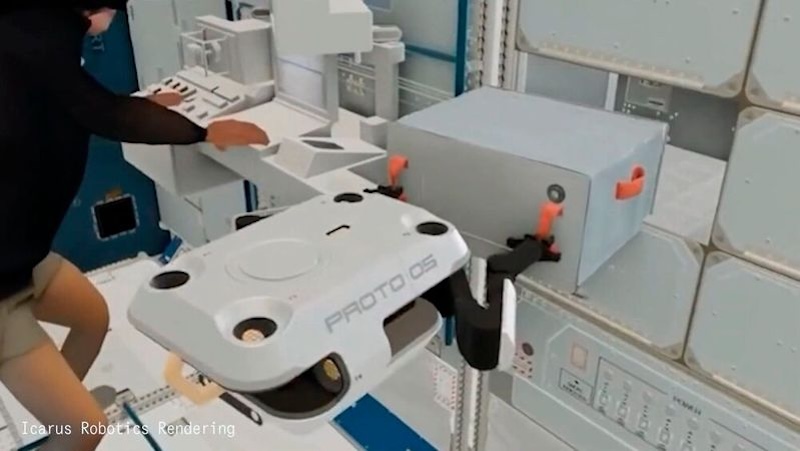
Rather than attempting to replace astronauts, Icarus aims to free them from repetitive but essential jobs such as cargo handling, equipment inspection and experiment setup, allowing crews to spend more time on scientific research and exploration.
The company says the same technology could eventually support commercial space stations, orbital manufacturing facilities and future missions to the Moon and Mars.
Leading the company’s technology strategy is co-founder and chief technology officer Jamie Palmer, who previously worked on robotics and artificial intelligence technologies and was recognised in the Forbes 30 Under 30 list.
Palmer is overseeing the development of Icarus’ embodied AI platform as the company prepares for planned testing aboard the International Space Station.
In this exclusive Q&A with Robotics & Automation News, Palmer discusses why cargo logistics is one of the most immediate opportunities for robotic automation in orbit, the challenges created by the lack of microgravity testing facilities in the United States, and why simulation alone cannot replace real-world testing in space.
He also explains Icarus’ approach to combining teleoperation with autonomous learning, outlines the role robotic workers will play in the emerging commercial space economy, and shares his views on the transition beyond the International Space Station toward commercial orbital platforms.
Looking further ahead, Palmer discusses the technical hurdles that still stand between today’s space robots and fully autonomous operations on the Moon and beyond.
Interview with Jamie Palmer

Robotics & Automation News: Icarus Robotics describes itself as building a “robotic labor force for space” using embodied AI. What specific tasks in orbit do you believe are most urgently in need of automation, and why?
Jamie Palmer: Cargo logistics is the most immediate and high-impact target. Every 45 to 60 days, around three and a half tons of cargo arrives at the ISS – and it takes a team of astronauts days to unload, sort, and repack it.
That’s highly skilled people doing work that doesn’t require their expertise. Beyond logistics, interface board manipulation, science experiment setup and teardown, and routine inspection tasks are all strong candidates.
These are repetitive, well-defined, and time-consuming – exactly the kind of work robots should be doing so astronauts can focus on the science that actually requires human judgment.
But the bigger picture is what’s coming. As orbital data centers, commercial space stations, and in-space manufacturing come online, the operational demands will be enormous.
Someone has to build, maintain, and run all of that infrastructure – inspecting equipment, repairing systems, assembling structures. The robotic labor force we’re building for the ISS today is the foundation for what the space economy will need at scale tomorrow.
R&AN: You’ve highlighted the shortage of US-based parabolic flight testing. How serious is this bottleneck in practical terms for startups developing hardware intended for microgravity environments?
JP: It’s a genuine constraint that the industry underestimates. Zero-G is the only US-based parabolic flight operator, and with their operations suspended, startups developing hardware for microgravity have limited domestic options.
For us, it adds time and cost at exactly the stage where you’re trying to move fast – you can simulate a lot, but you can’t simulate microgravity.
The physics are different in ways that matter enormously for robotics. Teams are flying to Europe just to validate basic hardware behavior, which is a significant overhead for an early-stage company.
R&AN: Many robotics companies can iterate quickly on Earth using simulation, digital twins, and AI training environments. Why is real microgravity testing still indispensable for space robotics? What kind of companies or organizations need this – can you provide any names?
JP: Simulation gets you far, but microgravity breaks assumptions in ways that are very hard to model accurately – fluid dynamics, contact mechanics, and how objects behave when you apply force without gravity anchoring them.
For space robotics specifically, the interaction between a robot and its environment changes fundamentally. You need real data from real conditions to train and validate your systems properly.
Any company building hardware that physically interacts with objects in space needs this – robotics, satellite servicing, in-space manufacturing. The closer your hardware gets to real operations, the less simulation can substitute for the actual environment.
R&AN: You secured an ISS deployment partnership only about a year after founding the company. What were the biggest technical or operational hurdles you had to overcome to move from concept to planned in-orbit testing so quickly?
JP: Two things stand out. First, building credibility with established aerospace players fast enough to get a seat at the table – the industry’s default assumption is that things take years, and we had to consistently demonstrate that we could execute on a startup timeline without cutting corners on safety or engineering rigor.
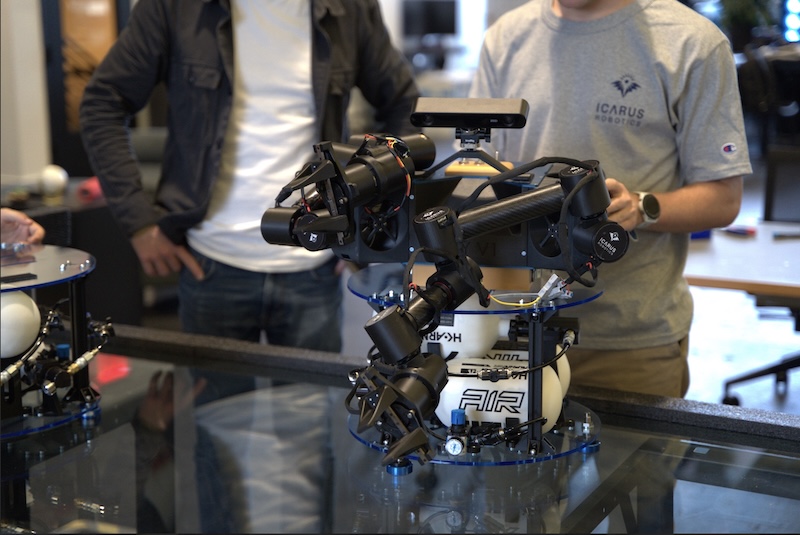
Second, generating meaningful training data for our AI without access to real microgravity. We built an air-bearing test facility at our lab in Brooklyn’s Navy Yard that lets us simulate 2D microgravity – it’s not a perfect substitute, but it lets us make real progress on developing our embodied AI while we work toward the ISS deployment.
R&AN: Your robots begin with human-in-the-loop control and learn from demonstration. How do you see the balance evolving between teleoperation and full autonomy in space operations over the next decade?
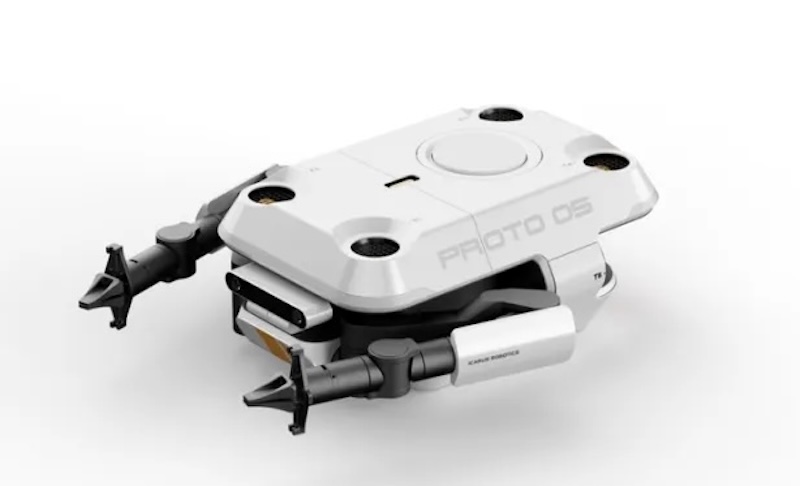
JP: We’re deliberate about this. We start with full teleoperation – not because autonomy isn’t the goal, but because teleoperation lets us collect real, high-quality training data from expert human operators in the actual environment.
From that, we build toward shared autonomy, where the robot handles routine elements of a task and hands off to the human for edge cases. Full autonomy comes last, earned incrementally as the AI demonstrates it can generalize reliably.
Over the next decade, we expect routine, well-defined tasks to become largely autonomous, with humans supervising rather than controlling. The human stays in the loop for novel situations, safety-critical decisions, and anything that requires judgment the AI hasn’t earned yet.
R&AN: Space agencies and private companies are increasingly talking about orbital manufacturing, commercial space stations, and lunar infrastructure. What role do you expect robotic workers to play in enabling a scalable space economy?
JP: The commercial space economy won’t be able to scale without them – it’s that simple. Getting to orbit is no longer the hard part.
Operating there is. And you can’t build an orbital manufacturing industry, or run commercial stations, or maintain lunar infrastructure on the back of fewer than 80 active astronauts.
That number isn’t going to grow fast enough. Robots don’t replace that workforce – they multiply it. One operator running four robots isn’t a cost-cutting measure; it’s a completely different way of thinking about what’s possible up there.
R&AN: The ISS is expected to be retired around 2030, while NASA pushes toward a more commercial low Earth orbit ecosystem. Do you think the industry is prepared for that transition, particularly in terms of infrastructure for testing and validating new technologies?
JP: The ISS has been irreplaceable – there’s nothing quite like it and there won’t be for a while. The commercial stations coming to replace it are exciting, but they’re not there yet, and that gap is real.
For companies trying to develop and validate hardware for the next era, the window to do it on the ISS is closing faster than most people realize.
How the industry navigates that transition – and whether the right testing and validation pathways exist on commercial platforms in time – will shape a lot of what the next decade in space actually looks like.
R&AN: The United States has historically led many areas of aerospace innovation, yet startups are reportedly traveling to Europe for microgravity testing access. What does this say about America’s current position in the commercialization of low Earth orbit – and what needs to change?
JP: It’s a warning sign. The US has the most ambitious commercial space agenda in the world, but the supporting infrastructure for hardware development hasn’t kept pace.
Parabolic flight access and testing facilities are areas where Europe has quietly built real capability. If American startups are routinely traveling to Europe to access parabolic flight testing, that’s not just an inconvenience; it’s a competitiveness issue.
The administration is betting big on commercial space, but that bet only pays off if startups can develop and validate technology efficiently. Closing the testing infrastructure gap is part of that.
R&AN: Looking longer term, your vision includes supporting lunar, Martian, and deep-space missions. Which technical challenges in space robotics remain the hardest to solve before truly autonomous off-world operations become realistic?
JP: Three key problems stand between robots and the moon. Hardware first – the lunar environment is harsh, and while the hardware to handle it exists, it’s expensive, has long lead times, and the robustness required discourages more complex systems.
Then latency – the communication delay to the moon makes real-time teleoperation impractical, which means robots need to be largely autonomous.
And finally, that autonomy doesn’t fully exist yet; the advances we’ve seen in robot learning on Earth won’t transfer directly to space because those models lack training data under lunar physics. The last piece of the puzzle is in-distribution data from the lunar surface itself.
That’s where our ISS work becomes the foundation for a lunar labor force. The conditions robots face on the ISS aren’t that different from what they’ll encounter on the moon – so robots trained in microgravity are the natural starting point for a lunar labor force.
From there, you layer in lunar physics simulation data and eventually real environment data from the surface. It’s a long road, but we think it’s achievable within the next 3-5 years.
