Automation and robotics have always been about combining reliable hardware with increasingly capable software. Over the last few years, the software half of that equation has shifted decisively toward artificial intelligence.
Vision systems that read labels and detect defects, natural-language interfaces that let operators query a line in plain English, predictive models that flag a failing motor before it stops – these now lean on AI models rather than hand-written rules.
The question for automation vendors is no longer whether to use AI, but how to wire it in so the system stays reliable and affordable as the technology keeps moving.
The Single-Provider Trap
The natural first step is to pick one AI provider, integrate its API, and build the feature around it. It works immediately, which is exactly why it becomes a liability.
The AI model market moves faster than almost any other part of the technology stack. New models ship every few weeks, prices swing, and the best model for a given task – visual inspection, speech, document parsing, decision support – changes several times a year.
A product hard-wired to a single provider cannot capture any of that. When a cheaper or more accurate model arrives, adopting it means a rewrite. When the provider has an outage, the automated system loses its intelligence with it.
And integrating several providers directly to stay flexible means juggling multiple SDKs, keys, and billing relationships – overhead that is especially unwelcome in industrial software that has to run for years.
The Access-Layer Approach
The pattern that resolves this mirrors how automation engineers already handle other dependencies: put a standard interface in front of the moving part.
Instead of calling each AI provider directly, route every AI request through a single gateway that speaks one consistent format and fronts many models at once.
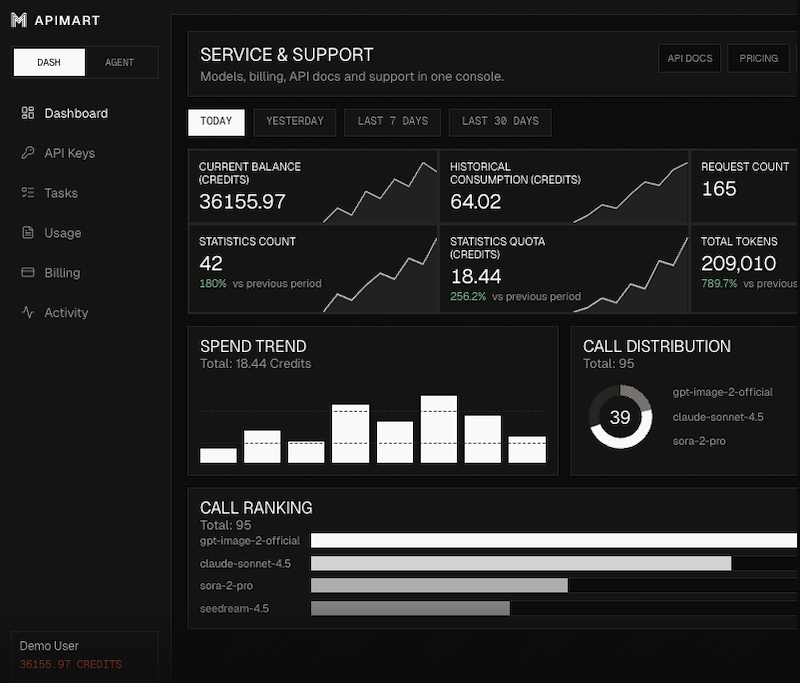
A multi-model AI API implements exactly this – hundreds of models spanning text, image, and video, reachable through one OpenAI-compatible endpoint under a single key and one consolidated, pay-as-you-go bill, frequently at rates below the providers’ own list prices.
For an automation product, the entire model catalog becomes available through one integration. Routing high-volume inspection to a fast, cheap vision model while reserving a premium model for edge cases becomes a configuration choice, and adopting a newly released model is a small edit rather than a project.
Practical Guidance
A few habits keep an AI-enabled automation stack clean. Wrap every AI call behind a single internal function that takes the model as a parameter, so switching models never touches control logic.
Tier by task, sending routine, high-volume work to inexpensive models and saving premium models for the small share of decisions that need them.
Handle AI calls asynchronously so a slow response never stalls a real-time process. And log model, latency, and cost per call, so the economics of the deployment stay visible.
The Bottom Line
AI models will keep getting cheaper and more capable, and the leaders will keep trading places. The automation companies that benefit most are not the ones that bet hardest on a single provider – they are the ones that treat model access as swappable infrastructure, choosing the best option for each task and switching freely as the market moves.
Getting that foundation right turns a constant stream of new models from a maintenance burden into a steady, compounding advantage.
