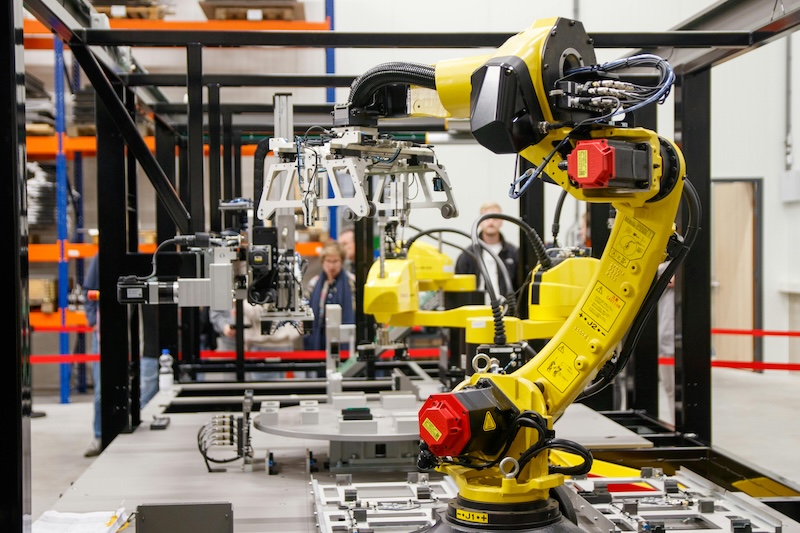
Modern robotics is often associated with advanced software, artificial intelligence, and precision automation. However, behind every robotic system lies a foundation of mechanical engineering, where robust tools still play a critical role.
Among these tools, the offset striking wrench stands out as an essential instrument in assembly, maintenance, and heavy-duty robotic applications.
Understanding the Offset Striking Wrench
An offset striking wrench is a specialized hand tool designed to deliver high torque through impact force. Unlike conventional wrenches, it features a reinforced structure that allows technicians to strike it with a hammer to tighten or loosen large fasteners.
This method generates significantly more torque than manual effort alone, making it ideal for heavy industrial environments.
The defining characteristic of this tool is its offset design. The head of the wrench is angled away from the handle, allowing users to access bolts and nuts located in tight or obstructed spaces. This design improves leverage and clearance, enabling work in compact mechanical assemblies where standard tools fail.
Relevance in Robotics Manufacturing
Robotics manufacturing involves assembling complex systems composed of actuators, joints, sensors, and structural components. These assemblies often include tightly packed fasteners that require precise torque application. The offset striking wrench becomes invaluable in such scenarios for several reasons.
First, robotic systems are designed for efficiency and compactness. Engineers frequently place components in confined spaces to reduce size and improve performance. The offset design allows technicians to reach fasteners that are otherwise inaccessible, ensuring proper assembly without dismantling surrounding parts.
Second, many robotic structures require high-strength fastening to maintain stability under dynamic loads. Striking wrenches provide the necessary torque to secure these fasteners effectively. Their ability to withstand repeated hammer impacts ensures durability in demanding industrial environments.
Role in Robotic Maintenance and Repair
Maintenance is a critical aspect of robotics, especially in industries such as manufacturing, logistics, and energy. Robots operate continuously and are exposed to vibrations, stress, and environmental factors that can loosen fasteners over time.
Technicians rely on offset striking wrenches during maintenance to quickly and efficiently tighten or remove stubborn bolts. In cases where corrosion or wear makes fasteners difficult to move, the impact-driven mechanism of the wrench provides the extra force needed without damaging surrounding components.
Additionally, the offset feature minimizes the need to disassemble large sections of a robot. This reduces downtime, which is crucial in automated production lines where every minute of inactivity can lead to significant losses.
Supporting Heavy-Duty Robotic Applications
Not all robots operate in clean, controlled environments. Industrial robots used in sectors like mining, oil and gas, and construction are subjected to extreme conditions. These robots often require heavy-duty components secured with large fasteners.
In these applications, the offset striking wrench plays a key role in both installation and maintenance. Its rugged construction allows it to handle high-impact forces, while its compact design makes it suitable for use in confined or hazardous areas.
The ability to apply controlled, high torque ensures that critical components remain securely fastened, even under intense operational stress.
Improving Efficiency and Safety
Efficiency and safety are top priorities in robotics operations. Using the right tools directly impacts both. The offset striking wrench contributes to improved efficiency by enabling faster fastening and loosening of components, especially in challenging positions.
From a safety perspective, the tool reduces the risk of slippage and improper torque application. Its design ensures better contact with fasteners, minimizing the chances of damage or injury. Moreover, by allowing work in tight spaces without awkward positioning, it helps reduce operator fatigue and the likelihood of accidents.
Integration with Modern Tooling Practices
While robotics continues to evolve with automation and smart tools, traditional hand tools remain relevant. In many situations, automated tools cannot replace the flexibility and control offered by manual instruments like the offset striking wrench.
Modern robotics facilities often combine advanced torque tools with manual backup options. This hybrid approach ensures that technicians can handle unexpected challenges during assembly or maintenance.
The offset striking wrench fits seamlessly into this workflow, offering reliability when precision tools alone are insufficient.
For industries seeking high-quality tools tailored for demanding applications, solutions such as the offset striking wrench provide the durability and performance required in modern robotic environments.
Endnote
High-tech robotics still rely on high-quality manual tools. The offset striking wrench proves that traditional engineering is far from obsolete. It’s the link that lets technicians handle the heavy lifting that automation can’t manage alone.
As we move toward a more automated future, these specialized tools will only become more vital to keeping the gears turning.
Main image by Freek Wolsink from Pexels
