By Andre Luecht, global strategy lead – transport and logistics at Zebra Technologies
While full-site automation grabs headlines, the most decisive trend involves targeted, scalable investments that empower frontline workers, build resilience, and perfect the all-important final customer touchpoint.
Discussions about the future of manufacturing and logistics often conjure images of vast, lights-out facilities operating with near-total autonomy. While these visions capture the imagination, the practical path forward for most organizations in 2026 looks quite different.
Faced with persistent economic uncertainty and intense cost pressures, leaders find themselves questioning the wisdom of massive, high-risk capital expenditures. The real, decisive trend shaping our industry lies not in monolithic, top-down automation but in a more pragmatic, ground-up approach: “pocket automation”.
This strategy involves targeting specific, individual workflows for optimization within existing “brownfield” operations. It represents a move toward scalable, incremental investments that deliver rapid returns, enhance operational resilience, and strategically empower the human workforce.

The ROI dilemma in an unpredictable world
Today, any major automation project faces intense internal scrutiny. As a rule, an investment proposal requiring a return on investment beyond 24 months struggles to secure funding. The reason feels straightforward. Predicting volumes and operational needs for the next decade seems almost impossible in a world shaped by shifting trade tariffs, regional conflicts, and fluctuating consumer demand.
Placing a multi-million-dollar bet on a large-scale automated storage and retrieval system with a 12-year payback period introduces a level of risk many companies simply cannot afford to take. The rigidity of such systems may not offer the flexibility needed to adapt to future market conditions.
This economic reality forces a shift in thinking, pushing organizations toward solutions that offer greater agility and a faster path to value. This need for smaller, incremental investments directly builds operational resilience, allowing companies to adapt without committing to a single, long-term vision of the future.
Empowering the connected frontline
This pragmatic approach reframes the goal of automation. Instead of pursuing a vision of replacing human workers, leading companies now focus on augmenting them. They seek to turn the people who show up for work each day into the most effective, efficient versions of themselves. The short and medium-term outlook does not include legions of humanoids running warehouses; the flexibility and nuanced problem-solving skills of human workers far outweigh the current capabilities of even the most advanced autonomous systems.
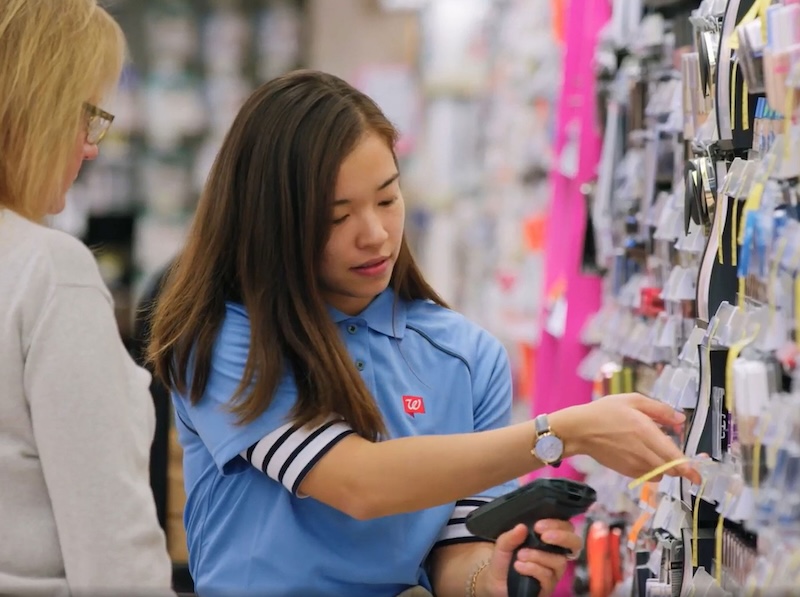
The strategic priority, therefore, involves equipping the connected frontline with the best possible tools to make intelligent decisions on the spot. This means investing in enterprise-grade mobile devices and wearables that put real-time data and guidance into workers’ hands.
A worker using a hands-free wearable computer and ring scanner, for example, can boost their individual productivity by eliminating wasted motion. This focus on frontline AI, which is intelligence that sits on the device and assists a worker in their specific task, helps reduce errors and improve their output. This path proves far less expensive and infinitely less risky than investing in unproven technologies that promise much but offer few real-world proof points.
Intelligent automation in the warehouse
This workflow-by-workflow automation strategy comes to life across the facility, from the dock doors to the outbound lanes. Unloading a trailer of parcels, for instance, represents a relatively mature area of automation, featuring autonomous forklifts for palletized goods and automated systems that use suction cups on their end-of-arm tooling to handle loose-loaded items for induction onto a conveyor.
Loading, however, presents a far more complex geometric challenge that has seen less commercial success. Where you see automated loading, you often find a remote operator guiding the machine from a screen, a form of human-in-the-loop assistance.
The real opportunity emerges when we use technology to sense and act in real time. Modern machine vision systems, powered by on-device AI, do much more than simply capture barcode data. These intelligent automation solutions can dimension a package, detect damage or leaks, and verify an order’s contents, all while an item moves at full speed on a conveyor. A scan tunnel at the sortation point, for example, can process thousands of parcels per hour with near-perfect accuracy, eliminating a major bottleneck.
This ability to capture high-fidelity data provides the foundation for an unbroken thread of asset visibility, most powerfully enabled by Radio Frequency Identification (RFID). The interest in source-tagged RFID, where a tag becomes part of an item at its point of origin, has exploded for three primary reasons.
First, retailers mandate it for improved inventory accuracy and shelf availability. Second, regulatory bodies like the FDA require it for complete traceability in the food and pharmaceutical chains. Third, consumers demand it for product authentication, wanting assurance that their expensive bottle of wine or luxury handbag is authentic. As the cost of tags continues to fall, their application multiplies, making comprehensive asset visibility an achievable goal.
The final touchpoint: Perfecting the last mile
The efficiencies gained within the four walls of the warehouse directly fuel a superior experience at the last mile, often the only physical touchpoint between a brand and its customers. As consumer expectations escalate, the pressure to provide faster, more transparent, and more flexible delivery services intensifies.
Customers now expect a “pizza delivery tracker” level of visibility for every order. They want to follow a package in real time and even reroute it to their office on a day they unexpectedly need to commute. This capability rests entirely on the foundation of real-time tracking data originating from the warehouse and a fully connected frontline.
Furthermore, AI-assisted technologies in the hands of the driver can perfect this critical moment. An intelligent application on a driver’s device can use the camera to instantly locate the correct package in a van full of shifting parcels, reducing search time.
The same on-device AI can guide the driver to take a flawless, compliant proof-of-delivery photo on the first try, automatically blurring private information. Each second saved at every stop enables a driver to complete more deliveries, directly addressing rising cost pressures while ensuring a professional, positive brand interaction.
Your next move in automation
For logistics leaders navigating 2026 and beyond, the path to building a more robust and efficient operation does not demand a complete reinvention. It requires a strategic focus on pragmatic, targeted automation. The ultimate question moves from if you should invest to where and how you can achieve the greatest impact.
The answer lies in making scalable investments in enterprise-grade, AI-capable technologies that solve specific problems, pay back quickly, and empower your frontline workers. By focusing on augmenting your existing workforce and building a true foundation for intelligent operations, you create an agile and resilient supply chain ready for the challenges ahead, one workflow at a time.

About the author: Andre Luecht is global strategy lead – transport and logistics at Zebra Technologies, a global leader that provides the foundation for intelligent operations driven by AI and data integrated with human expertise.
