Odyssey, an AI research company pioneering foundation world models, has announced Odyssey-3, its most powerful world model to date.
The new model represents a significant advance toward general-purpose intelligence that can understand, predict, and interact with both physical and virtual environments.
World models learn from vast examples of the world evolving to predict and simulate what happens next, including how actions affect outcomes.
Odyssey-3 gives intelligent systems a general understanding of how the world works before they are taught a specific task.
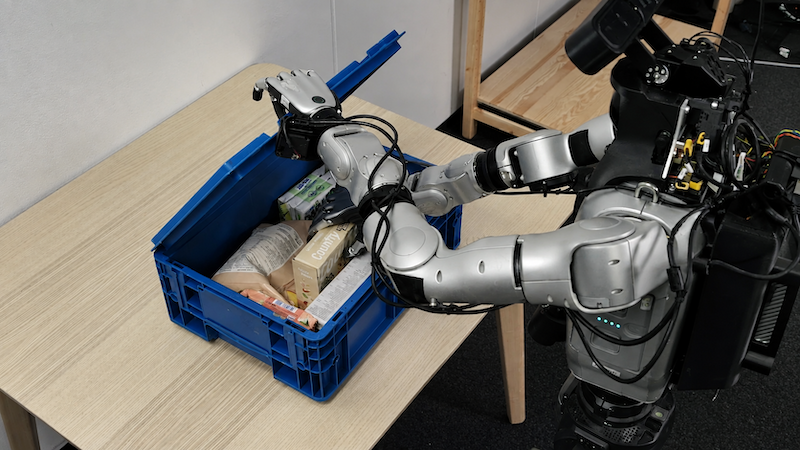
The model has shown the ability to control robots and humanoids, drive vehicles, pilot drones, generate environments for training AI agents, and play video games. The new model has already been adopted by companies including Flexion, a leader in humanoid autonomy.
Trained on a vast dataset of visual observations of the world, Odyssey-3 builds on world models the company has been developing over the past three years.
It has learned representations of physics, dynamics, cause and effect, and human behavior that can be applied across physical and virtual systems.
Using this pretrained foundation, Odyssey-3 enables physical agents: intelligent systems that can apply a shared understanding of the world across different machines, environments, and tasks.
Rather than learning every new task entirely from scratch, these systems can draw on a broader model of how the world works and adapt that knowledge to new situations with relatively little additional experience.
Oliver Cameron, co-founder and CEO of Odyssey, says: “Odyssey-3 is a big step toward a single intelligence that can understand and operate in the world around us.
“World models give physical agents a foundation of knowledge they can carry from one machine, environment, or task to another.
“We believe that the ability to learn broadly and then adapt with relatively little experience is the path toward increasingly general physical intelligence.”
The company has demonstrated Odyssey-3 across six domains:
- Robotics: Controls multiple robot arms and has demonstrated recovery behaviors it was not explicitly trained to perform.
- Humanoids: Powers control policies developed with Flexion that perform tasks in real time and generalize to environmental changes better than the baselines Odyssey tested.
- Vehicles: Drove autonomously on roads in India using a policy trained with approximately 20 hours of simulated driving data.
- AI training: Generates interactive environments where AI agents can act, learn from consequences and help expose weaknesses in the world model.
- Drones: Powers aerial navigation policies trained with simulated data to navigate indoor environments and avoid obstacles.
- Games: Plays Grand Theft Auto V and has shown early transfer of learned behaviors into other games without additional policy training.
Odyssey-3 is designed as a foundation that can span these domains rather than a model optimized for a single machine or application.
By learning common representations of how environments behave and how actions change them, Odyssey is working toward world models that can transfer knowledge across increasingly diverse physical and virtual systems.
