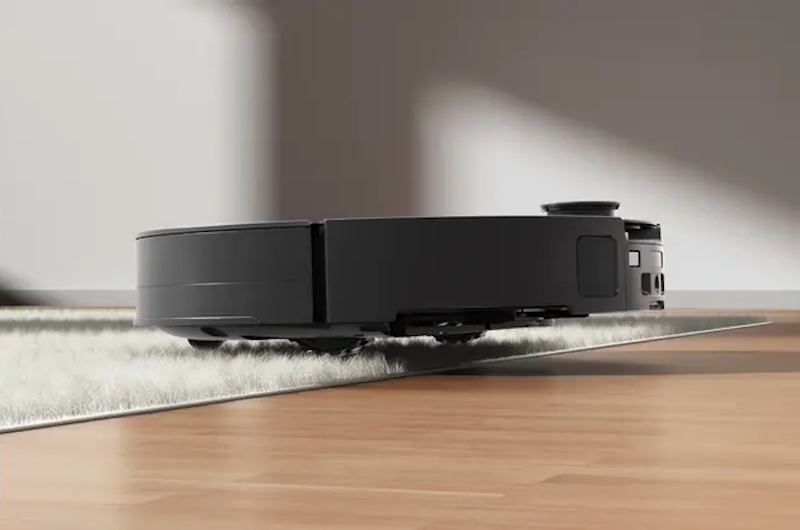
A robot vacuum that empties its own bin sounds like a chore removed. Someone still has to clear cables, untangle brushes and clean the dock. A robot mower keeps the lawn short, but the borders are still yours.
So the useful question isn’t “What can this robot do?” It’s “How much of the job will I still be doing?” These five checks turn an impressive demo into a realistic buying decision.
1. Start with your space, not the brand
For a robot vacuum, check floor types, rugs, thresholds and furniture clearance. Then check where the dock goes: a robot that fits under the sofa can come with a station that takes up a corner of the room.
For a mower, map the slopes, narrow passages and separate lawn sections. For a pool cleaner, confirm it handles walls and the waterline, not just the floor.
A robot can review well and still be wrong for your home.
2. Find evidence from conditions like yours
Headline specs such as suction power, cutting area and battery life are a starting point, not a verdict. If pet hair is the problem, look for hands-on results on hair pickup and brush tangling. If it’s kitchen floors, find mopping results and what happens at rug edges.
The most useful detail in a review is where the product struggled. Robots Rated pulls together specs, published review findings and owner feedback, which makes those weak spots easier to find.
3. Count the maintenance that remains
Write down what happens before and after a normal run. Does the floor need tidying first? How often do brushes, filters or pads need attention? Does the pool robot need lifting out and charging? Does the window cleaner need moving between panes?
You’re buying a routine, not just a machine. A short, predictable job is a good trade for regular cleaning. Constant rescues are not.
4. Check support, parts and subscriptions
Before paying, confirm that replacement consumables are easy to buy, that the warranty terms are clear, and that there’s a support route in your country. Read owner reports on faults and how they were handled, while remembering that individual stories aren’t a failure rate.
Check which features depend on an app, internet connection or subscription. These affect both running costs and how long the robot stays useful.
5. Shortlist against your top priorities
Pick the two or three things that matter most, then compare models only on those. Compromises become much easier to judge. Robots Rated’s robot vacuum finder narrows options by household needs if you want a starting point.
The best purchase is one whose strengths match your everyday problem, and whose remaining chores you’re happy to take on.
