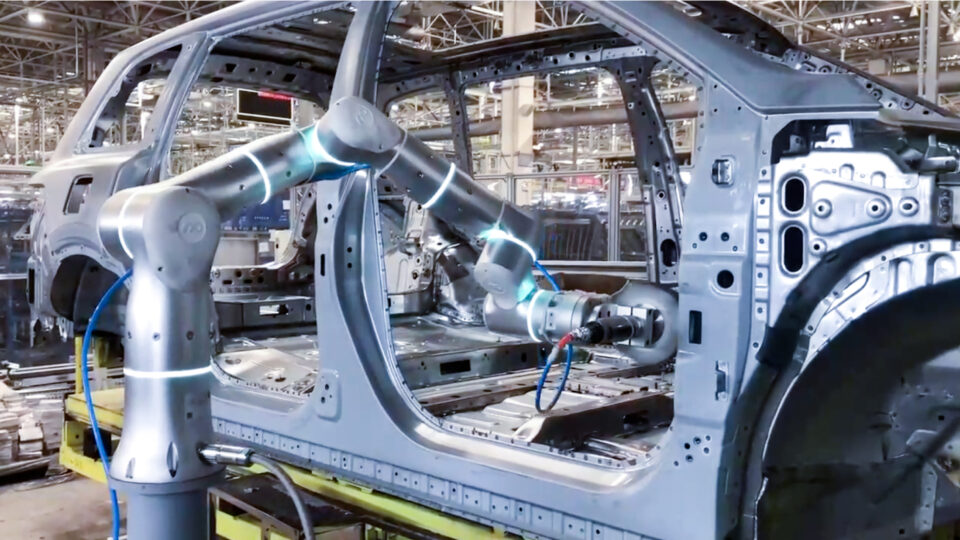
Nvidia has released Isaac ROS 5.0, introducing AI agent capabilities designed to help developers build, customize and deploy robotics applications more quickly using the open-source Robot Operating System ecosystem.
Released at ROSCon in Toronto, Canada, Isaac ROS 5.0 adds new agentic development workflows alongside expanded support for Nvidia’s Jetson computing platform and its physical AI models and libraries.
Isaac ROS is a collection of GPU-accelerated packages built on ROS, the open-source robotics framework maintained by Open Robotics. Nvidia says its software brings accelerated computing and production-ready libraries to a ROS community numbering almost 1.3 million users.
One of the major additions in version 5.0 is support for AI agents that can assist developers with robotics development tasks.
Nvidia has introduced new Isaac skills for setup and manipulation, providing reusable workflows that can be used by both developers and AI agents. Agent-ready documentation is intended to allow AI systems to understand Isaac ROS tools and translate developer instructions into working applications.
A new FoundationStereo fine-tuning skill, for example, enables an AI agent to help adapt a stereo perception model to a developer’s cameras, operating environment and application.
Nvidia has also made its pick-and-place workflow available as a standalone, agent-ready skill. The workflow connects object detection, depth estimation and pose output for robotic manipulation applications.
FoundationPose, Nvidia’s foundation model for object pose estimation and tracking, meanwhile gains an agent-ready inference library that the company says enables robots to perceive and track the position and orientation of objects up to 5.5 times faster.
Isaac ROS 5.0 also introduces support for ROS Lyrical and Ubuntu 24.04. Nvidia says it worked with the Open Source Robotics Alliance on a standard data-handling interface intended to improve the way robotics software operates across different computing hardware, including GPUs.
Several robotics companies are already integrating Isaac ROS into their systems.
RealSense-sponsored open-source project AgenticROS connects Isaac ROS with Nvidia Nemotron open models and NemoClaw blueprints, enabling AI agents to interact with ROS-based robots.
Intrinsic is using Nvidia FoundationPose in its newly released Open Machine Tending Solution, part of the open-source Intrinsic Core platform.
The system uses the perception pipeline to dynamically detect and handle parts, reducing reliance on physical fixtures and specialized integration.
Universal Robots has incorporated Isaac ROS into its AI Accelerator software development kit, while Flexiv is integrating the technology with its Rizon 4 adaptive robot.
Other users and partners highlighted by Nvidia include Magna, Seeed Studio, Robotis, FieldAI, Noble Machines and Mentee Robotics.
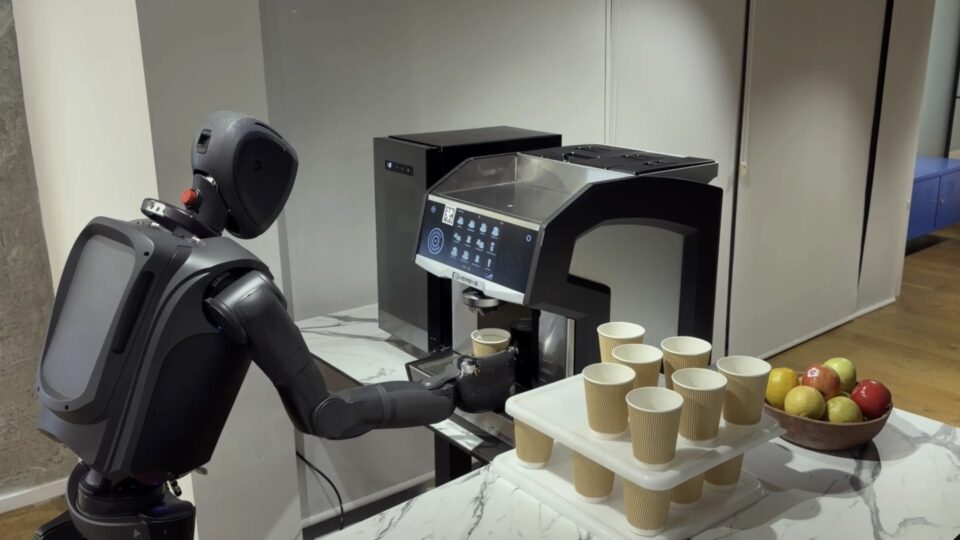
Mentee uses Isaac ROS as the perception and AI backbone of its MenteeBot humanoid, while FieldAI is integrating the software into robot foundation models running directly on Jetson hardware without requiring cloud connectivity.
Isaac ROS 5.0 supports Nvidia hardware ranging from the Jetson Orin Nano through to the higher-performance Jetson Thor platform, providing a common development and deployment path as robotic AI workloads increase in complexity.
Isaac ROS 5.0 is available now as free, open-source software.
