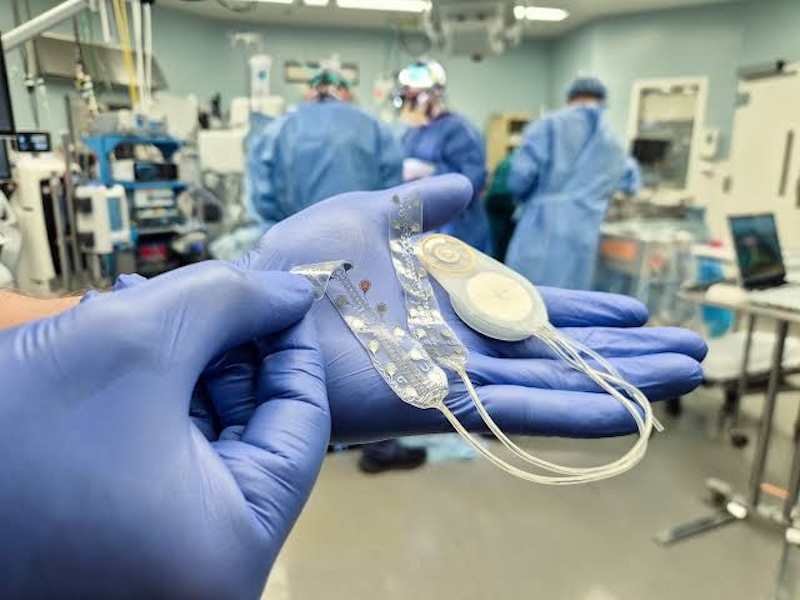
CorTec has received a second US Food and Drug Administration Breakthrough Device Designation for its Brain Interchange brain-computer interface, this time covering communication for people with non-progressive quadriplegia.
The designation covers the use of the implantable BCI to enable people with paralysis in all four limbs to control a computer cursor through neural signals, providing an independent means of interacting with computers and other digital systems.
The Freiburg, Germany-based neurotechnology company received its first Breakthrough Device Designation for Brain Interchange in April 2026 for stroke motor rehabilitation.
The FDA grants Breakthrough Device Designation to technologies that have the potential to provide more effective treatment or diagnosis of life-threatening or irreversibly debilitating conditions. The program provides a prioritized and more interactive regulatory review process during device development.
CorTec says the two designations demonstrate the potential for the same Brain Interchange platform to operate both as a therapeutic and an assistive BCI.

For stroke rehabilitation, the system delivers targeted brain stimulation intended to support motor recovery. For communication applications, it records and decodes neural signals associated with a user’s intentions and translates them into digital commands.
The company says a participant in its ongoing stroke study at the University of Washington has already demonstrated computer control through thought using the same implant. The new communication program will investigate this capability under structured FDA engagement.
Non-progressive quadriplegia, which can result from spinal cord injury, can leave cognitive function intact while causing lasting loss or impairment of voluntary movement in all four limbs.
CorTec is developing Brain Interchange to allow people with these conditions to control a computer cursor directly through neural activity, potentially providing independent access to electronic devices used in everyday life.
Bidirectional brain-computer interface
Brain Interchange is a fully implantable, wireless and battery-free BCI designed to record cortical signals and translate them into digital commands in real time.
The system is bidirectional and closed-loop, meaning it can both record neural activity and deliver targeted electrical stimulation.
CorTec says the same hardware architecture can therefore support both of its FDA-designated applications – decoding movement intention for communication and providing cortical stimulation intended to support motor recovery following stroke.
Dr Frank Desiere, CEO of CorTec, says: “This second designation confirms the platform strategy behind Brain Interchange.
“To our knowledge, only a handful of BCI companies worldwide, among them Neuralink and Paradromics, hold more than one FDA Breakthrough Device Designation, and no other system is designated for stroke motor rehabilitation. We built one implantable system to fight multiple neurological conditions, and the FDA has now recognized its breakthrough potential in two of them. Our job now is to turn that recognition into approved therapies that reach patients.”
Mara Assis, head of regulatory affairs and quality management at CorTec, says: “Designing Brain Interchange as an indication-agnostic platform from day one is exactly why it was possible to move so quickly through this process.
“The platform rests on more than a decade of building brain interfaces — over 50 of our electrodes have been implanted in humans — and that progress is what carries a designation from paper into a clinical program.”
Stroke rehabilitation remains lead program
Stroke motor rehabilitation remains CorTec’s lead clinical program.
Brain Interchange is currently being evaluated in an FDA-approved Investigational Device Exemption study at the University of Washington in Seattle, where three patients have been implanted to date.
CorTec says the system has demonstrated more than 500 days of continuous signal stability, with the results published in Scientific Data, a peer-reviewed journal from Nature Portfolio.
The platform is also being evaluated in a registered epilepsy study at Mayo Clinic, which has enrolled 13 patients to date.
A communication study involving people with paralysis, known as INTENSE, is also planned at UMC Utrecht, while CorTec says it is developing the technology for further potential indications, including depression.
The company is also enrolled in the FDA’s Total Product Life Cycle Advisory Program, or TAP, for its stroke program.
Brain Interchange uses non-penetrating cortical surface electrodes, meaning its electrodes are positioned on the surface rather than entering brain tissue.
More than 50 CorTec cortical electrodes have been implanted in humans during more than a decade of development, according to the company.
Founded in Freiburg in 2010, CorTec is developing Brain Interchange as a platform that can potentially be adapted to multiple neurological conditions rather than developing separate implantable systems for individual indications.
The company also operates a contract development and manufacturing business supplying active implantable technologies to other companies in the neurotechnology sector.
