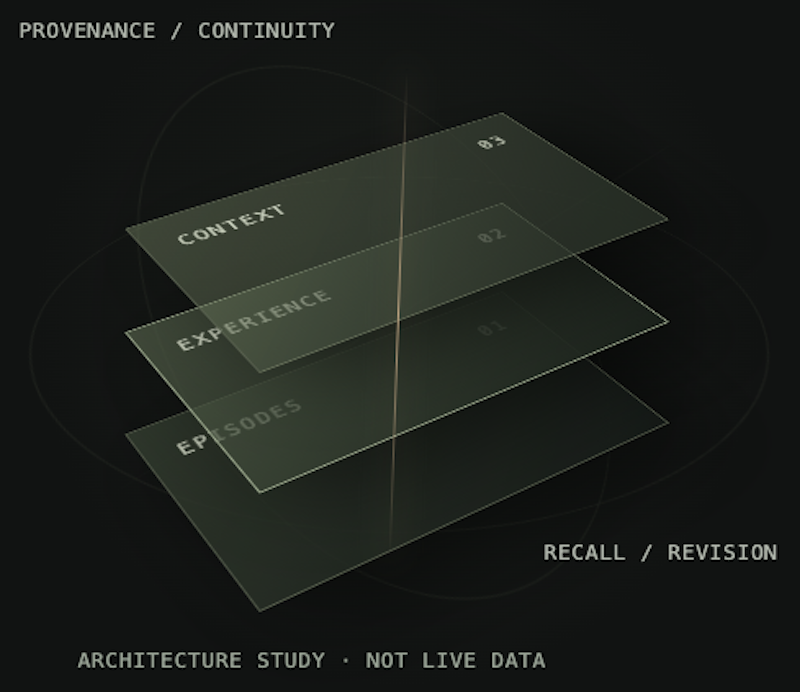
Monolithos has launched a public alpha of Robot Brain, a long-term memory and experience system designed to enable robots and embodied AI systems to retain information from previous tasks and make it available during future operations.
The system is designed to preserve a robot’s task histories, including failures, human corrections and subsequent outcomes, rather than treating each new task largely in isolation.
Monolithos says Robot Brain organizes those records into traceable and revisable experience that can subsequently be retrieved according to the task, operating conditions and purpose.
The idea is that when a robot encounters a problem similar to one it has previously experienced, its planning system can be given relevant information about what happened previously, including any human intervention that followed.
The system also retains information about the conditions under which an experience was acquired, helping prevent an old solution from automatically being treated as applicable when circumstances have changed.
Robot Brain operates as a separate service alongside an existing robotics stack rather than replacing the robot’s planning and control systems.
Monolithos says the robot’s existing systems remain responsible for decisions, real-time control and device safety, while Robot Brain manages historical experience and supplies relevant memory as context.
The technology could potentially be used for robot planning and recovery, allowing systems to inspect previous failures and interventions, as well as for reviewing experience generated during simulation and training.
Monolithos emphasizes that its current demonstrations are not measured comparisons of robot performance and that robots without Robot Brain may use other memory systems. The company says operational benefits would need to be evaluated using comparable tasks and operating conditions.
Robot Brain is currently available as a public Alpha 0.1 for macOS on Apple Silicon and Linux on ARM64 and x86-64 systems.
The software can be evaluated without physical robot hardware, a simulator, GPU or local AI model. Developers can initially test the ingestion, recall and persistence of experience before connecting the system to a robot, simulator, training platform or other execution system.
The launch comes as long-term memory is emerging as an increasingly important area of embodied AI research, particularly for robots expected to operate over extended periods rather than completing isolated tasks.
Recent research has similarly explored ways of giving robots persistent memory of environments and previous experience, including work on long-term spatial memory and navigation.
Robot Brain forms part of Monolithos’s broader work on memory and continuity systems. The company describes the technology as a way of giving machines experience they can build on while leaving control of physical actions with the existing robotics system.
