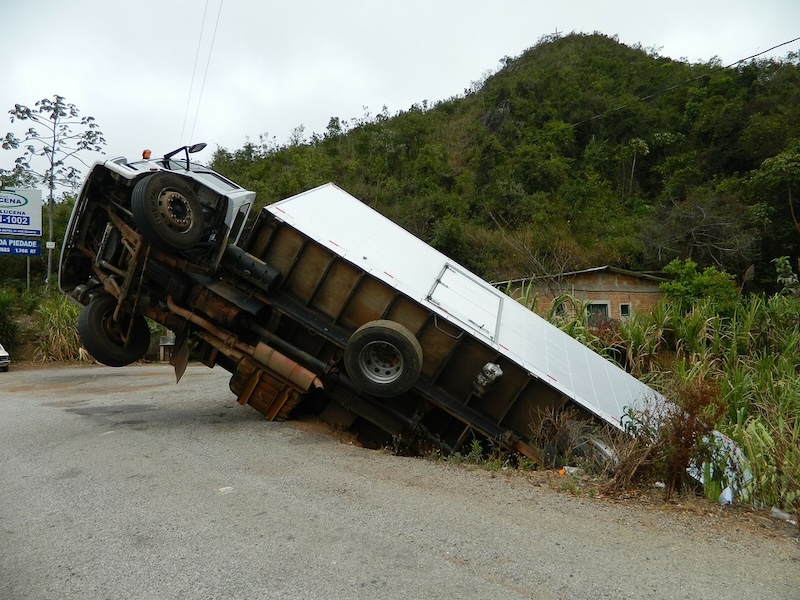
Commercial trucking is regulated differently than ordinary driving, and that difference is largely why liability in a truck crash usually doesn’t fall on a single individual.
FMCSA hours-of-service rules state that property-carrying CDL drivers can be on the road for as long as 11 hours after taking 10 consecutive hours off, yet they must stop once they reach the 14th hour of their on-duty window regardless of any remaining driving hours.
Federal oversight like that usually isn’t present for a person traveling to work, and it points to the possibility that several separate groups may have to share accountability when problems occur.
There were 5,340 people killed in crashes involving large trucks in 2024. And according to the National Safety Council, 70% of those fatalities were people in vehicles other than the truck. These figures highlight why determining liability after a truck accident may require examining the actions of parties beyond the truck driver.
Who’s on the Hook Besides the Driver
The driver is the obvious starting point, but rarely the whole picture. Because most truckers operate for a shipping or trucking firm, the firm can be held partly liable for what the driver does. Under respondeat superior, an employer is responsible for an employee’s actions taken as part of their job duties.
Truck accidents can involve more than one potentially responsible party. The first obvious one is the driver. Other possible liable parties are the trucking company, vehicle owner, maintenance provider, or another business involved in the shipment.
Knowing who is liable in a truck accident clarifies responsibility when multiple factors contribute to a crash.
The Parties People Don’t Expect
Beyond the driver and the company, there can be more parties showing up in the liability picture, depending on what actually triggered the crash. Cargo loading companies can get pulled in when improperly secured freight shifts around and ends up throwing a truck off balance.
If a maintenance contractor skips or incorrectly completes service, they can share blame for resulting mechanical failures.
Leasing firms may also share some of that burden, but it depends on how the lease agreement allocates risk between the truck’s owner and the operator. And if a design flaw inside the truck helped trigger the crash, then the manufacturer can be named directly.
None of these angles are unusual. They appear often enough that tracking each one is basically a normal step in building a truck accident case, not some rare, long-shot idea.
What the Cause Says About Who’s Liable
Identifying the cause of the truck crash can help identify liability. When fatigue is suspected, investigators may examine driver schedules, hours-of-service records, and electronic logging data.
There are cases when the cargo is not properly secured. This will lead to questions about the parties responsible for loading and securing the shipment complied with federal cargo-securement requirements. And mechanical failures tend to shift attention toward maintenance records and repair history.
On top of all that, a truck accident can leave someone dealing with a legal process that feels just as overwhelming as the physical and emotional recovery.
According to Sumter truck accident lawyer Charles T. Brooks III and their website overview, having and experiences personal injury attorney can step in with personalized representation and help protect a client’s rights while the cause of the crash and who’s responsible get sorted out.
The Insurance Layer That Changes the Fight
Insurance coverage adds this extra layer you don’t usually see in regular car crashes. Federal law says commercial trucking companies have to hold way higher liability protection than typical personal auto policies, usually at least $750,000 for most commercial trucks and as high as $5,000,000 for vehicles hauling hazardous materials.
With much greater coverage in place, the policy limit is less apt to cut off a genuine claim the way it could in a passenger-car collision, but that added exposure gives insurers stronger grounds to challenge responsibility.
What it Takes to Prove it
Pinpointing the actual responsible party or parties usually requires looking at a combination of proof, such as the vehicle’s electronic logging device, maintenance/inspection logs, shipment manifests, the driver’s employment and training file, and occasionally accident reconstruction.
Even though police reports and witness accounts count, in cases with many possible suspects, the records each side did or did not preserve tend to outweigh a person’s moment-by-moment memory.
