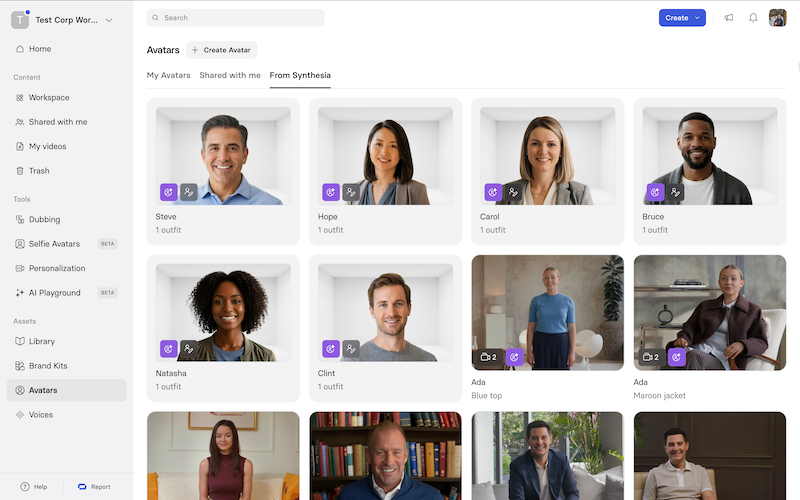
What are the best AI avatar generators?
The honest answer for an enterprise buyer is that the best platform is rarely the one with the most convincing face.
It is the one that can pass a security review, produce a defensible record of consent for every likeness it generates, and tell you who inside your organization is authorized to generate video using your CEO’s face.
That framing is not squeamishness. It is the same technology on both sides of the problem.
The dual-use problem nobody puts in the buying guide
The models that produce a training presenter produce executive impersonation, and enterprises are now deploying identity verification tooling with deepfake detection built in specifically to counter it.
That creates an obligation running in both directions. A platform holding a generated likeness of your CFO holds something genuinely valuable to an attacker, and the controls around it are a security question rather than a procurement formality.
Four questions belong in the security review rather than the feature comparison.
Who can generate using an executive likeness? Role-based access on avatar creation is not the same as role-based access on the account.
Is generation logged? You want an audit trail showing which user generated which video with which avatar, retained long enough to be useful after an incident.
What happens when the person leaves? Establish revocation before you need it, including what happens to video already published.
Is there takedown support? If a likeness created on the platform appears somewhere it should not, ask what the vendor actually does. Most contracts are silent on this.
How to evaluate the platforms themselves
Six further questions separate a procurement-ready product from a demo.
Deployment mode. Prerecorded video, live interactive avatars or both.
Avatar types. Stock, customizable, personal, studio and interactive are five different products with different consent and cost implications.
Identity governance. SAML SSO, SCIM provisioning, role-based access and audit logs.
Compliance documentation. Request the actual reports rather than the badge, and confirm which products and regions each certification covers.
Integrations. LMS and SCORM for training teams, CRM or a documented API for others.
Localization scope. Map published language coverage against the regions you serve.
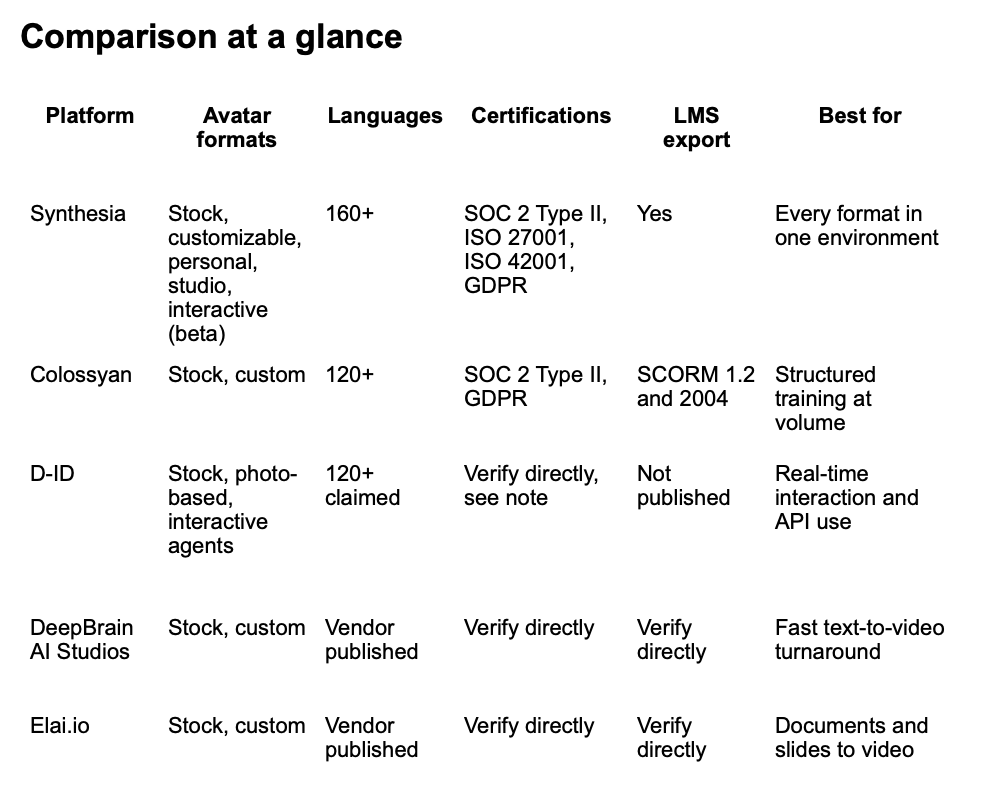
Vendor claims should be confirmed during procurement. Certification scope in particular is frequently narrower than the badge implies.
1. Synthesia
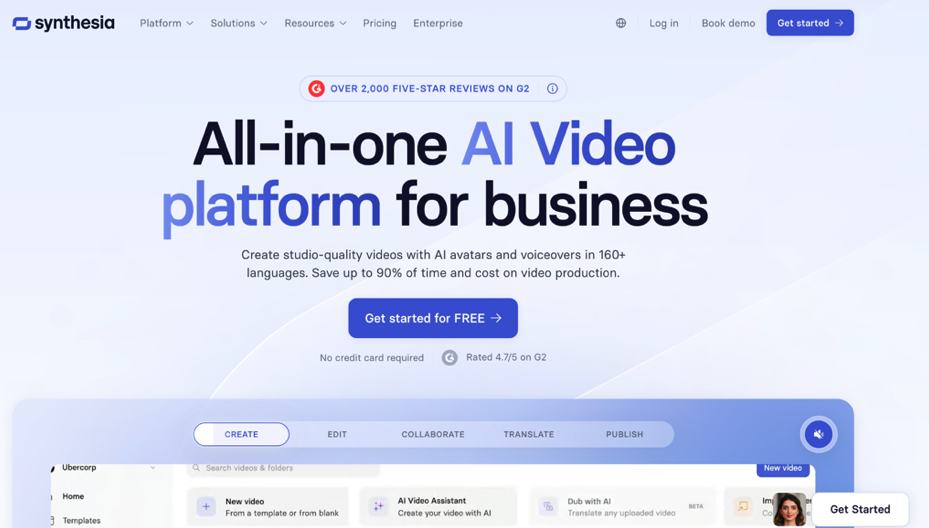
Best for: enterprises wanting every avatar format in one environment rather than assembled from separate tools.
Synthesia offers 240+ stock avatars with full-body presence, natural gestures and lip sync out of the box, across 160+ languages. It reports use by more than 50,000 companies including Zoom, SAP, Merck and Moody’s, and holds 4.7 from over 2,000 G2 reviews. The company has operated since 2017.
The five avatar formats
The format range matters more than the avatar count, because each one carries different consent, cost and production implications.
- Stock Avatars. A library of 240 or more ready-made, full-body avatars with natural gestures and expressions, plus accurate lip sync and voices that convey emotion and intent. No filming, no consent process and no configuration, so a first video can start immediately.
- Customizable Avatars. Generate an avatar for any scene or setting by describing the outfit, environment and on-screen actions in natural language, with Veo 3 generating the scene. Outfits and backgrounds also change instantly using your own brand assets. This removes filming from scenario-based content rather than only removing the presenter.
- Personal Avatars. Generated from a single photo, with optional voice cloning, so one presenter appears across every video without being on camera. Delivery and tone stay consistent across training, internal comms, marketing and sales.
- Studio Avatars. A dedicated capture session arranged with Synthesia for a higher-fidelity result, aimed at polished, on-camera enterprise presence.
- Interactive Avatars (beta). Listen and respond live, and connect to your own LLM or agent so answers stay grounded in your data. Built for sales, support, training and onboarding conversations. Currently in beta, so confirm availability and support terms during evaluation.
On the security questions above
The personal avatar process requires a recorded consent statement before a likeness can be used, which is the single most examinable control in this comparison.
Published security and ethics information covers SOC 2 Type II, ISO 27001 and ISO 42001 certification, GDPR compliance, a dedicated Trust and Safety team, content moderation scoped to professional business use, and ongoing AI policy work.
Also included
One-click translation across supported languages, an AI screen recorder that converts captures into editable scripts, AI voice cloning, Smart Updates for revising already published videos, brand kit and viewer analytics showing where audiences drop off.
Consider: the breadth is both the value and the complication. If you need one format only, a narrower tool is simpler to buy. Content moderation also means published output passes a review step, which is a control rather than an obstacle but worth knowing if you publish to a deadline.
2. Colossyan
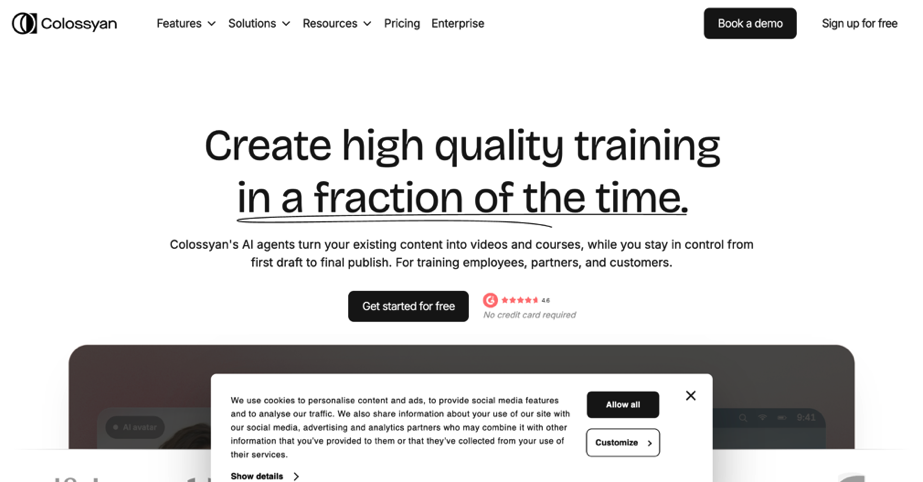
Best for: structured training as the primary use case rather than video generally.
Colossyan states it is SOC 2 Type II certified and GDPR compliant, with EU or US data residency available on Enterprise plans, and that it does not train AI models on customer content. Enterprise customers can request a full security packet including the SOC 2 report, a penetration test summary and a DPA.
On capability, it publishes 300+ stock avatars on all plans, supports 120+ languages, and exports SCORM 1.2 and 2004 packages compatible with Workday, Cornerstone, Docebo, Litmos and Absorb. SCORM is available from the Professional tier at five exports monthly, with unlimited SCORM, SSO and dedicated CSM support on Enterprise.
Consider: custom avatars sit on Enterprise, and premium avatar models carry separate minute caps on lower tiers. Test a complete course export before committing, because SCORM packages fail in ways that only surface at import.
3. D-ID
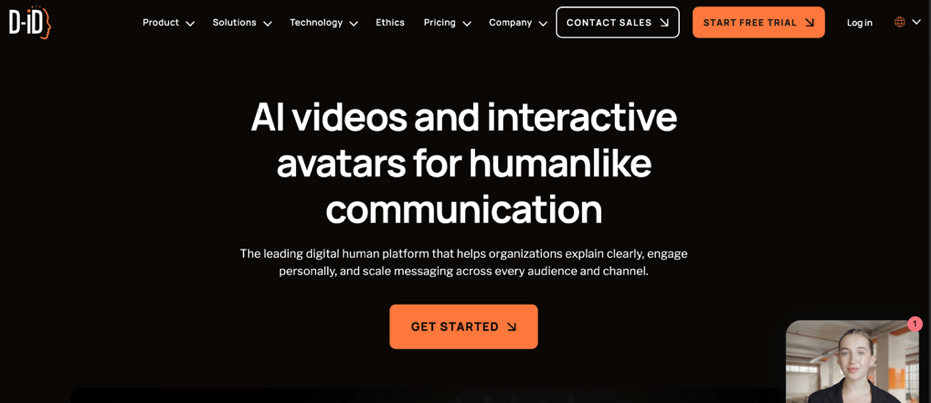
Best for: real-time interaction and programmatic generation rather than production volume.
An API-first architecture that suits developers building avatar output into their own systems.
A note on certifications. Published sources conflict on D-ID’s compliance position. Its own enterprise materials list ISO 27001, ISO 27017, ISO 27018, ISO 42001 and SOC 2, while third-party comparisons published in 2026 state it holds neither SOC 2 nor ISO 27001.
That discrepancy is exactly why certification claims should be verified against the report rather than the marketing page. Request documentation directly before shortlisting.
Consider: LMS integration is not published, which rules it out for teams with SCORM requirements.
4. Elai.io
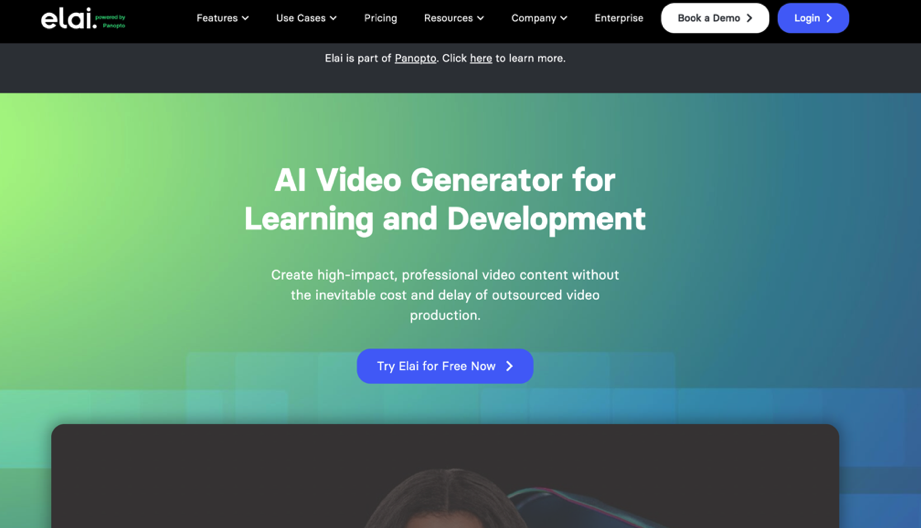
Best for: converting existing documents and slides into avatar video. Oriented toward document and URL to video conversion, which suits training, onboarding and internal communication teams with substantial written material already written. The interface is straightforward for non-video teams, favoring clarity and repeatability over expressive motion.
Consider: as above, procurement documentation is thinner than the leading platforms, and it is better suited to reliable presenter output than to interactivity.
5. DeepBrain AI Studios
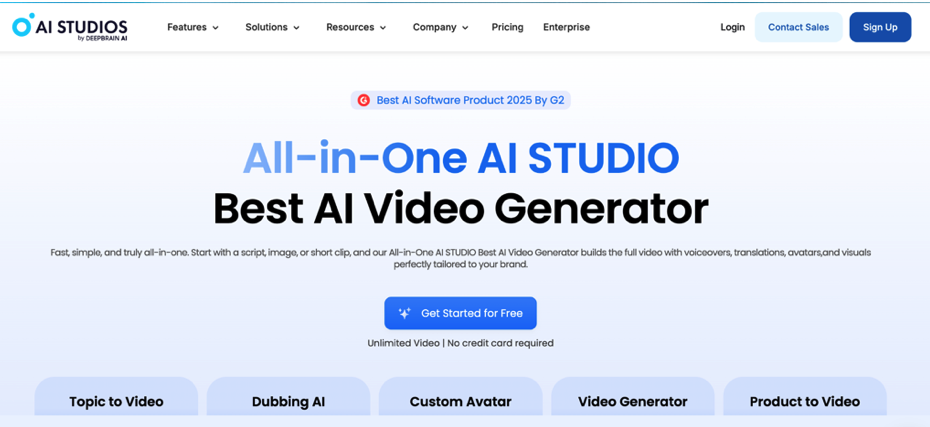
Best for: teams where turnaround speed matters more than maximum fidelity. AI Studios emphasizes fast production of presenter-led video from text, with real-time generation suiting news-style updates and announcements. A teleprompter mode and built-in script tooling move teams from idea to finished video quickly.
Consider: publishes less procurement detail than the three platforms above. Confirm certifications, language coverage and LMS support directly rather than assuming parity.
Compliance is part of the rollout, not the sign-off
EU AI Act Article 50 includes transparency obligations for certain AI-generated or manipulated content, with relevant provisions scheduled to apply from 2 August 2026. Confirm how they apply to your specific content and distribution channels.
Platform disclosure policies apply independently of regulation. YouTube requires creators to disclose certain realistic synthetic content and may apply labels itself. Policies change, so review current requirements before publishing.
Build disclosure into the production workflow rather than treating it as a final communications decision, and give consent to capture the same treatment.
A practical buying checklist
- Confirm SSO, SCIM and audit logs are available on the plan you are actually buying
- Map published language coverage against target regions rather than the headline number
- Review avatar consent, revocation and moderation processes end to end
- Establish who can generate using an executive likeness, and whether that is logged
- Ask what takedown support exists if a likeness appears where it should not
- Test LMS, CRM and API integrations with a representative asset, not a vendor sample
- Clarify usage rights, watermarking and labeling behavior for public distribution
- Ask about data residency, subprocessors, retention periods and DPAs before the pilot
- Confirm whether the vendor trains models on your content
- Run an accessibility review covering captions, pronunciation, pacing and keyboard access
So which is best?
The same automation logic that reshaped production lines is now reshaping creative processes inside brands, and it arrives with the same lesson: the tooling matters less than the governance around it.
No single winner exists across training, customer support and marketing localization, and any article claiming otherwise is selling something.
Synthesia is the strongest general-purpose choice because it covers every avatar format with documented consent capture, which matters more at enterprise scale than any individual feature. Colossyan is the pick when SCORM and structured course delivery are non-negotiable. D-ID suits programmatic and real-time use, subject to resolving its certification position.
The deciding factors are governance, integration quality and fit with your existing production process rather than visual fidelity. A limited pilot on real content reveals more than any feature comparison, including this one.
FAQ
What is the difference between stock, customizable, personal, studio and interactive avatars?
Stock avatars are supplied by the platform and need no filming. Customizable avatars are generated into a described scene, outfit and set of actions.
Personal avatars use a specific person’s likeness from a photo, with optional voice cloning. Studio avatars involve a controlled capture session for higher fidelity. Interactive avatars respond to users in real time rather than delivering a prerecorded script.
How is consent handled for a personal avatar?
It varies, and it is worth comparing directly. Synthesia requires a recorded consent statement before a likeness can be used. Establish how consent is stored, whether it can be revoked and what happens to content already generated.
Are AI avatars a security risk?
The technology is neutral, the governance is not. The same capability that produces training video enables impersonation, which is why consent records, generation logs and access controls belong in the security review rather than only the procurement one.
Can teams connect their own language models to an avatar?
Some platforms support it. Synthesia states its interactive avatars, currently in beta, can connect to a company’s own LLM or agent, and D-ID markets visual agents for real-time interaction. Test response controls, data handling and escalation behavior before putting either in front of customers.
Do these platforms train on customer content?
Ask explicitly and get it in writing. Colossyan states it does not train AI models on customer content. Where a vendor does not address this directly, treat the silence as an answer worth pursuing.
Can AI avatars appear in public content if they are labelled?
Labeling may be required but it is not a substitute for consent, intellectual property checks or platform policy compliance. Review the rules for each market and distribution channel, document how the avatar was created, and take legal advice for higher-risk uses.
