Construction scheduling is where most projects quietly fall apart. Not during the build itself, but in the planning gaps where subcontractors overlap, crews wait on materials, and the office loses touch with the field.
The best construction scheduling software closes those gaps before they become delays. After reviewing dozens of platforms, five stood out for how well they handle real-world conditions like scope changes, resource conflicts, and multi-trade coordination. This guide breaks down who they’re built for and what sets them apart.
The Difference the Right Construction Scheduling Software Makes
Most schedule problems don’t start on the job site. They start when the plan doesn’t account for a material lead time, or when two subcontractors are scheduled for the same space on the same day. The right software catches those conflicts before they cost money.
Weather delays, labor shortages, and overlapping trade timelines aren’t edge cases in construction. They’re weekly realities. A platform built for this environment absorbs change orders without unraveling the master schedule, and it keeps field crews and office teams looking at the same information in real time.
That kind of alignment directly moves your Schedule Performance Index, tightens your planned vs. actual task completion rate, and keeps resource utilization from drifting into over-allocation territory.
The 5 Best Construction Scheduling Software: Quick Comparison
1. Planera – Best for Construction Project Scheduling and Resource Planning
Which Products and Services Define Planera?
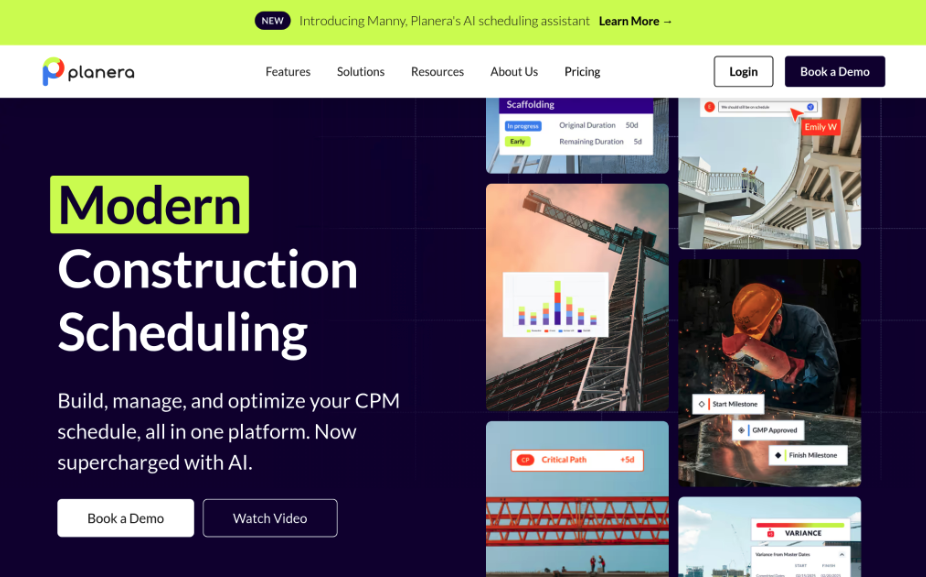
Planera is a collaborative whiteboard platform built for CPM scheduling in construction. Teams use it to build resource- and cost-loaded schedules without needing a dedicated scheduling expert on staff.
The platform connects office and field teams through a shared digital whiteboard, and it works directly with Procore, Autodesk, Primavera P6, and Microsoft Project. That’s a rare combination of accessibility and technical depth that most scheduling tools can’t match.
Why is Planera a Contender for Construction Scheduling Software?
Construction teams often lose hours migrating data between scheduling tools and project management platforms. Planera’s direct integrations with Procore and Autodesk keep that friction out of the workflow.
Putting CPM scheduling on an intuitive whiteboard interface means project managers spend less time fighting software and more time managing actual schedules.
From the User Reviews:
Planera has built real momentum with over 500 live projects across customers like Granite, Barton Malow, and Blach Construction.
The level of trust from major contractors this early in the company’s life (founded 2021, with $26.9M in total funding) suggests the product is delivering real value. From what the reviews and customer roster show, teams that adopt it tend to stay.
2. Procore – Best for End-to-End Construction Management
Which Products and Services Define Procore?
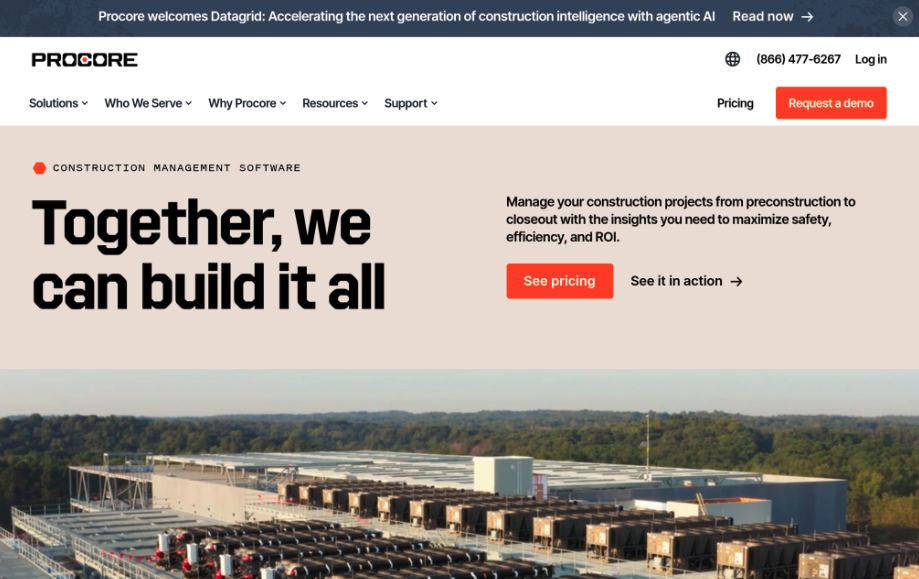
Procore covers every phase of a construction project, from preconstruction through financials and workforce management.
Their platform serves over 2 million users across 3 million projects in more than 150 countries, and they’ve added AI tools like Procore Copilot for document summarization and Procore Agents for process automation.
The unlimited user model is a practical advantage on large projects where controlling seat counts gets complicated fast.
Why is Procore a Contender for Construction Scheduling Software?
When owners, general contractors, and specialty contractors are all working the same project, the lack of a shared data source creates constant miscommunication.
Procore addresses that directly by keeping everyone in one system. The unlimited user model means the whole project team stays informed without budget headaches tied to seat licenses.
From the User Reviews:
Procore earns consistent praise for its feature depth and mobile capabilities. SelectHub analysts gave it best-in-class marks in several categories including integrations and safety management.
Most teams mention the learning curve upfront but report stronger project coordination once they’re through it.
3. Autodesk Construction Cloud – Best for Design-to-Operations Workflow
Which Products and Services Define Autodesk Construction Cloud?
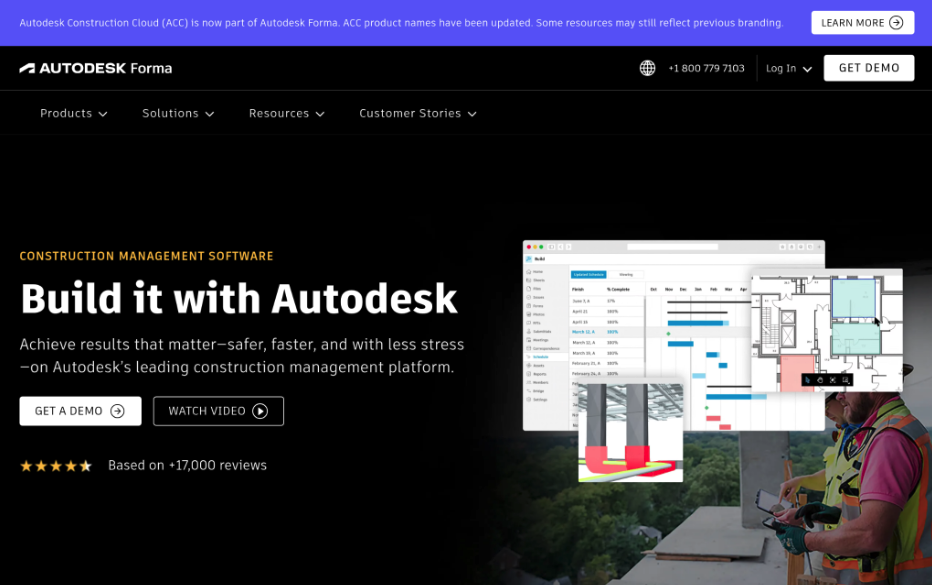
Autodesk Construction Cloud connects design, planning, building, and operations into one platform. It covers BIM, cost management, safety, clash detection, and quantity takeoff, and it connects nearly one million subcontractors through BuildingConnected.
The platform has been used on over two million construction jobs worldwide. Brinkman Construction completed tasks twice as fast using Autodesk Build, and that kind of track record is hard to ignore.
Why is Autodesk Construction Cloud a Contender for Construction Scheduling Software?
Coordinating subcontractors with overlapping task timelines is one of the hardest parts of construction scheduling.
Autodesk’s BuildingConnected ecosystem gives project teams access to the largest subcontractor network in the industry, and the clash detection and BIM work together to catch schedule conflicts at the design stage, not after crews are already on site.
From the User Reviews:
The platform picked up a 2023 Technology Solution Award from The Inside Construction Foundation Awards, and clients like CCPI have reported delivering 97.8% of projects on time and within budget.
Teams with complex design-build workflows tend to get the most out of it. The platform runs deep, so it rewards teams that are ready to commit.
The Process Behind This Ranking
Building a list like this takes more than browsing product pages. Here’s how the research actually came together.
What Information Needs to Be Collected
The starting point was building a broad longlist of scheduling platforms mentioned across construction management directories, software review sites, and documented case studies.
Entries came from multiple sources, including G2, Capterra, and GetApp, as well as industry publications covering construction technology.
Each platform was noted with its feature set, claimed use cases, and any available customer references tied to construction environments.
Pre-Verification Phase
Before any platform moved forward, options with thin or unverifiable track records were removed. Review patterns were analyzed across platforms to flag outliers, check for consistency in feedback, and identify any platforms that appeared strong but lacked real-world construction use.
Platforms with fewer documented customer results in construction contexts were cut at this stage, regardless of their general reputation.
The Verification Phase
Each remaining platform was cross-referenced to check whether product claims held up against what actual users reported. Features listed on official websites were compared against reviewer commentary to identify gaps between marketing language and real usage.
Platforms that showed measurable results, like documented improvements in project delivery timelines or resource coordination, were rated more highly than those with vague outcome claims.
Tracking Authority Markers
Credibility signals were also factored in. These included industry awards, mentions in construction technology publications, original research published by the company, and any analyst recognition.
A platform winning recognition from organizations like Gartner, TrustRadius, or construction-specific foundations signals sustained performance, not just a strong launch.
Those signals helped separate platforms that are genuinely trusted in the field from those that are newer or more narrowly tested.
Construction Scheduling Software Proof Points
The final filter focused on construction relevance. Each platform was checked for dedicated scheduling feature pages, verified reviews from construction project managers or general contractors, and case studies tied to real construction outcomes.
Platforms that could show documented improvements in schedule adherence, subcontractor coordination, or schedule accuracy scored higher. General project management tools without clear construction-specific evidence were held to a stricter standard here.
Closing Thoughts
Choosing construction scheduling software is less about finding the flashiest tool and more about finding the right fit for your team’s size, workflow, and project demands. Planera suits contractors who want purpose-built CPM scheduling. Procore fits teams that need everything in one system.
Autodesk goes deep on design-build work. Wrike and monday.com offer flexibility for teams that need adaptable workflows. The category is moving fast, and teams that invest in purpose-fit tools now will be better positioned as project demands keep growing.
