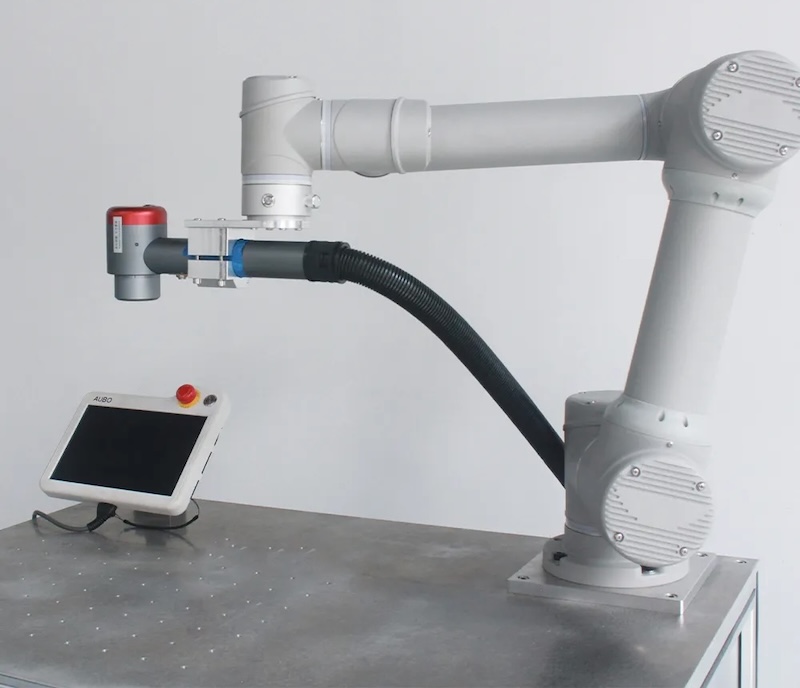
New technology is changing the face of factories. All companies are seeking to reduce cycle time, lower costs, and guarantee quality. Automation is assisting factories to accomplish their tasks in a superior manner.
A helpful technology is industrial robots and laser cleaning systems. This mix can be used to automatically remove burrs from metal components in factories. It helps save time and effort in the production process.
Many companies are taking an interest in the use of industrial laser cleaning machines in their production lines for enhanced productivity and better results.
What is Laser Cleaning?
Laser cleaning is an up-to-date cleaning technology. It is a powerful laser beam used to remove unwanted materials from the surface of metal.
It can remove:
- Rust
- Paint
- Oil
- Grease
- Dust
- Dirt
- Old coatings
Only the unwanted layer is removed by the laser. Not destructive to the original metal surface.
Laser cleaning is a cleaner process than a lot of traditional processes, as no harsh tools or chemicals are required.
What Are Industrial Robots?
An industrial robot is a machine that performs tasks automatically in a factory. They assist workers in various tasks.
Robots can:
- Move products
- Weld parts
- Assemble items
- Clean surfaces
- Perform repeated jobs
Robots can operate with great precision and speed. They are able to perform the same act repeatedly without fatigue.
Why Combine Robots with Laser Cleaning?
Cleaning is required prior to painting, coating, or welding metal parts. A dirty surface can cause issues and impact product quality.
Workers used to clean metal components manually in the old days. It was more of a process and required more time and effort.
In combination with the robot, the laser cleaning process is automatic. The robot is used to move the laser tool and remove the dust quickly from the surface.
This saves time and improves production in factories.
Faster Production
All factories wish to make production go faster.
Laser parts cleaning systems by robots can clean many parts in a short time. Robots are not only able to work round-the-clock but can also finish cleaning jobs in a short period of time.
This assists companies in creating more products daily.
A quick cleaning process also facilitates other production processes.
Better Cleaning Results
The laser movement is very accurate, which is controlled by robots.
They are able to clean a part properly in every area. This ensures consistent cleaning results time after time.
A clean surface is better for welding, painting, and coating.
It also plays a role in the improved product-making by companies.
Reduces Human Effort
The hand cleaning process involves employees spending lots of hours removing rust, oil, and dirt.
This type of work can be challenging and exhausting.
Repeated tasks can be accomplished with robots using robotic laser cleaning. The worker need not be busy continuously with cleaning activities.
They can concentrate on other important tasks in the factory.
Improves Safety
The importance of safety in every factory cannot be overstated.
Traditional cleaning practices may generate dust, chemical waste, and harmful particulates. A variety of factors can impact employees.
Additionally, laser cleaning is a safer process since it does not involve the use of harmful chemicals.
If the job is done by robots, workers are not exposed to hazardous locations.
This results in a cleaner and safer work environment.
Protects Metal Surfaces
Certain traditional cleaning practices are harmful to metal.
Grinding or sand blasting could, for instance, leave scratches on the surface.
Laser cleaning is a non-violent process. Does not corrode or harm the metal.
This helps to avoid the loss of good parts and extend product life.
Improves Welding Quality
In welding, the importance of clean metal cannot be overemphasized.
Oil, dust, and rust can weaken welds.
These are eliminated by robotic laser cleaning, and the surface is now ready for welding.
This helps create:
- Strong welds
- Better connections
- Fewer welding problems
Improves Painting and Coating
Clean surfaces are better suited to paint & coatings.
Metal can have dirt or rust, which may not allow paint to stick.
For painting, the surface must be smooth and clean, which is achieved with laser cleaning before painting.
This helps:
- Paint stays longer
- Improve product appearance
- Increase coating quality
Easy to Use in Factories
The new Robotic Laser Cleaning Technology can be readily integrated into production lines.
They are capable of working with other machines in the factory, such as:
- CNC machines
- Conveyor systems
- Welding machines
- Assembly equipment
This enables factories to develop a more automated manufacturing process.
Saves Money
A Robotic laser cleaning can help companies save money.
The following are some of the cost savings a factory can expect to achieve:
- Cleaning materials
- Chemicals
- Worker time
- Repairs
- Maintenance
The machine requires an initial investment, but it will eventually save money.
Helps Smart Manufacturing
Smart manufacturing is a trend in many factories.
Smart manufacturing is the use of robots and other advanced technologies to enhance manufacturing.
Robotic laser cleaning helps factories to become more modern and efficient.
It enables businesses to create superior products with less effort.
Uses of Robotic Laser Cleaning
Robotic laser cleaning systems are employed in many industries. You can view more about their applications, benefits, and advanced cleaning solutions.
Automotive Industry
In the automotive industry, the use of laser cleaning is especially prevalent in the cleaning of vehicle components before welding and painting, as well as to eliminate oil and dirt from the surfaces.
Aerospace Industry
Laser cleaning is important for aircraft manufacturers to prepare important parts safely.
Metal Industry
In metal factories, laser cleaning is employed for the removal of rust and to prepare surfaces.
Shipbuilding Industry
Robotic cleaning systems are used by ship manufacturers to clean large metal structures.
Future of Robotic Laser Cleaning
The use of automation is increasing every year.
Robotic laser cleaning is becoming more popular in industries because of its time, quality, and cost-saving benefits.
These systems in the future will be smarter and more user-friendly.
This technology will be employed in more factories to enhance their production lines.
Conclusion
It is a wise solution to combine industrial robots and a laser cleaning system into one in modern factories. This technology simplifies the cleaning process as it makes it faster, safer, and more accurate.
Saves money, will improve product quality, and reduce manual work.
Automation is playing a major role across industries, and thus, robotic laser cleaning is expected to play a significant role in the future of manufacturing.
