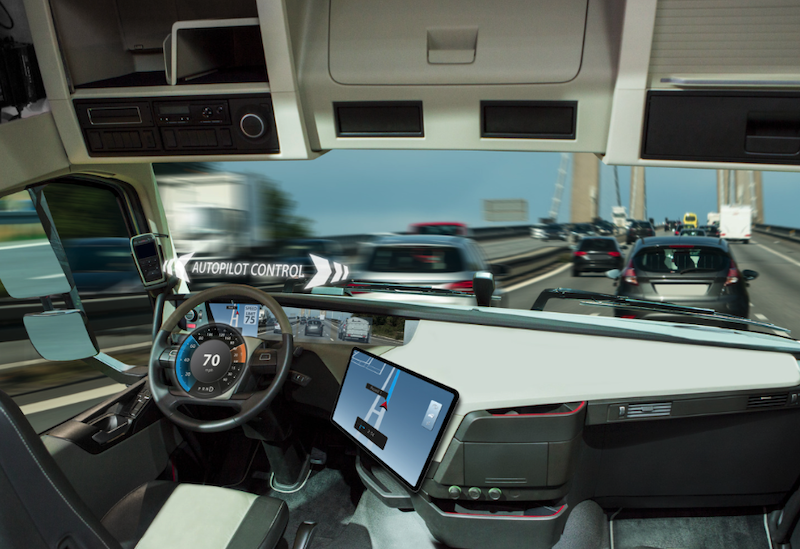
As autonomous trucking pilots continue expanding across highway corridors in Texas, Arizona, and California, the legal industry still hasn’t settled a fundamental question that becomes more urgent with every new deployment: when a self-driving truck causes a crash, who’s actually liable?
The manufacturer’s angle
Product liability law may shift fault toward the software developer or hardware manufacturer if a sensor failure, mapping error, or algorithmic misjudgment directly caused the crash.
This represents a meaningful departure from traditional trucking liability, which has historically centered almost entirely on driver conduct and carrier oversight rather than the underlying technology itself.
The fleet operator point of view
Even with fully autonomous systems behind the wheel, fleet operators retain significant maintenance and oversight responsibilities under existing regulatory frameworks.
A poorly calibrated sensor array, a missed software update, or inadequate system monitoring remains a human accountability issue, regardless of how sophisticated the driving system becomes.
As autonomous commercial vehicles become more common, questions about maintenance records, software compliance, and fleet oversight are expected to play an increasingly important role in litigation.
These are issues that a California truck accident attorney at The May Firm examines when determining whether a fleet operator, technology provider, or another party shares responsibility for a serious crash.
The ‘safety driver’ gray zone
Many current autonomous deployments still require a human safety monitor present in the cab, and determining whether that monitor could have realistically intervened in time remains one of the most contested issues in early case law involving these vehicles.
Courts are essentially being asked to evaluate human reaction time against a system that, by design, is meant to reduce the need for human intervention in the first place.
Sensor and mapping data create a new evidentiary category
Unlike traditional trucking cases that rely on ELD logs and dash cam footage, autonomous truck crashes generate enormous volumes of sensor data, including LIDAR readings, camera feeds from multiple angles, and detailed decision-tree logs showing exactly what the system “saw” and how it responded in the moments before impact.
This data is far more granular than anything available in conventional trucking litigation, but it’s also far more complex to interpret without specialized technical expertise.
Multi-party liability becomes the norm, not the exception
A single autonomous truck crash can realistically involve the vehicle manufacturer, the autonomous driving software company (which is sometimes a separate entity entirely from the truck manufacturer), the fleet operator, and potentially the safety driver, all as distinct parties with potentially overlapping liability.
This represents a significant increase in legal complexity compared to a standard trucking case with a single human driver.
Insurance frameworks are still catching up
Commercial auto insurance was built around the assumption of a human driver, and insurers are still working out how to underwrite and price risk for vehicles where decision-making authority is shared between, or fully delegated to, an automated system.
Some early policies essentially treat the software provider as a co-insured party, which creates its own complications when a claim is actually filed.
No clean precedent exists yet
Few finalized court verdicts currently exist nationally specifically addressing fully autonomous truck liability, which means the early cases working their way through the system right now are effectively setting the template that future litigation will follow.
This is an unusually consequential moment for an entire area of law that’s still being written in real time.
How traditional firms are adapting
Traditional trucking injury law firms are already adjusting their approach to account for this shift, even while most current cases still involve conventional human-driven commercial trucks.
The May Firm, led by Robert May, which has built a $400M+ recovery record handling conventional trucking and auto cases across California, has pointed to existing FMCSA carrier-liability frameworks as the most likely starting point courts will lean on until autonomous-specific statutes and regulations fully catch up with the technology.
Why this matters beyond the legal industry
For technologists and fleet operators racing toward full automation, understanding this liability landscape isn’t just a legal compliance issue; it directly affects deployment timelines, insurance costs, and public trust in the technology itself.
A single high-profile liability dispute with an unclear or unfavorable outcome could meaningfully slow broader industry adoption.
The bigger picture
For an industry racing toward full automation faster than its legal framework can keep pace, the next major autonomous trucking crash, not new legislation passed proactively, may end up being what actually defines how liability gets handled going forward.
Regulatory patchwork across states adds another layer of complexity
Unlike conventional trucking, which operates under a relatively unified federal regulatory framework through the FMCSA, autonomous vehicle testing and deployment rules currently vary significantly by state.
A truck legally operating without a safety driver in one state might require one in a neighboring state, creating genuine compliance complexity for fleets running interstate routes and, by extension, complicating liability analysis when a crash occurs near a state line.
How public perception is shaping the legal conversation
High-profile incidents involving autonomous vehicles, even relatively minor ones, tend to generate outsized media attention compared to conventional trucking accidents, which creates pressure on regulators and courts to resolve liability questions more definitively and more quickly than the underlying legal principles might otherwise naturally develop.
This public attention is itself becoming a factor in how quickly this area of law matures.
What insurers are doing in the meantime
Some commercial insurers have begun developing specialized autonomous vehicle policy riders that attempt to address the unique multi-party liability structure these vehicles create, though standardized industry-wide approaches remain genuinely rare at this stage.
Fleet operators deploying autonomous technology are often navigating bespoke insurance arrangements rather than off-the-shelf commercial policies.
Why human-driven trucking liability still matters in this conversation
Even as autonomous trucking expands, the overwhelming majority of commercial trucking accidents nationwide still involve conventional, human-driven vehicles, and the legal frameworks built around FMCSA compliance, driver fatigue, and carrier oversight remain directly relevant for the foreseeable future.
The transition to autonomous fleets will likely be gradual rather than sudden, meaning both legal frameworks will need to coexist for years to come.
What technologists building these systems should understand about liability exposure
Engineers and product teams working on autonomous trucking systems benefit from understanding that legal liability considerations increasingly shape design decisions, from how sensor data gets logged and retained to how human safety monitor handoff protocols are structured.
Building systems with litigation-ready data transparency in mind, rather than treating it as an afterthought, is likely to become a competitive advantage as this legal landscape matures.
