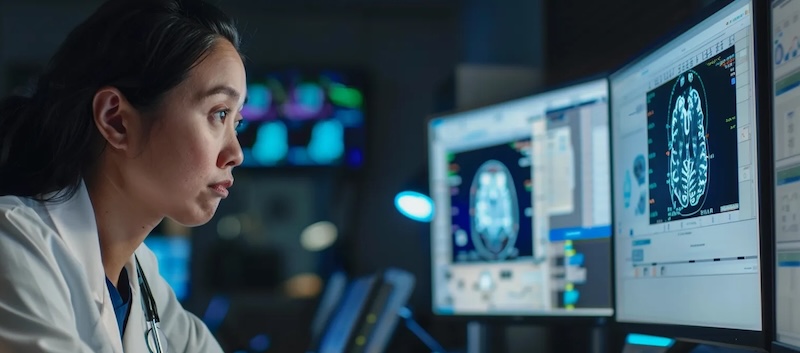
The integration of AI technology into healthcare, particularly through AI medical scribes, is transforming how patient data is managed and utilized.
A study indicates that AI scribes can reduce the time physicians spend on documentation by up to 50%, increasing the time available for patient care.
By employing AI scribes, healthcare institutions are enhancing the accuracy and efficiency of clinical documentation. Below, we explore the specific ways AI scribes contribute to patient care improvements.
How AI Medical Scribe Streamlines Clinical Documentation
AI-powered medical scribes take on the labor-intensive task of recording patient encounters, allowing physicians to focus more on the patient rather than on paperwork.
These digital assistants can understand and process natural language, converting spoken words during consultations into structured electronic health records (EHRs).

By automating data entry, AI scribes ensure that the patient’s medical history, treatment plans, and consultation notes are quickly updated and accurately reflected in their EHRs. This efficiency not only saves time but also minimizes the errors commonly associated with manual data entry.
Research studies highlight significant reductions in errors, which can critically impact patient outcomes. Notably, leveraging the AI Medical Scribe enhances the overall clinical documentation process.
To leverage AI scribes effectively, healthcare providers need to ensure the technology is seamlessly integrated into their existing EHR systems. Training medical staff on how to interact with AI technology can further optimize efficiency and data accuracy.
Enhancing Accuracy in Patient Health Records with AI Technology
Accuracy in patient health records is paramount as it influences treatment decisions and patient outcomes. AI medical scribes excel in capturing detailed and precise medical information which reduces the instances of incorrect data that can lead to adverse medical events.
AI scribes use sophisticated algorithms to analyze and sort information, ensuring that only relevant and accurate data is entered into patient records. They are equipped to understand complex medical terminology and contextual nuances, further enhancing the quality of the documentation.
For healthcare organizations looking to adopt this technology, it’s vital to choose AI scribes programmed to comply with prevailing medical guidelines and privacy regulations to protect patient information effectively.
Impact of AI Scribes on Patient-Doctor Interactions
The adoption of AI medical scribes significantly enhances the quality of patient-doctor interactions. With documentation handled by AI, doctors can maintain more eye contact and engage more deeply during consultations, creating a better rapport with patients.
Patients often report higher satisfaction rates because they feel their concerns are heard and adequately addressed when doctors are more present and less distracted by documentation tasks. Studies show that patient satisfaction correlates strongly with the quality and duration of their interactions with healthcare providers.
To maximize the benefits of AI medical scribes, training sessions for doctors on how to balance interaction with the AI tools while maintaining personal engagement with patients can be highly beneficial.
AI Scribes and Their Role in Reducing Physician Burnout
Physician burnout is a significant issue, with many doctors feeling overwhelmed by administrative burdens. AI medical scribes can alleviate this by handling the tedious aspects of medical documentation, reducing stress and workload for healthcare providers.
This reduction in clerical burdens allows physicians to have a better work-life balance and more time to focus on patient care rather than paperwork. Surveys have shown that less administrative stress leads to improved job satisfaction among healthcare professionals, which can also translate into enhanced patient care.
For organizations implementing AI scribes, it’s important to regularly assess the impact on physician well-being and work processes. Continuous feedback from medical staff is essential to ensure the scribes are meeting their needs effectively.
In conclusion, AI medical scribes represent a significant technological advancement, offering substantial benefits in terms of documentation efficiency, accuracy, improved patient-doctor interactions, and reducing physician burnout.
By integrating AI scribes into healthcare settings, medical professionals can dedicate more time and focus to their primary task: the well-being of their patients.
