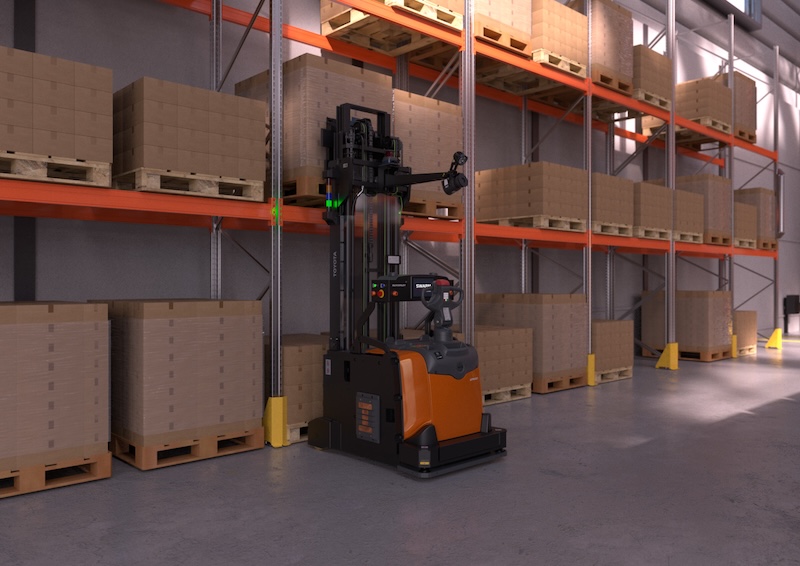
Toyota Material Handling Europe has introduced a new automated guided vehicle (AGV) system designed to handle a range of warehouse transport tasks and pallet types.
Called Swarm Automation Transport, the system combines the company’s SAI125CB automated counterbalance stacker with its T-ONE control software platform, enabling coordination across automated and mixed fleets.
The company says the system is designed to support multiple warehouse flows, including pallet transport, stacking and replenishment, while integrating with existing automation and manual operations.
Designed for mixed fleets and varied pallet handling
Toyota says the system can handle different pallet formats, including euro pallets and bottom-deck pallets, and supports both standard and turned pallet loading at low to mid-lift heights.
It is intended for use in a range of environments, including logistics warehouses, manufacturing facilities, retail distribution centers and e-commerce operations.
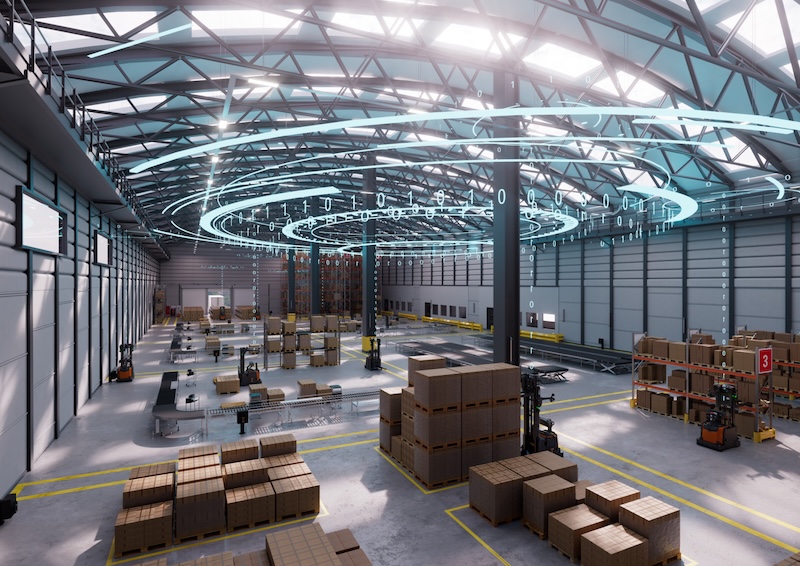
The system can operate as a fully automated solution or as part of a hybrid setup alongside manual trucks, allowing companies to introduce automation gradually.
Integration with existing warehouse systems
Swarm Automation Transport is designed to integrate with other automated equipment, including Toyota’s automated reach trucks, enabling pallet storage up to 5 meters independently and up to 12 meters when used in combination with other systems.
Toyota says the platform is suited to tasks such as repetitive transport, buffer zone handling and replenishment processes.
Focus on scalability and accessibility
“Swarm Automation Transport marks a major step in our mission to make automation accessible to every warehouse,” says José Maria Gener, vice president sales and marketing at Toyota Material Handling Europe.
“By combining the strength of our automated counterbalanced stacker with the intelligence of our automation software T-One, we’re giving customers a scalable solution that elevates safety, efficiency and performance across their entire operation.”
Energy and safety features
The system uses lithium-ion batteries with automatic charging, which the company says reduces energy consumption and extends operating time.
It is also equipped with a 360-degree safety system incorporating sensors, scanners and bumpers designed to improve safety during operation.
