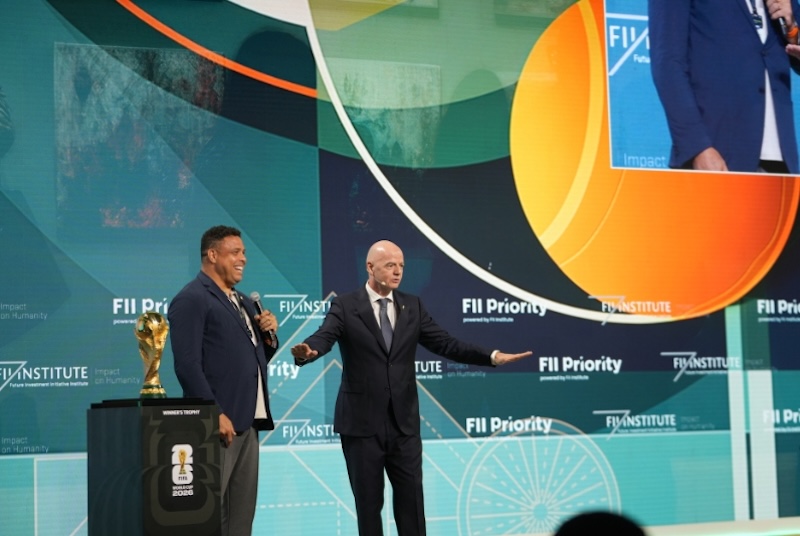
FII Priority Miami concluded its three-day summit with a series of discussions on global investment trends, economic volatility, and emerging growth sectors, alongside appearances by former US President Donald J. Trump and football legend Ronaldo Luís Nazário de Lima.
FII stands for Future Investment Initiative. It is a global nonprofit focused on “Impact on Humanity”, bringing together ideas and investment to address challenges in AI and robotics, education, healthcare, and sustainability.
Held in Miami, the event brought together investors, executives, and policymakers to examine how capital is adapting to geopolitical uncertainty, shifting supply chains, and the growing influence of artificial intelligence.
Investment strategy under pressure
Across plenary sessions, speakers focused on the changing global economic environment, pointing to rising volatility after a prolonged period of relative stability.
Josh Harris, founder of 26North, said: “In today’s environment, you have to move very slowly, stay focused on high quality assets, and be ready with capital, because we are at the beginning of a period where volatility is rising significantly after years of stability.”
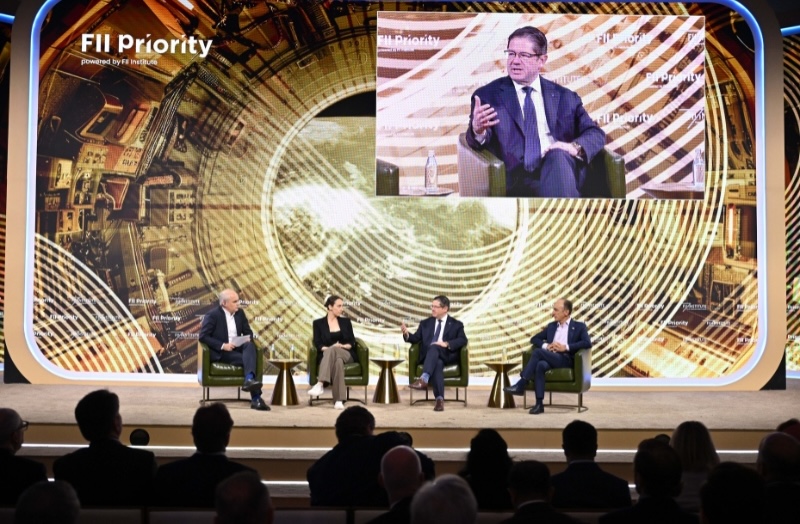
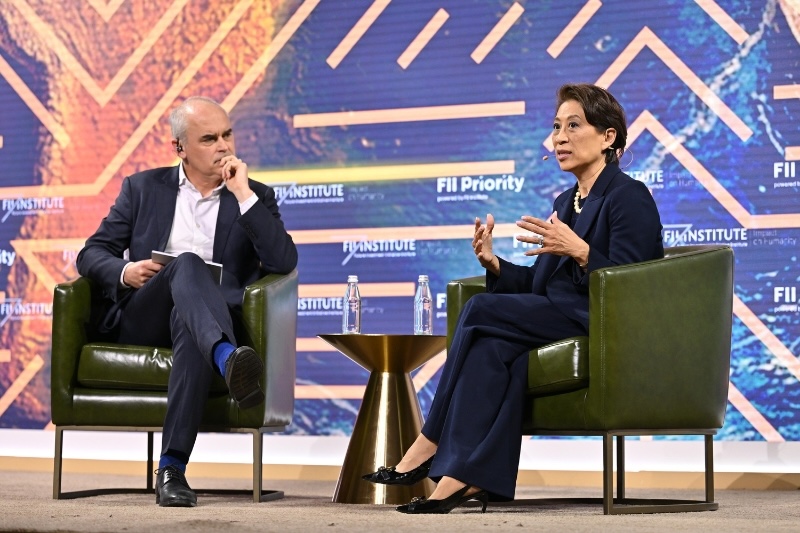
Other discussions explored how asset management is evolving in response to technological change.
Yie-Hsin Hung, president and CEO of State Street Investment Management, said: “AI enables mass customization at scale at much lower cost, and ultimately those companies that can harness these technologies to build sustainable advantage and compound value over time are the ones that will endure.”
Cities, infrastructure and industrial growth
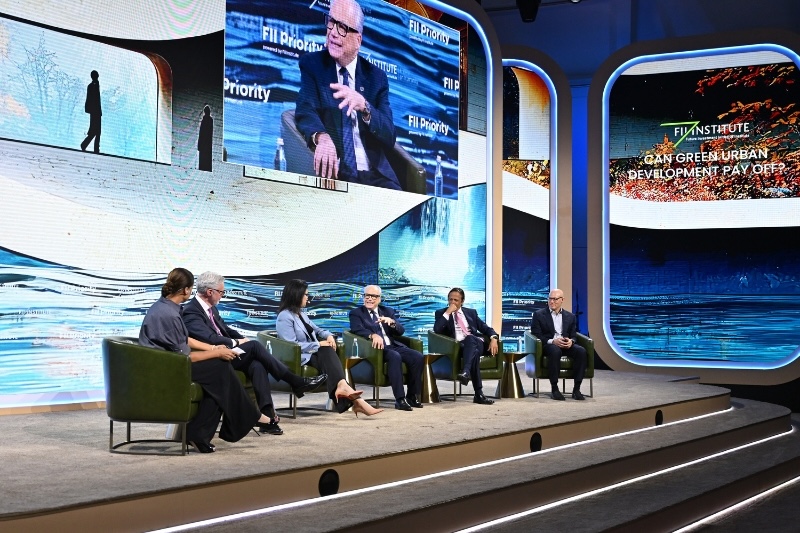
Urban development was presented as a long-term investment theme, with speakers describing cities as integrated systems rather than standalone projects.
Michael Dyke, CEO of New Murabba, said: “We are not just creating a collection of assets, we are building a place where people genuinely want to live, work, and play, which fundamentally changes how you think about urban development.”
Elsewhere, aerospace and industrial sectors were highlighted as potential drivers of future growth. Éric Martel, president and CEO of Bombardier, said:
“Commercial aviation demand is projected to double over the next 20 years, reshaping supply chains, capital flows, and industrial priorities.”
Energy, travel and shifting demand
Sessions also addressed the impact of energy costs and geopolitical disruption on global industries.
Manfredi Lefebvre d’Ovidio, chairman of the World Travel & Tourism Council, said: “Cruising depends a lot on the cost of fuel… it makes a big difference.”
Alejandro Reynal, president and CEO of Four Seasons, added: “The short-term impact in the region is direct and impactful… I remain bullish, optimistic about the region and the future prospects.”
AI, infrastructure and cultural influence
Later sessions examined the global race to build AI infrastructure, with speakers highlighting the growing importance of data, energy, and compute capacity in shaping future economic power.
In a separate discussion, Mythos Studios founding partner David Maisel emphasized the role of intellectual property in long-term value creation, particularly in entertainment and media.
The programme also included a segment on global sport, where FIFA president Gianni Infantino discussed the scale and impact of the FIFA World Cup, joined on stage by Brazilian football legend Ronaldo.
Presidential address closes the day
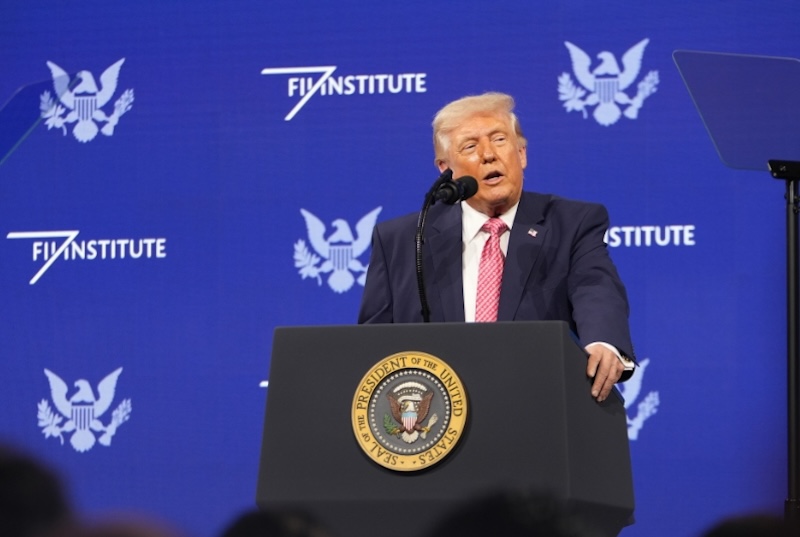
The day concluded with an address by Donald J. Trump, who appeared on stage before attendees at the event. Organizers positioned the speech as part of the summit’s broader focus on global economic direction and investment priorities.
