The global industrial landscape is undergoing a profound transformation, driven by the rapid convergence of artificial intelligence, advanced robotics, and sophisticated hardware. We are moving far beyond the era of simple mechanization and entering a phase where machines possess the ability to perceive, analyze, and react to their physical surroundings in real time.
This paradigm shift is not just about replacing manual labor; it is about creating highly intelligent, interconnected ecosystems that optimize production, reduce waste, and enhance overall operational safety.
Revolutionizing Industries with Automation Technology requires a holistic approach that seamlessly integrates cutting-edge software algorithms with incredibly robust physical infrastructure.
As factories transition into smart manufacturing hubs, the reliance on continuous, high-speed data streams becomes absolute. Every robotic arm, autonomous guided vehicle (AGV), and conveyor system depends on a complex network of digital and physical nodes working in perfect harmony.
Without reliable hardware to transmit this critical data, even the most advanced artificial intelligence is rendered useless. The true innovation lies in bridging the gap between digital intent and physical execution, ensuring that every command is carried out with microscopic precision and unwavering reliability.
The Physical Backbone of Modern Robotics and Smart Factories
“The true potential of smart manufacturing lies not just in the software, but in the seamless physical connectivity of every sensor and actuator on the factory floor.”
To understand the mechanics of modern industrial progress, one must look closely at the physical layer of the smart factory. Artificial intelligence and machine learning models require vast amounts of real-time data to function effectively.
This data is gathered by thousands of highly sensitive sensors distributed across the production environment, monitoring everything from temperature and pressure to spatial positioning and vibration.
Once the AI processes this information, it sends commands back to actuators, which translate the digital signals into physical movement. The speed and accuracy of this continuous feedback loop define the efficiency of the entire automated system.
However, the industrial environment is notoriously harsh, characterized by extreme temperatures, heavy vibrations, moisture, and electromagnetic interference. To maintain the integrity of the data transmission between these critical components, engineers rely on robust, standardized hardware.
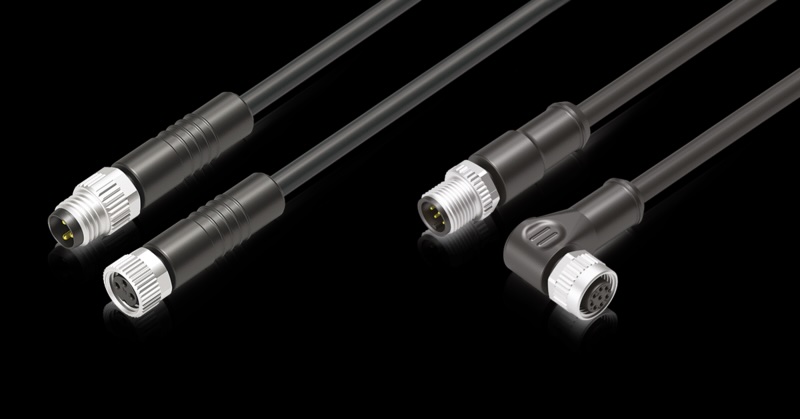
For instance, when connecting sensors and actuators, M12-A coded connectors serve as the trusted industry standard. These specific components are engineered to provide secure, uninterrupted power and signal transmission, ensuring that the vital communication pathways within robotic systems remain intact even under the most demanding physical conditions.
The implementation of such standardized, high-quality connectivity solutions is a foundational step in building a resilient automated infrastructure. When a facility upgrades its production lines, the focus must be equally divided between the software architecture and the physical wiring, plugs, and receptacles.
A single point of failure in the physical connection can lead to catastrophic data loss, resulting in costly machine downtime or compromised product quality. Therefore, investing in industrial-grade hardware is not merely a maintenance consideration, but a strategic necessity for any enterprise looking to scale its automated capabilities.
Bridging the Gap Between Digital Intelligence and Physical Execution
The concept of “Physical AI” is rapidly gaining traction among engineers and investors alike. Unlike traditional AI, which operates purely within digital realms like data analysis or natural language processing, Physical AI involves algorithms that interact directly with the material world.
This requires a sophisticated translation process where lines of code are converted into the precise mechanical articulation of a robotic limb or the calculated navigation of an autonomous logistics drone. Revolutionizing Industries with Automation Technology hinges entirely on mastering this complex intersection between the digital brain and the mechanical body.
Achieving this seamless integration demands ultra-low latency networks and edge computing capabilities. By processing data closer to the source—right at the machine level—factories can drastically reduce the time it takes for a system to react to a sudden change in its environment.
For example, if a vision system detects a microscopic flaw in a product moving along a high-speed conveyor belt, the system must process that image, make a decision, and trigger a mechanical arm to reject the item in a fraction of a second. This leaves absolutely no room for signal degradation or hardware malfunction.
Furthermore, the physical execution of these tasks requires hardware that can adapt to modular and flexible manufacturing setups. Modern production lines are no longer static; they are frequently reconfigured to accommodate custom orders and rapid product iterations.
The connectivity infrastructure must therefore be “plug-and-play,” allowing technicians to quickly swap out sensors, upgrade actuators, or reroute power without overhauling the entire system. This modularity, supported by standardized industrial connectors and intelligent interfaces, is what ultimately gives smart factories their agility and competitive edge.
Key Components Driving the Automation Ecosystem
The architecture of a modern automated facility is built upon a diverse array of specialized components, each playing a critical role in the broader ecosystem.
Understanding these elements is essential for facility managers and system integrators who are tasked with designing future-proof production lines. It is the synergy between these various technologies that enables the high levels of autonomy and efficiency seen in today’s leading manufacturing plants.
To grasp the complexity of these systems, it is helpful to categorize the essential elements that make up the industrial automation ecosystem:
- Sensory Input Devices: High-resolution cameras, LiDAR, proximity sensors, and thermal imaging units that capture environmental data.
- Actuation Mechanisms: Servo motors, pneumatic cylinders, and hydraulic drives that execute physical movements based on control signals.
- Industrial Connectivity: Heavy-duty cables, standardized circular connectors, and fieldbus systems that ensure reliable power and data flow.
- Edge Computing Nodes: Localized processing units that analyze data on the factory floor to minimize latency and reduce bandwidth usage.
- Centralized Control Systems: Programmable Logic Controllers (PLCs) and cloud-based AI platforms that orchestrate the entire operation.
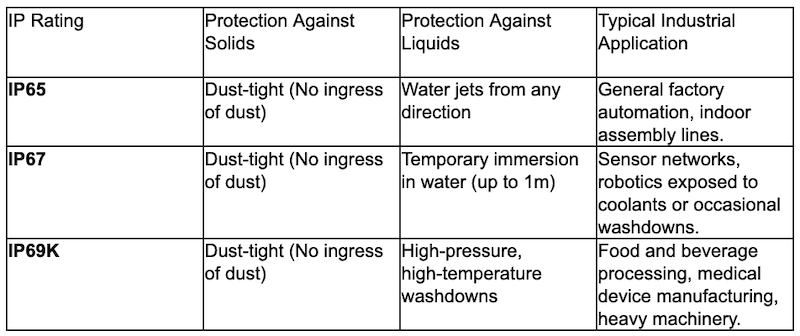
The environment in which these components operate dictates their design and material composition. Industrial hardware must be rigorously tested and certified to withstand specific environmental hazards.
The Ingress Protection (IP) rating system is a crucial metric used by engineers to specify the appropriate level of protection for electrical enclosures and connectors. Selecting the correct IP rating is vital for preventing premature equipment failure and ensuring long-term operational stability.
Overcoming Challenges in High-Tech Manufacturing Environments
Despite the incredible advancements in robotics and AI, deploying these technologies in real-world industrial settings presents significant engineering challenges. The factory floor is inherently hostile to delicate electronics.
Continuous mechanical vibration from heavy machinery can loosen connections over time, leading to intermittent signal loss that is notoriously difficult to diagnose. Additionally, the presence of corrosive chemicals, synthetic coolants, and fine metallic dust poses a constant threat to the integrity of both physical wiring and internal circuitry.
To combat these issues, manufacturers of automation hardware employ advanced material science and innovative mechanical designs. Housings for connectors and sensors are often cast from ruggedized metals or specialized high-grade plastics that resist chemical degradation.
Furthermore, locking mechanisms such as threaded joints or push-pull systems are integrated to ensure that connections remain secure regardless of the vibrational forces at play.
Shielding against Electromagnetic Interference (EMI) is another critical factor, as the dense concentration of high-voltage equipment in a factory can easily corrupt the low-voltage data signals traveling between AI controllers and robotic endpoints.
Addressing these environmental challenges proactively is the cornerstone of predictive maintenance. By utilizing highly durable, well-shielded components, facilities can trust the data being fed into their predictive algorithms.
When the hardware is stable, AI can accurately monitor the subtle changes in machine performance – such as a slight increase in motor temperature or a change in acoustic frequency—and alert maintenance teams before a catastrophic failure occurs.
This proactive approach minimizes unplanned downtime, significantly reducing operational costs and maximizing overall equipment effectiveness (OEE).
The Future Trajectory of Intelligent Production
As we look toward the horizon of industrial development, the integration of physical machinery and artificial intelligence will only deepen. The concept of the “lights-out factory”, where production runs entirely autonomously around the clock, is steadily moving from theoretical concept to practical reality.
This evolution requires a relentless commitment to improving both the software algorithms that govern the systems and the physical hardware that executes the commands. The continuous process of Revolutionizing Industries with Automation Technology will demand unprecedented levels of collaboration between software developers, mechanical engineers, and hardware manufacturers.
The next generation of industrial automation will likely feature self-healing networks, highly adaptable robotic swarms, and AI models capable of redesigning production workflows on the fly.
However, the fundamental laws of physics remain unchanged. No matter how advanced the artificial intelligence becomes, it will always require a robust, secure, and highly conductive physical pathway to interact with the real world.
The unsung heroes of this industrial revolution will continue to be the meticulously engineered connectors, cables, and sensors that hold the entire digital-physical ecosystem together.
Ultimately, companies that recognize the equal importance of digital innovation and physical infrastructure will be the ones that thrive in this new era. By investing in standardized, high-quality automation technology today, businesses are laying the resilient foundation necessary to support the unimaginable technological leaps of tomorrow.
The journey toward total industrial automation is complex, but with the right technological partnerships and a focus on uncompromising hardware reliability, the potential for growth and efficiency is limitless.
