Each year, the construction industry builds $2.1 trillion worth of structures in the US, and more than three-quarters of those projects face delays, according to the Associated General Contractors of America.
One solution could be robots.
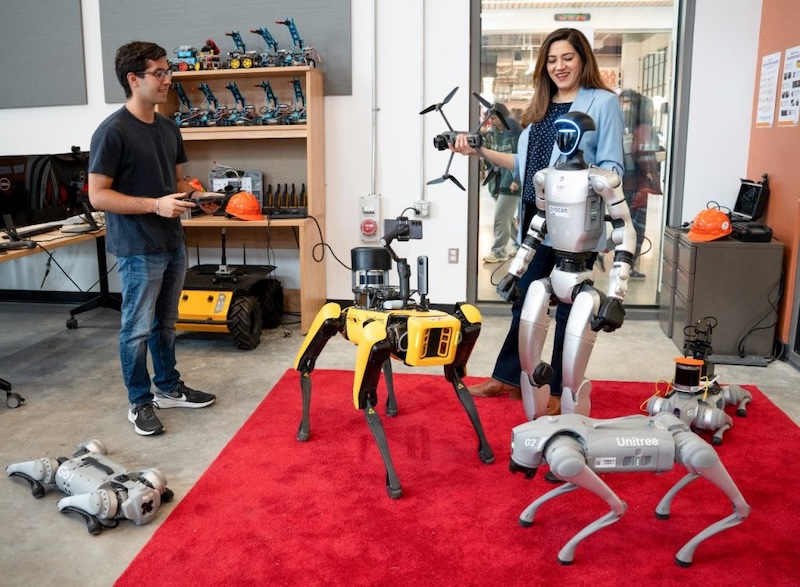
Virginia Tech researchers, in collaboration with Procon Consulting, are developing a coordinated team of robots, drones, and technology such as artificial intelligence (AI) sensing and computer vision designed to enable continuous, remote monitoring of construction sites.
This coordinated effort – named by researchers Multi-Agent Robotic System for Inspection On-site, or “Mario” – could not only minimize the impact of labor shortages, it could also reduce safety risks while expanding access to construction careers through the use of technologies like digital twins, or digital models of real-world objects.
“Mario would essentially act as the Google Satellite and Street View capture systems for buildings and infrastructure, ensuring that digital models are based on the most current, measured representation of reality,” said Steve DeVito, director of technology at Procon Consulting.
“We see this technology as unlocking the digital twins future in the architecture, engineering, construction, and operations industry.”
DeVito and Associate Professor of construction engineering and management Kereshmeh Afsari explained how the Mario technology could work.
What is Mario, and why is now the right time for a system like it in construction?
Afsari: Construction projects are expanding geographically while the industry faces a shortage of skilled labor. At the same time, progress monitoring often remains a “black box”, with limited real-time visibility into evolving conditions. Mario addresses this challenge by deploying an integrated team of advanced robotic technologies that provides real-time reality capture from the field.
How can Mario improve construction quality and safety?
DeVito: Mario provides stakeholders with a more complete and objective view of what is happening on a job site, reducing the need for frequent physical visits. Instead of relying on occasional snapshots, teams receive structured visual and sensor data from ground and air perspectives.
This helps identify coordination issues, installation defects, or sequencing problems early, before they become costly rework.
For safety, robots can enter hazardous areas instead of human inspectors. Whether scanning unstable upper floors after a storm or navigating partially shored excavations, the system delivers high-quality visual and sensor data while reducing exposure to falls, collapses, and struck-by incidents.
How could Mario help address the skilled labor shortage?
DeVito: Mario allows a single inspector to supervise multiple robots across multiple sites, reviewing structured visual data from one location rather than traveling between projects. This enables experts to scale their impact without compromising quality.
How might this technology expand access to construction careers?
Afsari: By removing the need for physical presence on site, this approach can broaden the construction talent pool to include individuals who are not typically represented in the industry.
DeVito: If physical demands or location have been barriers, remote inspection workflows allow someone to contribute from a distance, using robots as their presence on site. That can make inspection- and construction-related roles more accessible to people with disabilities, caregivers, or those living far from major construction sites.
How has the project enhanced student learning?
Afsari: This project has provided an exceptional hands-on learning experience for four graduate students and two undergraduate students, immersing them in real-world problem solving at the intersection of computer science, robotics, AI, and construction.
I think being among the first students to develop applications on top of a humanoid robot platform has offered a distinctive and career-defining experience that sets them apart as emerging leaders in advanced robotics and intelligent systems.
