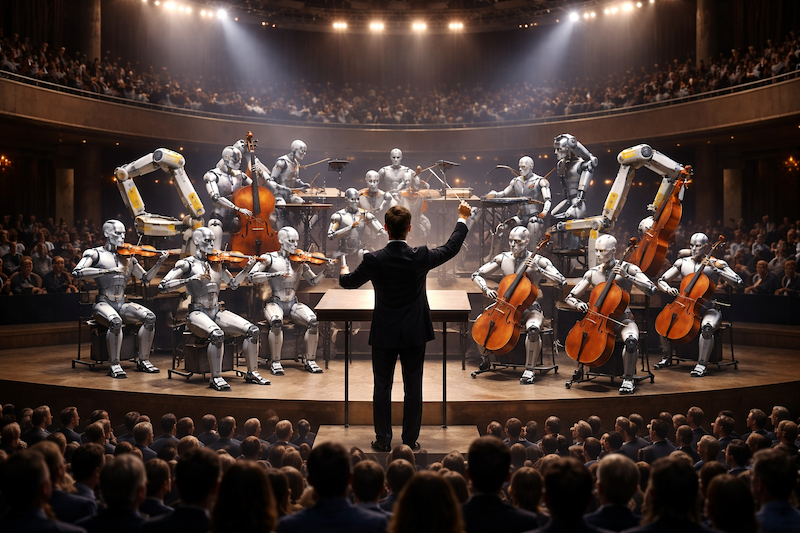
For decades, industrial robots have grown steadily more capable. Modern robot arms can move faster, more smoothly and more precisely than ever before, executing complex, multi-axis motion with sub-millimetre repeatability in harsh industrial environments.
Yet for many manufacturers, programming these machines remains one of the biggest obstacles to wider automation. The issue is not that robot software is inherently weaker than robot hardware, nor that robots are approaching human-level dexterity.
Rather, it is that the ways humans interact with industrial robots have not kept pace with the mechanical capabilities of the machines themselves.
As factories face labour shortages, shorter product cycles and rising product variation, this mismatch between robot potential and programming effort is becoming increasingly difficult to ignore. [Read more…] about The future of industrial robot programming: Easier, faster, more intuitive