2026 has been called the “year of mass production” for humanoid robots. In the first half of the year alone, output exceeded 40,000 units, with full-year projections surpassing 100,000.
As robots transition from stage performers to workers in factories and retail spaces, a fundamental question emerges: what enables them to execute movements that look increasingly human?
The answer lies not in algorithms but in materials. An industry consensus is forming – the performance ceiling of humanoid robots is determined largely by three foundational functional material categories: lightweight structural materials, flexible electronic skin materials, and high-performance battery materials.
Lightweight Structural Materials: Shedding Weight to Move
For a humanoid robot to run, jump, or even perform a backflip, weight reduction is the first prerequisite. The current mainstream approach combines aerospace-grade aluminum, titanium alloys, and high-strength engineering plastics, with the lightest humanoid robots now down to 27 kilograms.
But the room for weight reduction with metals is narrowing, and the industry is turning its attention to engineering plastics with more extreme performance profiles.
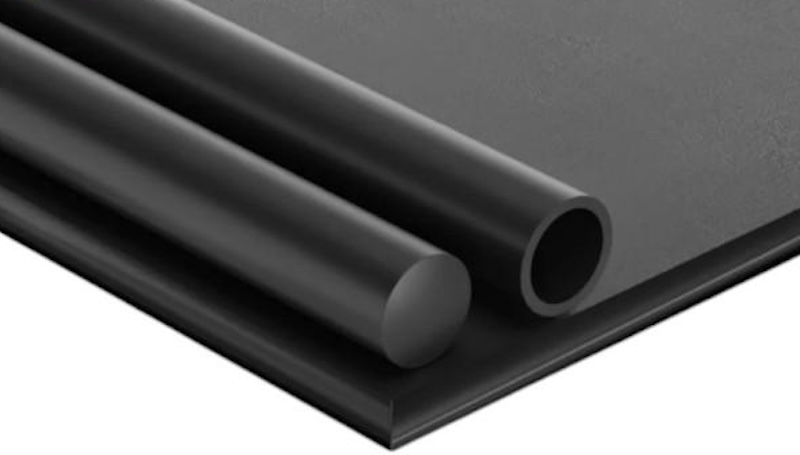
Polyether ether ketone (PEEK) is currently the most closely watched option. Tesla’s Optimus Gen2 extensively uses PEEK to achieve weight reduction and speed gains, and this demonstration effect is spreading.
PEEK’s appeal lies in its ability to reduce component weight to roughly half that of aluminum alloy while maintaining sufficient strength, combined with self-lubricating properties and fatigue resistance that suit high-frequency moving parts such as joints and gears.
Carbon fiber takes a different route. Carbon fiber’s value lies in its extremely high specific strength and specific modulus, making it suitable for structural components like upper arms and thighs that require high rigidity and are weight-sensitive.
But it has shortcomings: high cost, long processing cycles, and anisotropy – meaning designs must precisely match load directions, or the advantage becomes a liability.
One reality worth noting is that lightweighting is not simply “swapping materials.” Magnesium alloy has low density but insufficient stiffness, potentially requiring increased wall thickness or reinforcing ribs to meet deformation requirements – the final part may not actually be lighter.
Material selection and structural design must iterate in tandem, which is precisely the origin of the “structural-material integration” trend.
Flexible Electronic Skin: The Robot’s Tactile Nervous System
If lightweight materials are the skeleton, electronic skin is the sensory layer that moves robots from “mechanical execution” toward “intelligent interaction”. Without touch, dexterous hands can only grasp blindly, and safe human-robot collaboration is impossible.
The technical core of electronic skin lies in converting physical contact into electrical signals. Current mainstream approaches use piezoresistive or capacitive sensing principles, with flexible polymers (such as PDMS) as substrates and carbon nanotubes, graphene, or ionic gels embedded as functional layers.
Academic frontiers are also advancing more precise solutions. An October 2026 study in Science Advances proposed a gradient-mesh-confined ionic gel sensor that exploits the incompressibility of dielectric elastomers to produce controlled surface bulges that progressively contact electrodes under pressure, achieving high-linearity wide-range sensing across 0-350 kPa.
The goal of such designs is clear: to let a robot’s “hand” perceive a delicate egg and handle a firm grasp alike.
But the bottleneck for electronic skin is not the material itself – it is data. High-quality real tactile interaction data is extremely scarce, with global totals around 500,000 hours – a gap exceeding 95% relative to industry demand.
Without sufficient data for training, even the most sensitive sensor cannot teach a robot the “just right” amount of force.
High-Performance Batteries: The Dual Gamble of Energy Density and Safety
Battery life is one of the biggest obstacles to moving humanoid robots from demonstration to practical use. Full-size humanoid robots currently average only 2 to 4 hours of runtime, and most products have battery capacities under 2 kWh.
More vexing is that robot joints mostly lack mechanical self-locking – merely maintaining standing balance consumes 200 to 300 watts of whole-machine power.
Making the battery bigger doesn’t work: torso space is occupied by joints and controllers, and a heavier battery raises the center of gravity, making dynamic balance harder to maintain.
The breakthrough lies in chemistry. In 2026, the pace of solid-state batteries moving from the lab to robotics scenarios has visibly accelerated. This data means robot working time could move from “half a day per charge” toward “a full day per charge.”
But robot batteries have stricter requirements than automotive ones. During carrying, flipping, or rapid movement, continuous discharge needs about 3C, instantaneous peaks during violent motions may hit 5C to 15C, and extreme cases can reach 20C.
This imposes standards on instantaneous response and continuous output capacity far higher than consumer electronics. Meanwhile, safety standards remain unclear, and companies are working with leading customers to push for group standard development. Before standards land, competition in material systems will precede product scale-up.
Worth noting is that solid-state batteries are not the only path. One manufacturer’s second-generation product rolled off the line in September 2025 with 300 Wh/kg energy density, also targeting humanoid robots.
Semi-solid and all-solid-state will coexist across different cost ranges and application scenarios, with the final choice depending on the robot’s positioning: a high-end device pursuing extreme performance in industrial settings, or a cost-sensitive mass-market product in consumer scenarios.
Material Competition is Fundamentally Engineering Competition
The progress in these three material categories is encouraging, but an unavoidable fact is that the road from “usable” to “good” is a long one of engineering.
Most robotics business for PEEK and carbon fiber remains in small-batch stages, the data loop for electronic skin is not yet closed, and the standards and cost issues for solid-state batteries remain unresolved.
The deeper challenge lies in system integration. A lighter structural component may alter the whole machine’s vibration characteristics; a more sensitive electronic skin will generate massive data requiring processing; a higher-energy-density battery requires redesigning thermal management.
Materials cannot be “upgraded” in isolation – they must achieve balance at the whole-machine level.
The 2026 production data shows that the supply chain is accelerating this process through shared production lines and selection centers.
But when robots truly enter every industry, the test will no longer be who can produce samples, but who can twist material performance, manufacturing cost, and application requirements into a single rope.
The competition among the three foundational materials is, in the end, a contest of engineering capability. The winner will not be the one with the most impressive material parameters, but the one who best understands how to make materials work together in the real world.
Stanford Advanced Materials (SAM) supplies high-purity metals, alloys, and advanced materials for robotics R&D and manufacturing.
