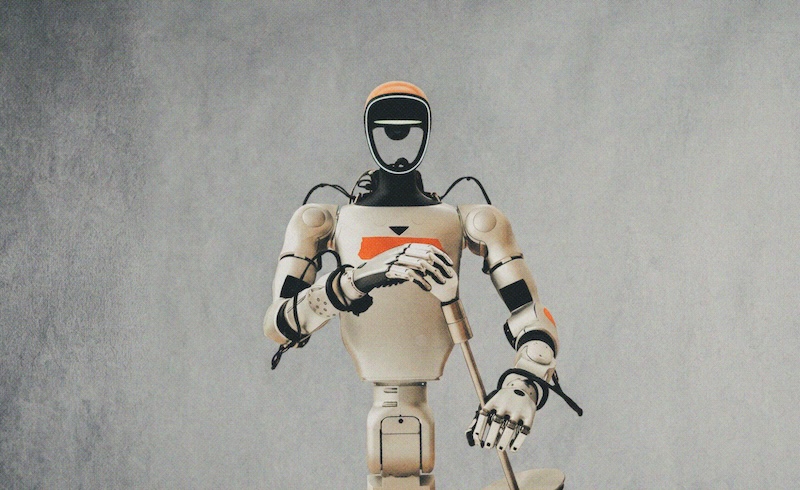
Swedish robotics startup 120ft has emerged from stealth after raising €576,000 in angel funding to develop autonomous microfactories using humanoid robots for local manufacturing.
The Stockholm-based company is developing modular factories designed to enable consumer brands to assemble products locally in smaller batches rather than relying on large production runs and lengthy international supply chains.
Founded in 2025 by Martin Willers, 120ft plans to operate its factories itself, with customers paying per finished product rather than purchasing robots or establishing their own automated production lines.
The company’s factory design uses three 40-foot containers for component preparation, assembly, inspection and packing – giving 120ft its name.
Its system combines humanoid robots, AI, virtual production-line simulation and proprietary orchestration software. Product designs, parts lists and quality requirements are converted into digital instructions, allowing assembly processes to be tested virtually before production begins.
120ft says it has reduced the time required to teach one end-to-end robot assembly skill from seven weeks in 2025 to seven hours in 2026. Its target is seven minutes in 2027.
The company has demonstrated the system by using robots to assemble a lamp, including installing a cylinder lock, threading the bulb fitting and carrying out a functional test.
Willers, founder and CEO of 120ft, says: “I started 120ft because I had lived this problem myself. At Transparent, we could spend months waiting for thousands of products to arrive before knowing what colour customers actually wanted the most.
“For a smaller brand, that means tying up cash and making decisions about demand far too early. Robotics and physical AI are now reaching the point where we can rethink that model.”
The funding comes from 22 angel investors, including Ted Persson, co-head of EQT’s Scaleup Europe Fund; Sophia Bendz, partner at Cherry Ventures and former global marketing director at Spotify; Fashwell co-founder Matthias Dantone; and Sam Baker of Planet A.
Baker says: “A robot on its own does not solve the manufacturing problem. Brands also need the tooling, software, quality control and operational systems around it.
“120ft is bringing those pieces together into something customers can simply buy as finished production.”
The funding will support development of 120ft’s software and factory infrastructure as it moves toward commercial production. Longer term, the company plans to extend the model to product repair, upgrades and remanufacturing.
