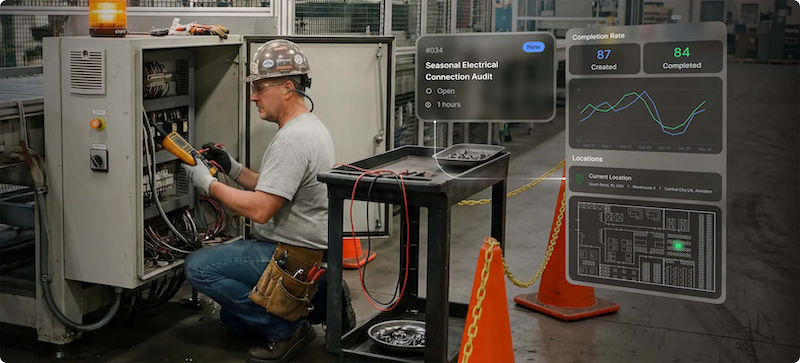
Unexpected equipment failures can disrupt an entire production day. A stalled conveyor can hold material upstream, a failed compressor can affect several processes at once, and a machine waiting for one inexpensive spare part can leave operators idle for hours.
Maintenance teams therefore need more than a list of repair requests. They need a reliable record of each asset, its service needs, its failure history, and the work required before a small problem reaches the production line.
Manufacturers use systems such as UpKeep’s CMMS software to organize that information and turn maintenance activity into planned work. A computerized maintenance management system can schedule service, assign technicians, record completed repairs, and show which assets consume the most maintenance attention.
When the maintenance process also connects with parts inventory software, teams can prepare the materials needed for upcoming jobs instead of discovering a stock shortage after a machine has already stopped.
Build a Reliable Record for Every Critical Asset
Downtime prevention starts with knowing what the plant actually has and how each asset behaves over time. A useful CMMS asset record can include equipment location, model and serial information, manuals, service intervals, past work orders, failure notes, and the components technicians frequently replace.
This history gives maintenance teams a stronger starting point than individual memory or paper files stored in different departments.
The record becomes especially valuable when the same machine develops repeated symptoms. A technician responding to a motor overheating problem can review earlier repairs and see if previous work involved lubrication, alignment, bearings, cooling, or electrical faults.
That context shortens diagnosis and reduces the chance that the team repeats a temporary fix that failed before.
Asset records also help plants decide where maintenance attention should go first. A packaging machine that stops a high-volume line may deserve more frequent inspection than a noncritical fan with little effect on production.
Classifying assets by production impact, safety exposure, repair cost, and replacement difficulty gives planners a more rational basis for scheduling work.
Schedule Preventive Work Before Production Has to Stop
Preventive maintenance works best when the schedule reflects how equipment operates. Some tasks make sense on a calendar, such as a quarterly inspection. Others fit operating hours, production cycles, mileage, or meter readings more closely.
A machine that runs continuously may need lubrication or inspection much sooner than an identical unit used for one shift each day.
A CMMS allows planners to create recurring work orders around those service intervals. Each work order can identify the procedure, expected labor, tools, and required parts. Maintenance supervisors can coordinate the job with production instead of waiting for failure to create an emergency.
Teams should still review the schedule against actual failures and inspection findings. Excessive preventive work wastes labor and can introduce new faults, while service intervals that are too long allow deterioration to progress unnoticed.
Turn Inspection Findings into Actionable Work Orders
Operators and technicians often notice deterioration before a machine fails. A bearing may sound different, a belt may begin tracking poorly, a pump may vibrate more than usual, or a gearbox may run hotter.
The maintenance process needs a quick way to capture those observations and convert them into work that someone owns.
A CMMS can give floor teams a standard path for reporting defects. The request can identify the asset, location, symptom, urgency, and supporting photographs or readings.
A planner or supervisor can review the request, set priority, assign a technician, and schedule the repair at a time that causes the least production disruption. This prevents early warning signs from disappearing into verbal conversations at shift change.
Condition data can make the process more precise. Plants may collect temperature, vibration, pressure, current, oil, or other measurements depending on the equipment.
A reading outside the plant’s chosen limit can prompt inspection before performance drops far enough to stop production. Maintenance retains more control over timing when the team acts during deterioration rather than after failure.
Prioritize Work by Production Risk
A maintenance backlog can contain dozens or hundreds of open tasks. Treating them all as equally urgent creates noise and makes it harder to protect the equipment that production depends on most.
A loose guard, a small oil leak, a failed indicator light, and a motor showing signs of bearing damage may all need work, but they do not carry the same operational risk.
CMMS work orders give teams a consistent way to rank that work. Priority can reflect safety, production impact, failure probability, quality risk, and the availability of backup equipment. Planners can place high-risk tasks into the schedule first while grouping lower-priority work around planned downtime.
If a repair waits for a part, contractor, approval, or shutdown window, recording that reason also gives supervisors a clearer view of which jobs are ready and which remain blocked.
Keep Spare Parts From Becoming the Reason a Line Stays Down
A technician may diagnose a failure in minutes and still lose an entire shift because the required bearing, belt, seal, sensor, or contactor is unavailable.
Spare-parts control therefore has a direct relationship with downtime. The challenge is keeping enough stock to protect production without filling storerooms with expensive items that rarely move.
Maintenance records help teams decide which parts deserve tighter control. If one component appears repeatedly on work orders for a critical asset, planners can set a suitable minimum stock level.
Parts with long supplier lead times may need extra protection even when failures occur less often. Low-cost items used across many machines may need different reorder rules from high-value components purchased for one asset.
Linking part usage to work orders also improves inventory accuracy. When technicians record the components they consume, the stock count reflects actual maintenance activity. Purchasing teams gain better visibility into reorder needs, while maintenance planners can check availability before scheduling a major job.
Over time, usage history can also expose recurring component failures that deserve engineering attention rather than repeated replacement.
Use Maintenance History to Remove Repeat Failures
A CMMS creates value after the repair closes because each work order adds to the plant’s history. Maintenance leaders can review which machines fail most often, which repairs consume the most labor, which components create repeated shortages, and which breakdowns cause the longest production interruptions.
Those patterns help distinguish isolated failures from equipment problems that need a deeper response.
For example, replacing the same bearing every three months should raise a different question from replacing one after several years of normal service. The real cause might involve alignment, contamination, lubrication, load, installation practice, or operating conditions.
The maintenance history gives the team enough evidence to investigate the recurring pattern instead of treating each event as an unrelated repair.
Plants can also compare planned and unplanned work. If emergency repairs remain high despite a large preventive maintenance workload, the schedule may target the wrong tasks or intervals.
If one production line consumes far more maintenance hours than similar lines, its equipment, operating conditions, or work practices deserve closer review. Recorded maintenance activity can then guide a more selective and effective maintenance plan.
Preventing equipment downtime does not mean eliminating every failure. Industrial machinery wears, components break, and unexpected conditions still occur.
The practical goal is to reduce avoidable stoppages, detect deterioration earlier, and shorten the time required to recover when something does fail.
CMMS software supports that goal by giving maintenance teams a structured way to plan work, record asset history, manage priorities, prepare spare parts, and learn from repeated failures.
When technicians keep the records current and planners use the data in everyday decisions, maintenance becomes less dependent on emergency response.
Production gains more predictable equipment availability, and the plant can spend more maintenance hours preventing problems instead of chasing them after the line stops.
