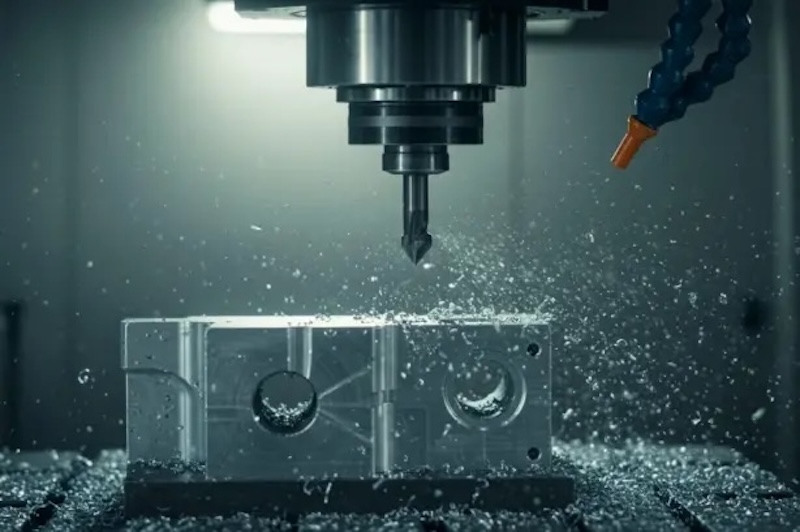
Walk into almost any production facility today and you will notice something. Aluminum is everywhere. It shows up in aerospace components, car parts, medical tools, and consumer gadgets. And most of those parts went through a CNC machine at some point.
That is not a coincidence. As the demand for precise, lightweight parts keeps climbing, this combination is becoming more central to how modern manufacturing gets done.
The global CNC machining market is projected to exceed $100 billion by 2026, and companies like Yijin Solution, known for their reliable aluminum CNC machining service, are already doing the kind of work that reflects where the industry is heading.
Why Aluminum is Preferred in CNC Machining
Machinists have plenty of material options. They keep coming back to aluminum for reasons that go beyond preference.
- Superior Machinability: Aluminum is genuinely easy to cut. It does not chew through tooling the way harder metals do, and you can move through it quickly without sacrificing accuracy. For shops handling short runs or tight deadlines, that speed adds up. Yijin Solution works with clients who need prototypes fast and production volumes that can scale, so a material that keeps the process moving is not a small thing.
- Strength-to-Weight Ratio: Here is what makes aluminum special in sectors like aerospace and automotive. It is light, but it holds up. Alloys like 6061 and 7075 give engineers real structural strength without loading down the final product with extra weight. When fuel efficiency depends on how much a vehicle weighs, every material decision matters.
- Corrosion Resistance: Aluminum forms its own protective layer naturally. That means parts used outdoors, in humid environments, or in medical settings hold up over time without extra treatment. Grade 6061 in particular has earned a reputation for durability in exposed applications like building facades and outdoor hardware.
- Workability: The material responds well to complex shapes and demanding tolerances. Machinists can hold accuracy down to 0.025mm, which opens up design possibilities that would be difficult or expensive to achieve with harder metals.
- Recyclability: Scrap aluminum from a CNC job can go straight back into the supply chain without losing quality. Yijin Solution builds this into their sustainability approach, and for clients with genuine environmental goals, working with a manufacturer who takes that seriously makes a real difference.
Applications in Modern Industries
Aluminum CNC machined parts have found a home across a surprisingly wide range of industries, and each one has its own reasons for depending on them.
- Aerospace: The requirements here are strict. Components need to be light, strong, and consistent every single time. Alloys like 7075 are standard for structural and critical parts because they handle high-stress conditions without adding unnecessary weight. Yijin Solution supplies aerospace manufacturers where tolerances are tight and safety is non-negotiable.
- Automotive: Car makers have been shifting toward aluminum machined components for years now. Lighter vehicles simply perform better and burn less fuel. Shafts, engine blocks, transmission housings, and structural brackets are all areas where aluminum CNC parts are making a difference. The ability to prototype and refine quickly through CNC machining also helps manufacturers move new designs forward without long delays.
- Construction: Projects move fast and need materials that can keep up. Aluminum handles weather exposure well and lends itself to the kind of custom architectural details and structural brackets that construction projects regularly call for. Yijin Solution’s custom hardware and sheet metal services are built to match the pace of these projects.
- Consumer Electronics: Phones, laptops, and similar devices need parts that are precise, thin, and tough enough for everyday handling. CNC-machined aluminum delivers the tolerances and surface quality that electronics manufacturers need, and it looks clean doing it.
- Energy and Medical: Grid infrastructure depends on reliable enclosures and components that stand up to long-term use. Medical applications demand parts that are biocompatible, easy to sterilize, and dimensionally accurate. Aluminum handles both well. Yijin Solution also covers sheet metal fabrication, injection molding, and 3D printing, giving clients a single partner for more of their manufacturing needs.
Emerging Trends and Future Outlook
A few things are reshaping how aluminum CNC machining works, and they are worth understanding.
- Automation and Artificial Intelligence: Modern CNC systems can now self-correct during a run, adjusting feed rates and spindle speeds based on what is actually happening rather than just following a preset program. At Yijin Solution, this kind of automation means faster production cycles and more consistent output, even on complex or highly customized parts.
- Adaptive Machining and Smart Tooling: Sensors built into today’s machines give real-time feedback that allows for adjustments on the fly. This reduces waste, extends tool life, and gives shops more flexibility when dealing with small batches or last-minute design changes. For high-stakes industries like aerospace and medical, responsiveness matters a lot.
- Industry 4.0 Integration: Connecting production systems to smart software is changing how facilities handle maintenance, resource planning, and quality control. Yijin Solution continues to invest in this kind of connected infrastructure as part of staying competitive and delivering reliable precision at scale.
About Yijin Solution
- Business: Yijin Solution
- Spokesperson: Gavin Yi
- Position: CEO
- Phone: +1 626 263 5841
- Email: yijing@yijinsolution.com
- Location: 760 NW 10th Ave, Homestead, FL 33030
- Website: http://yijinsolution.com/
- Google Maps Link: https://maps.app.goo.gl/TbnqMpxoinnottN7A
Frequently Asked Questions About Aluminum CNC Machining
Why is aluminum commonly preferred in CNC machining processes?
It machines quickly, tolerates tight dimensional requirements, resists corrosion naturally, and scrap material can be recycled cleanly. For industries that rely on precise, durable, and lightweight parts, aluminum hits the right balance without pushing costs too high.
What industries benefit the most from aluminum CNC machined parts?
Aerospace, automotive, construction, consumer electronics, energy, and medical industries all rely heavily on aluminum CNC parts. Each one takes advantage of the material’s strength, light weight, and machining precision in ways specific to their applications.
How does the strength-to-weight ratio of aluminum impact modern manufacturing?
It allows engineers to reduce component weight without compromising structural performance. In aerospace and automotive applications especially, that trade-off directly influences fuel efficiency and overall product performance.
What emerging technologies are shaping the future of aluminum CNC machining?
Automation, AI integration, adaptive machining, smart tooling, and Industry 4.0 connectivity are all pushing the field forward. Together they improve speed, reduce waste, and give manufacturers better control over quality and consistency.
Can aluminum CNC machining support sustainable manufacturing practices?
It can, and it does. Aluminum scrap recycles without quality loss, and manufacturers like Yijin Solution incorporate waste reduction into their standard operations. That makes it easier for clients to meet their environmental commitments without any compromise on part quality.
What are the benefits of using CNC machining for custom prototyping with aluminum?
Fast material removal, low tool wear, and short lead times make aluminum CNC machining a natural fit for prototyping work. When designs need to be tested and revised quickly, having a process that keeps turnaround times short is a genuine advantage.
