In precision manufacturing, the decision to produce a part comes down to figuring out the right equipment, not simply using the strongest machine in the shop.
For machine shops faced with this type of hardware selection decision, the endpoint often involves two prevalent vertical milling machine formats: knee mills and bed mills.
These machines both perform fundamental machining operations but differ in mechanical architecture, influencing setup speed, rigidity, and cutting capability.
This article aims to assist machine shops, toolrooms, and prototyping environments in evaluating a knee mill versus a bed mill decision based on parameters like flexibility, rigidity, part size, and scale of production.
Why this Comparison is Still Relevant in the CNC Era
One might argue that manual machines are obsolete in the age of advanced CNC machining centers. However, this discussion persists because the functional mechanical shell of the machine often remains relevant beyond the software layers that define modern CNC systems. Manual machining acts as a vital, time-saving technique rather than sending a failed 3D-printed part through a redesign cycle.
Engineers can often modify physical prototypes quickly using manual mills. Thus, prototyping environments, maintenance techs, and toolrooms rely on conventional mills, making the knee versus bed architectural decision an ongoing operational choice.
What is a Knee Mill?
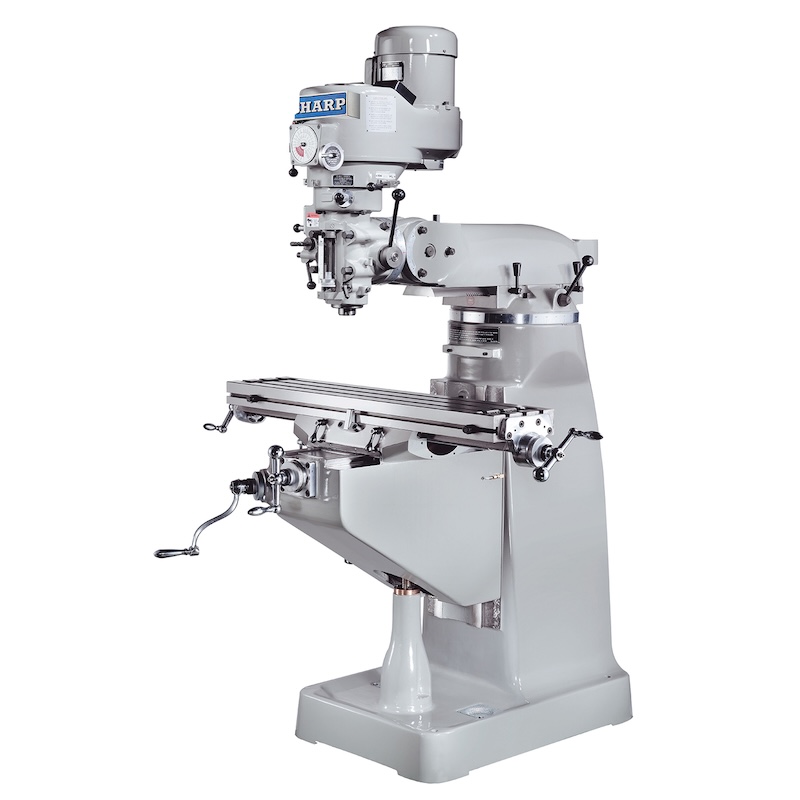
A knee mill uses a particular vertical adjustment mechanism where the entire worktable assembly is mounted on a large casting called the “knee.” This knee sits on a stationary column and moves up/down along guideways, allowing control of depth and positioning. Raising/lowering the knee+saddle+table via an elevating screw jack lets you fit different heights of workpieces.
This mechanical architecture offers tremendous physical flexibility, especially for lighter-duty machining tasks. By its very construction, the knee mill is ideal for prototyping, occasional repair tasks, the toolroom environment, and small quantities.
What is a Bed Mill?
A bed mill trades the above design and instead supports the table on the fixed machine base (“bed”) instead of the knee. The table moves horizontally (X/Y axes) while the vertical (Z) comes from the spindle head/ram moving up/down the column to interact with the workpiece. Fixing the table height delivers much greater rigidity and load capacity.
This design makes bed mills attractive for shops working with larger parts, more demanding materials, and heavier cutting operations where rigidity matters. For companies adopting more 24/7 automated production technology, the stability of a bed mill often serves as a preferred foundation.
Knee Mill vs. Bed Mill: Differences That Matter
1. Movement and Flexibility
The fundamental architectural difference controls how the machine moves. The knee mill’s vertical movement of the table provides massive tactile flexibility for operators across ever-changing tasks.
Many include turrets and rams with features where the turret moves ±45° and spins 360°, facilitating complex one-setup machining. Conversely, bed mills have fixed-height tables, and all spindle movement occurs via the head/ram, favoring rigidity over operational flexibility.
2. Rigidity and Vibration Control
For high-hardness materials (e.g., steels), mass correlates with stability. By not moving the multi-ton table assembly vertically, the bed mill provides a lower, well-supported load path, damping vibrations and reducing chatter.
Details like square columns/ways on heavy-duty bed mills offer increased rigidity. Cutting steel on a lighter knee mill risks frame deflection, hurting surface finish and accuracy.
3. Workpiece Size and Load Capacity
Table load capacity forces a usage distinction. Bed mills handle massive parts; standard tables support up to 1320 lbs, and large models can support more. Vertical clearance is generous for tall parts as well. Knee mills scale towards lighter ranges within the loading limits of the movable knee+saddle table casting.
4. Accuracy, Repeatability, and Surface Finish
Both machines achieve high accuracy with features like precision-ground lead screws that can mechanically remove backlash with double nuts. They diverge in purpose: knee mill high-speed spindles achieve excellent aluminum surface finishes, while bed mills maintain accuracy and stiffness under continuous torque in tougher materials.
5. Footprint, Training, and Everyday Use
Knee mills thrive in traditional toolrooms due to intuitive ergonomics and their simple R8 tapered spindle, along with easy speed adjustment on many models. Care must be taken within mechanical limits, especially during tool changes and manual quill operations. Bed mills have larger footprints and infrastructure requirements, making them less suitable for cramped electric shops vs. industrial spaces.
When a Knee Mill Makes More Sense
A knee mill suits functional environments where low volume/high variety is the priority. If you’re strongly focusing on new engineering prototyping work, single parts, or emergent maintenance, then the physical accessibility advantages of the knee design apply. Within flexible job shops, moving the tooling to the workpiece efficiently reduces total refixturing, improving setup productivity.
Once the rapid flexibility of turret+knee architecture is prioritized, the next steps are evaluation of capacities like table limits, horsepower, and total cost of ownership that includes machine mass and cast iron quality.
Specifically, readers evaluating this option can review a knee milling machine to further line in the machine specs to smooth operational continuity based on physical footprint, spindle speed capability, and vibration control.
When a Bed Mill is Stronger
A bed mill actually provides advantage once the structural limitations of the movable table baseline out. If your work skews towards machining hardened steels, extra-large structural components, or short-run production, bed mills offer an industrial middle ground that is not a full machining center.
Within these environments, rigidity and stability become paramount over convenient spindle movement. By supporting massive parts without refixturing constraints and using swiveling spindle heads, etc., a bed mill can support heavier weights.
Questions to Ask That Help Decide
To make a decision, the machine selection should be prompted by questions that drive to clear operational outcomes:
- What parts/materials are you machining? High-speed aluminum favors knee mills while low-end torque steels like D2 favor bed mills.
- How big are the parts? Calculate travel ranges vs. fixture stack vs. tooling length.
- Are you running repeat short batches or high variability? Repeat runs scale towards industrial rigid machines.
- How frequently do setups change? Constant multi-angle setups favor highly accessible ram+turret setups.
- What is the priority: flexibility or stability? Toolroom/emergency repairs prioritize flexibility, but deep tool engagement favors bed mills.
- What is the skill level of your operators? Assess familiarity with standard R8 spindle vs. simpler commercial mills.
Next Step
Ultimately this selection can be made based on the daily workload, maximum size parts, precision needs, and how the shop prioritizes. By mapping torque/machine needs against architectural realities and physical part geometries, you can impact the total cost of ownership for the right machine to enable continuous fabrication.
