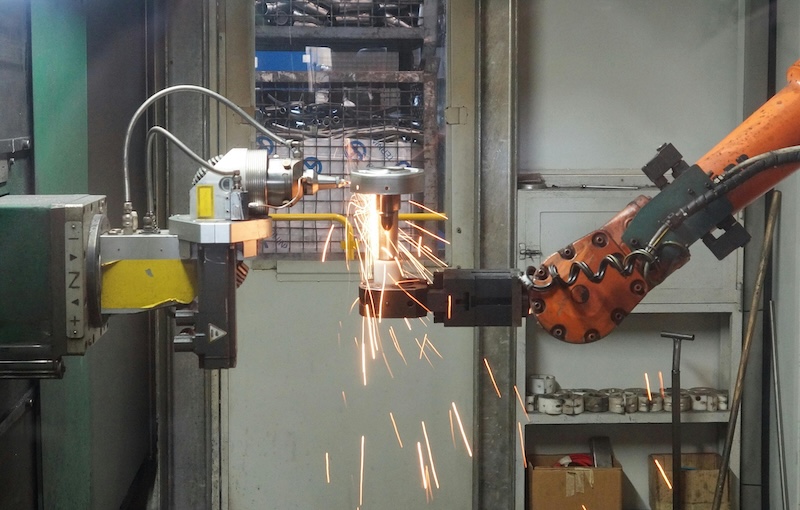
Robots make work faster, cleaner, and more consistent. They also change how risk shows up on the floor. The danger is not only the moving arm, but also the in-between moments, when a cell is paused, a jam is cleared, or a quick adjustment turns into hands inside the fence.
Operators sit closest to these moments, so practical safety habits matter as much as any policy. You do not need to quote standards from memory to work safely. Here are practical robot safety steps operators can apply.
1. Treat tool choice as a safety control rather than a convenience
When you enter a guarded area, you bring risk with you, and tools are part of that risk. Choose tools that match the environment, especially where vapors, dust, or residues could ignite. Keep a small ‘approved kit’ for robot interventions, and log what belongs in it.
For facilities with ignition-sensitive zones, stocking non sparking impact sockets for defined tasks can reduce spark exposure during fastener work, especially when you are rushed and tempted to grab whatever is closest. If it is not in the kit, it stays out.
2. Use the right mode, at the right speed, every time
Most incidents happen during setup and recovery, not normal production. Slow, controlled motion is your friend. Before you touch anything, confirm the cell is in the correct operating mode for the task, and that speed limits and enabling devices are active.
If your procedure calls for teach mode, do not just bump it into automatic. Stay on the pendant, keep out of the line of motion, and plan an exit path. That shortcut is how near-misses become injuries.
3. Lockout, release stored energy, and prove it is safe
Lockout is not just flipping a switch. It is a full stop, with proof. Isolate every energy source tied to the task, including electrical, pneumatic, hydraulic, and any stored mechanical force. Apply your lock and tag, then bleed pressure, discharge where required, and secure anything that could drop or spring back.
Do not trust the HMI alone. Test the start, try the motion, and confirm the cell will not move. If there is any doubt, pause and escalate. A clean verification step is what separates a controlled intervention from a close call.
4. Protect your sightlines, and reset the space before you step in
Clutter steals reaction time. Before you open a gate or step inside, be sure to make space. Remove trip hazards, wipe spills, and keep tools out of pinch zones. Stand where you can see the robot, the gripper, and the part path. Mark safe zones on the floor, and use them.
If you cannot see the full risk area, do not proceed alone. Make sure to call a spotter. Visibility prevents surprise motion, which is often just motion you did not notice in time.
5. Make communication the final barrier
Safety is a team sport in automated cells. Be sure to use short, specific callouts like ‘Gate open,’ ‘in cell,’ ‘power isolated,’ ‘test move,’ and ‘clear to run.’ Additionally:
- Confirm who owns the start button
- Use a handoff checklist when shifts change
- Never assume a reset is harmless
Endnote
You do not need to quote a standard to work safely. You just need repeatable steps that match the standard’s intent, keep energy controlled, keep access deliberate, and keep problems visible. Do that consistently, and the shop floor becomes the place where safety rules finally pay off.
Main image: alex, Pexels
